
Last updated October 30, 2026
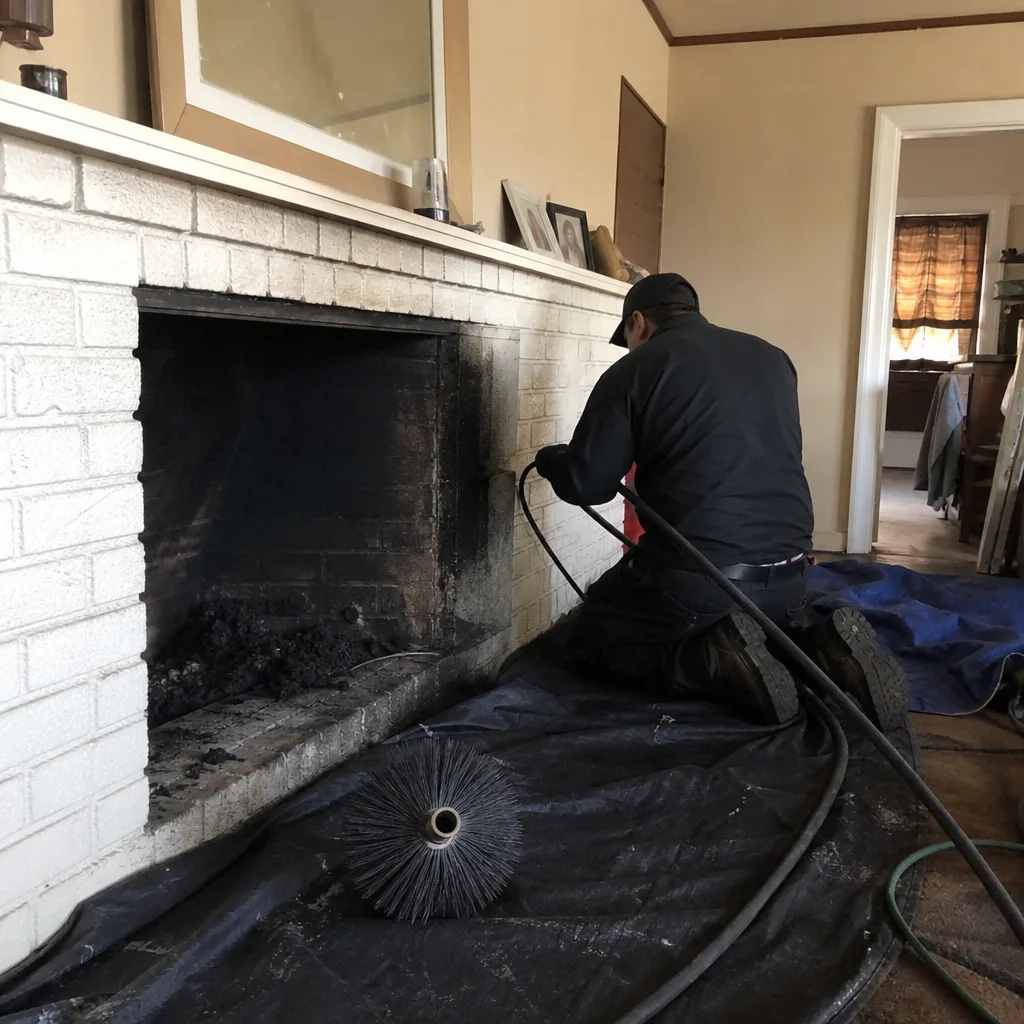
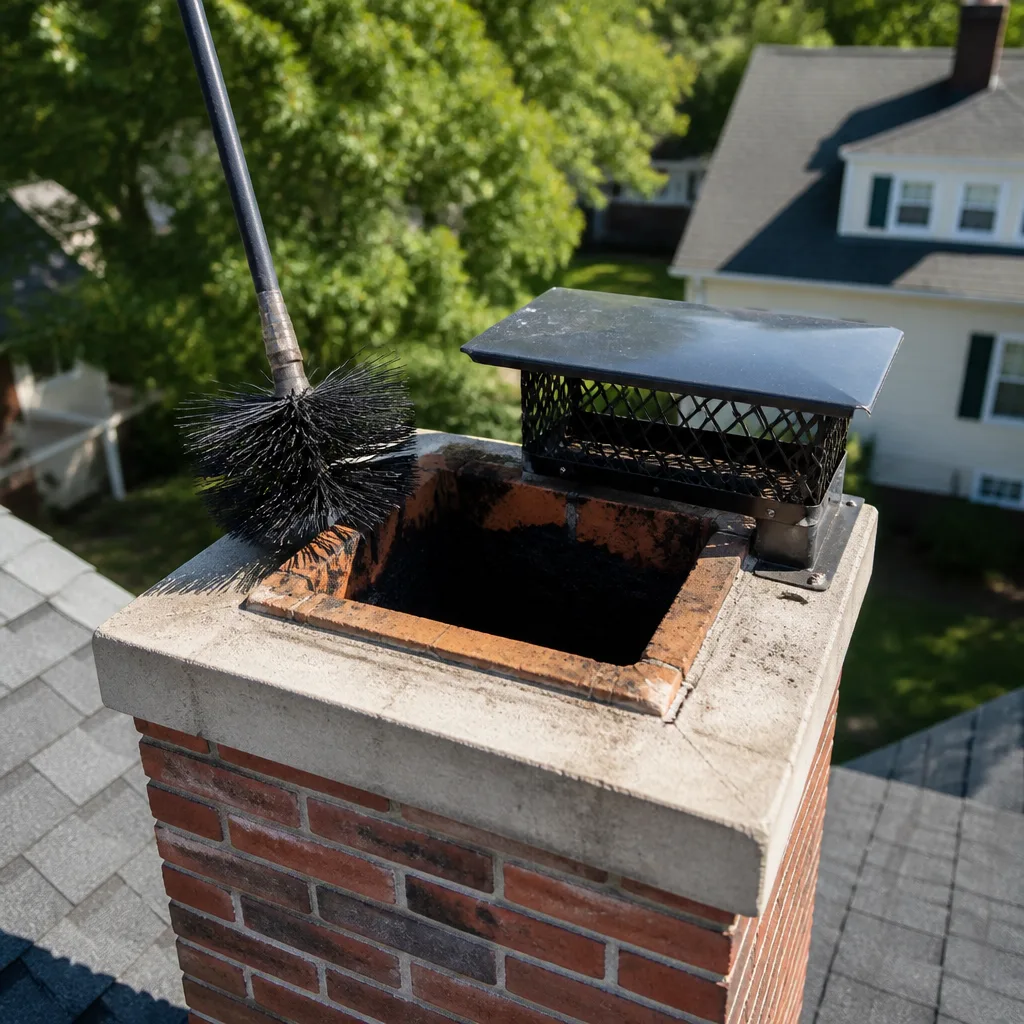 Sweep & inspection
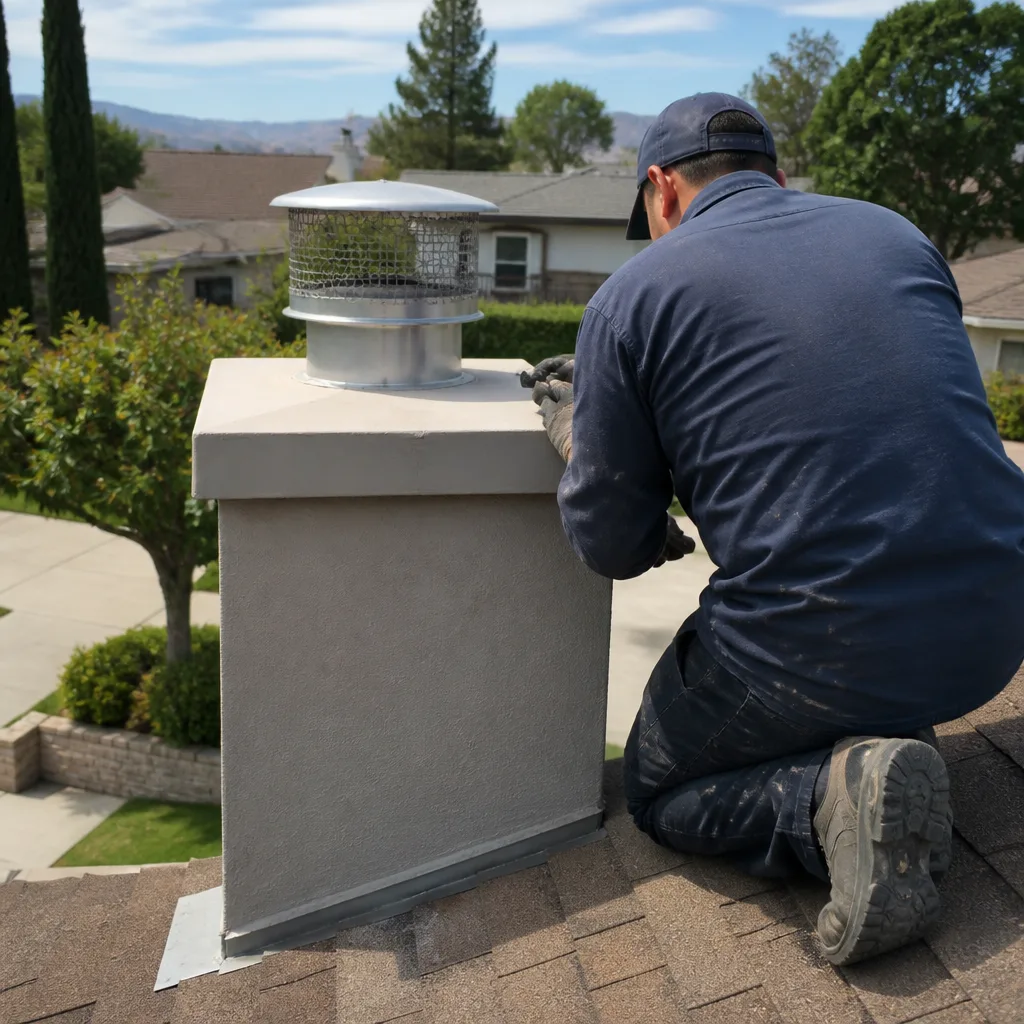
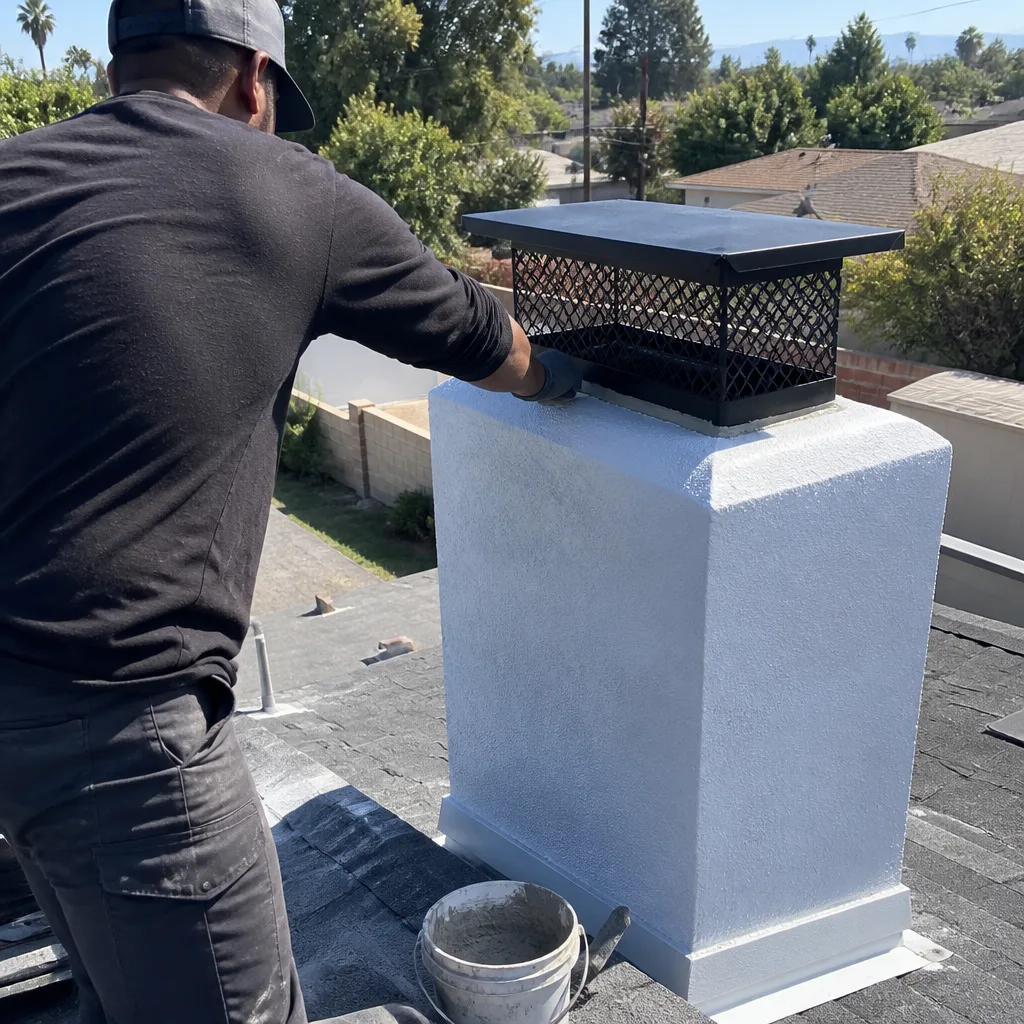
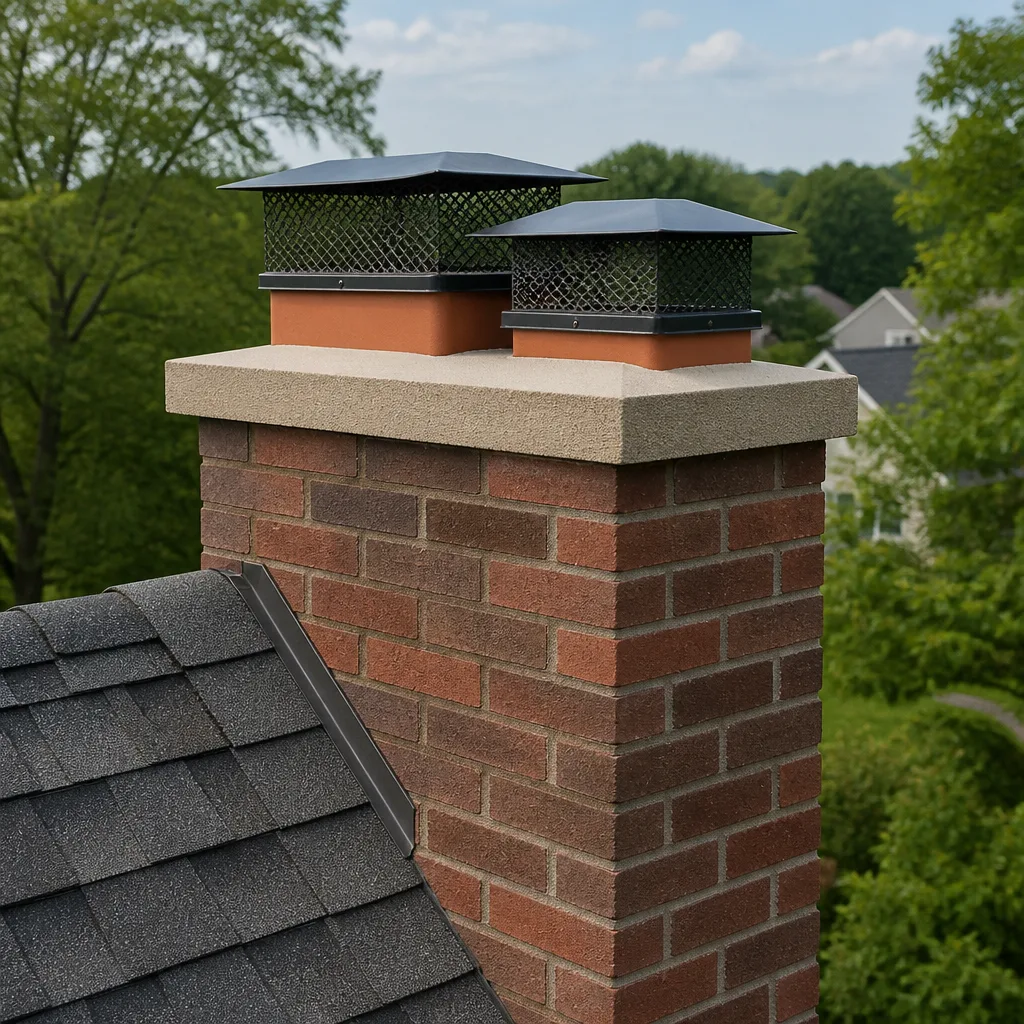 Caps & crowns
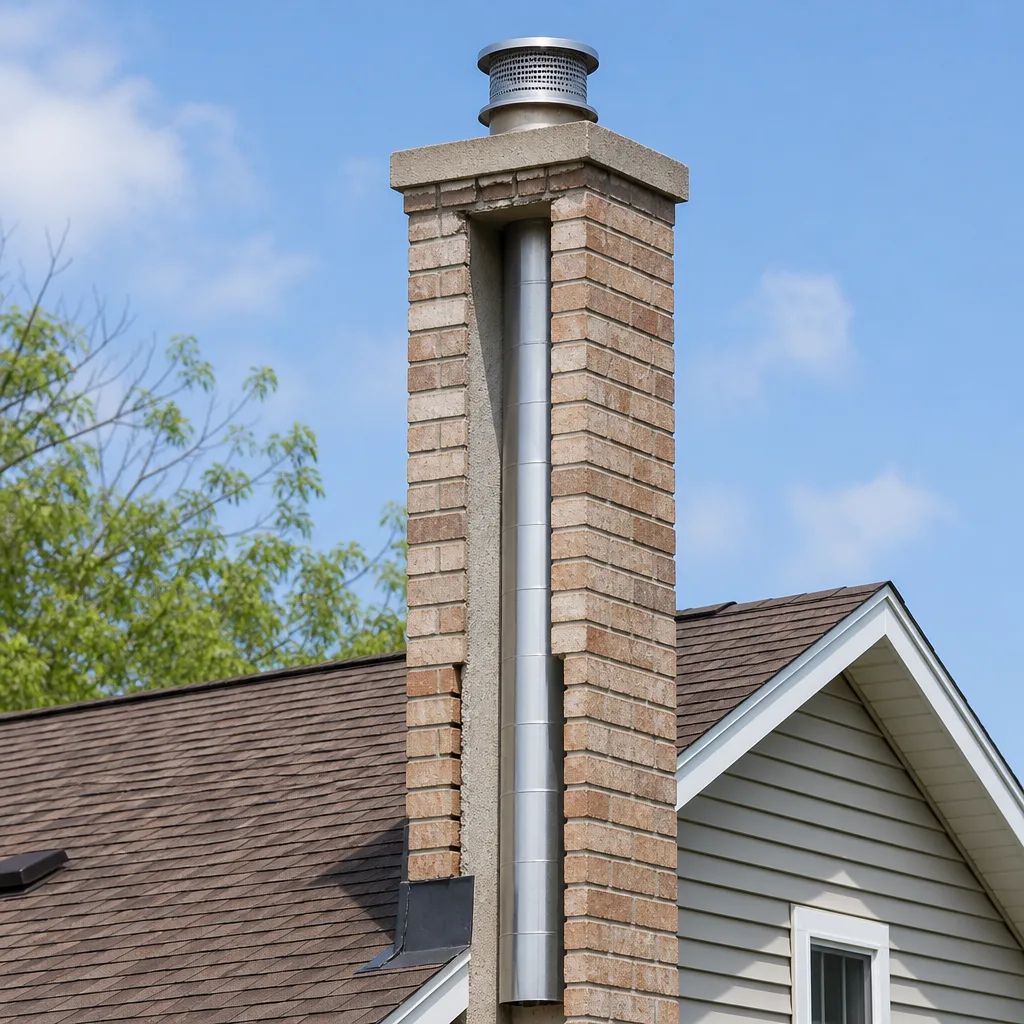 Flue relining
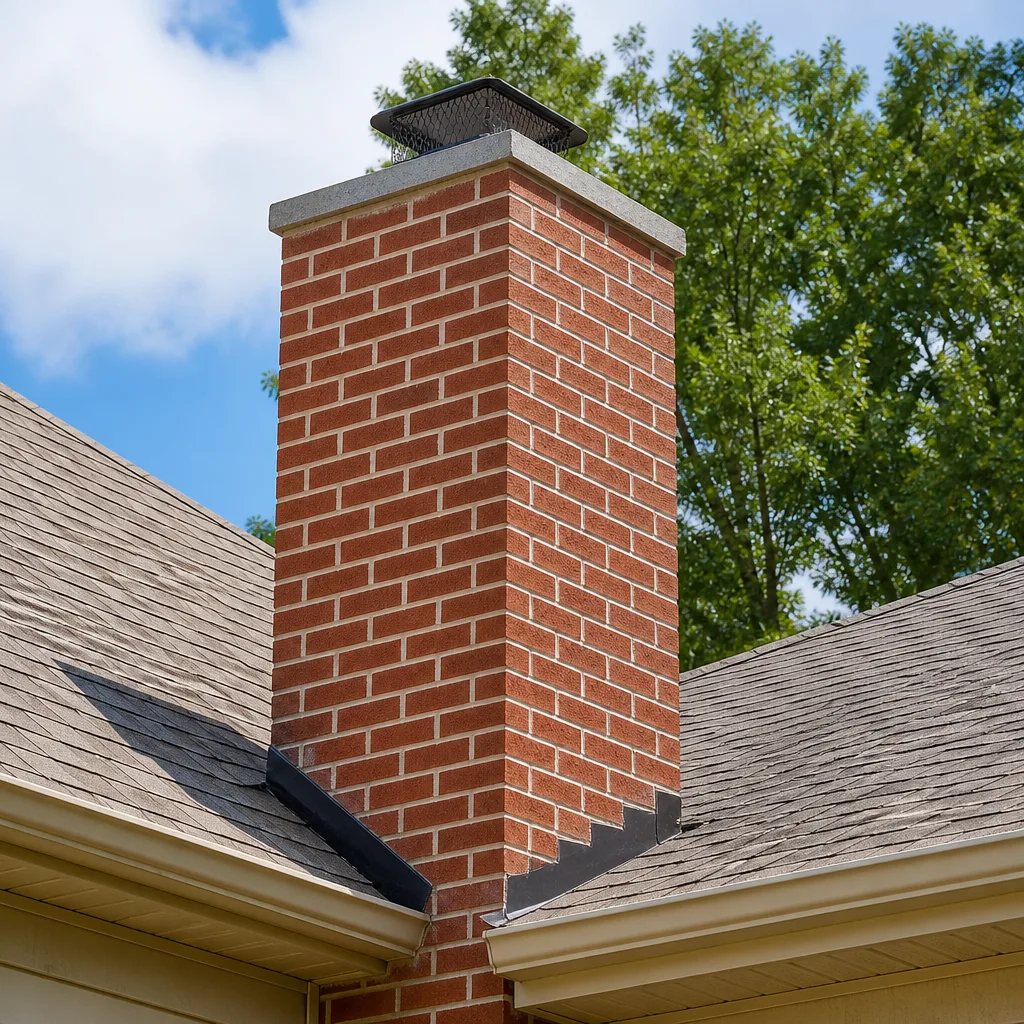 Masonry repair
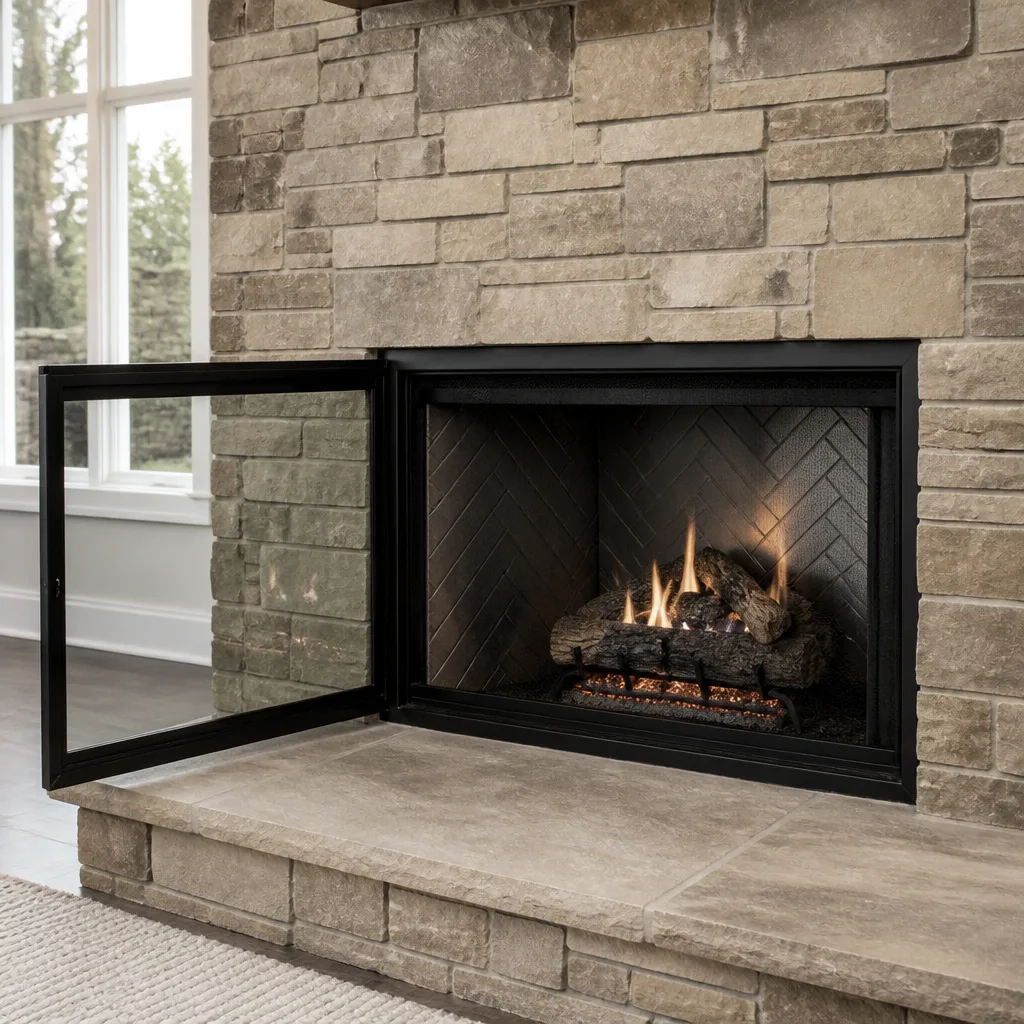 Gas fireplace service
Level 1 sweep and inspection to the NFPA 211 annual standard - flue, crown, cap, and flashing checked and photographed
Chimney sweep logs do not sweep chimneys. They loosen some creosote - which then falls where a brush and vacuum still have to collect it.
Chimney Cleaning Emergency Preparedness Guide for Pomona Homes
A chimney fire doesn’t always announce itself with visible flames. In a contained flue, it can sound like low rumbling or a train passing through the house, and it can burn through mortar joints and wooden framing before anyone realizes what’s happening. Homeowners in Pomona face a specific set of conditions: older housing stock, seasonal inversions that trap smoke, and the Santa Ana wind pattern that can pull air down a chimney and scatter embers. This guide walks through what a chimney emergency actually looks like, how to respond in the first five minutes, and what Pomona homeowners need to know about documenting damage and getting a legitimate assessment afterward. For Chimney Cleaning Warning Signs: A Pomona Homeowner’s Reference Guide, see our earlier coverage.
Styles & brands we work with
Quick Answer
If you suspect a chimney fire, close the damper if you can do so safely, evacuate everyone from the house, and call 911 from outside. Do not use water, do not open the firebox door to check, and do not re-enter until the fire department clears the home. After any chimney fire or major smoke event, the chimney requires a Level 2 inspection before further use.
Table of Contents
- Identifying a Chimney Fire in Progress
- The First Five Minutes: Response Protocol
- Carbon Monoxide: The Silent Chimney Emergency
- After the Event: Level 2 Inspections and Documentation
- Pomona-Specific Emergency Resources
- What Not to Do: DIY Errors That Make Emergencies Worse
- Common Mistakes to Avoid
- When to Call a Professional
- Frequently Asked Questions
- The Bottom Line
Identifying a Chimney Fire in Progress
A chimney fire is not subtle once you know what to look for, but most homeowners in Pomona have never experienced one and don’t recognize the signs until the fire has been burning for several minutes. The National Fire Protection Association identifies two types of chimney fires: free-burning and slow-burning. Free-burning fires roar loudly and are unmistakable. Slow-burning fires, which are more common, happen inside the flue at lower temperatures but can still cause extensive damage to mortar joints, the liner, and adjacent framing.
The sounds are the most reliable early indicator. A contained chimney fire often produces a low, rhythmic rumbling that homeowners compare to a train passing at a distance or a freight truck idling nearby. Some describe it as a deep whooshing sound. If you hear something like this and you have a fire going or recently had one, treat it as an emergency until proven otherwise.
Visual cues vary depending on whether the flue is visible. From outside the house, you may see dense, dark smoke pushing out of the chimney top with unusual force, or flames shooting above the cap. From inside, if you have glass fireplace doors, you may see more flame activity than a normal fire should produce, or a glow that seems to come from inside the flue itself rather than the firebox.
The smell is another tell. A chimney fire produces an acrid, hot-metal smell that’s distinct from ordinary wood smoke. Some homeowners in Pomona report noticing a smell like burning tar or hot iron before they see or hear anything else. Creosote, the flammable residue that builds up inside chimneys, burns at extremely high temperatures, and that smell is distinct.
In our experience, the homeowners who catch these fires earliest are the ones who know their normal fire behavior well. A fire that suddenly burns hotter and louder than usual, or that makes noise even after the damper is closed, is telling you something.
The First Five Minutes: Response Protocol
The immediate response to a suspected chimney fire follows a clear sequence. Here’s the step-by-step protocol we recommend for Pomona homeowners:
- Close the damper if you can reach it safely. This cuts off the oxygen supply feeding the fire, which may slow it down. If the damper handle is hot, if there’s smoke pushing into the room, or if reaching it puts you near the firebox opening, skip this step.
- Get everyone out of the house. Pets included, if you can gather them quickly. Do not spend more than a few seconds on this. The priority is human life.
- Close doors behind you as you exit. This helps contain the fire and smoke if the fire has already breached the chimney structure. Do not go back for anything.
- Call 911 from outside the house. Use your cell phone. Tell the dispatcher you have a possible chimney fire, give your Pomona address clearly, and state whether everyone is out of the house.
- Stay outside. Do not re-enter the home for any reason until the fire department has assessed the situation and told you it’s safe.
There are specific things you should not do, and some of them are counterintuitive enough to be worth stating plainly. Do not use water on a chimney fire. Water hitting superheated flue tiles or metal can cause them to crack or explode from thermal shock. Water also turns to steam instantly, which can push embers and hot gases into the living space. Do not open the firebox door or glass doors to check on the fire. That feeds oxygen to the flames and can cause a backdraft, pulling the fire into the room. Do not try to put the fire out with a fire extinguisher aimed up the chimney. The extinguisher can’t reach the fire inside the flue, and forcing the nozzle into the firebox creates the same backdraft risk.
Pomona’s fire stations respond to chimney fire calls regularly during the fall and winter, and the department’s standard procedure includes checking for fire extension into the attic and surrounding wall cavities. A chimney fire can burn quietly inside a wall for hours after the visible flames are out, which is why the fire department will often remain on scene longer than homeowners expect.
Carbon Monoxide: The Silent Chimney Emergency
Not every chimney emergency involves fire. A blocked or cracked flue can create a carbon monoxide hazard even when there are no flames involved, and this is a type of emergency that unfolds more slowly but can be just as deadly. Carbon monoxide is odorless and colorless, so the symptoms are often the only warning sign.
Chimneys remove combustion gases from your home. When a flue is blocked by a bird nest, a collapsed liner, or heavy creosote buildup, those gases have nowhere to go but back into the living space. A cracked flue liner is equally dangerous: the cracks can allow exhaust to seep into wall cavities and then into rooms rather than venting outside. In Pomona, where many homes have older masonry chimneys that have been through decades of earthquake activity and thermal cycling, cracked liners are a common finding during inspections.
The symptoms of carbon monoxide exposure depend on the concentration and duration of exposure. Early symptoms include headache, dizziness, nausea, and confusion. These are easy to dismiss as a cold or flu, especially in the fall and winter when both CO exposure and seasonal illness are more common. One red flag is when symptoms affect multiple people in the household at the same time, or when symptoms improve when you leave the house and worsen when you return. That pattern points to something environmental, and CO is high on the list of suspects.
Here’s how to distinguish between an emergency and a non-emergency inspection:
- Emergency: You have a CO detector actively sounding, or anyone in the house is experiencing symptoms like headache, dizziness, or nausea that started while the fireplace or gas appliance was in use, or symptoms that improve outside the home. Evacuate, call 911, and do not re-enter until responders clear the house.
- Non-emergency inspection: You have no symptoms and no active alarm, but you’ve noticed soot stains on the walls near the chimney, a smell of smoke that lingers when no fire is burning, or you haven’t had the chimney inspected in more than a year. Schedule a standard chimney sweep and inspection, preferably before you use the fireplace again.
Every home with a fireplace or gas appliance should have carbon monoxide detectors installed on every sleeping floor and in the room where the appliance is located. In Pomona, where homes often have central heating running during the same months fireplaces are in use, the risk window is longer than you might think.
After the Event: Level 2 Inspections and Documentation
If your Pomona chimney has survived a fire or a significant smoke event, the chimney is compromised until proven otherwise. The heat from a chimney fire can crack flue tiles, damage mortar joints, and melt metal components. Even if the fire was small and seemed to resolve quickly, the flue may have sustained damage that creates a fire or CO risk the next time you use the fireplace. This is exactly why the National Fire Protection Association’s NFPA 211 standard requires a Level 2 inspection after any chimney fire, any operational malfunction, or any event that may have caused damage to the chimney.
A Level 2 inspection includes everything in a Level 1 inspection plus access to the chimney from the roof, the attic, and any crawlspaces, and it typically involves video scanning of the flue interior. That video documentation is important for two reasons. First, it shows you exactly what condition the flue is in, which is the honest way to determine whether repairs are needed. Second, it creates a documented record you can use for an insurance claim.
For insurance purposes, document everything before you schedule a repair. Photograph the firebox, the exterior of the chimney from multiple angles, and any smoke staining on walls or ceilings. Keep notes on what you heard, smelled, and saw before and during the event. When the fire department responds, ask for the incident report number. Your insurance company will likely want it. If you have the chimney inspected, keep the written report and any video footage. In Pomona, where summer heat and winter fireplace use both stress chimney structures, having a clear paper trail can make the difference between a covered claim and a denied one.
One thing homeowners should understand: a Level 2 inspection is not a sales visit. A legitimate inspection documents the condition of the flue and the surrounding structure, shows you what was found, and makes recommendations based on what the video shows. If a company recommends a full relining without showing you camera footage of the damage, get a second opinion. A company that uses a video scan and shows you exactly what it found is doing the job right. At Lantern Chimney Sweep, we provide every inspection with video documentation and photo reports, so you can see the condition of your flue with your own eyes before deciding on any work.
Pomona-Specific Emergency Resources
Pomona homeowners have local resources that can make an emergency response go more smoothly, and knowing them before you need them is part of being prepared. The Pomona Fire Department operates several stations across the city, and response times in most central Pomona neighborhoods are typically short. When you call 911 for a chimney fire, the dispatcher will route you through the Los Angeles County Fire Command system, which coordinates with Pomona’s department. Be ready to give your cross street, not just your house number, which speeds up response in Pomona’s older neighborhoods where addresses can be confusing.
For documentation, the Pomona Fire Department can provide incident reports after the fact, which your insurance company will need. Request the report number at the time of the response. The City of Pomona Building and Safety Division may also inspect the chimney after a fire event if there’s structural damage to the exterior, and that inspection may trigger a repair permit if masonry work is required. For details on what to expect, read our guide to Chimney Cleaning Permits, Codes & Inspections in CA: What You Need to Know. This is not a reason to avoid the inspection; it’s part of making the home safe, and a licensed chimney company can usually coordinate with the city on permit requirements.
It’s worth knowing, too, that Pomona’s geography affects chimney fire behavior in a way that’s specific to this region. The city sits in a valley where Santa Ana winds and seasonal temperature inversions can trap smoke near the ground. During an active chimney fire, this means smoke may not dissipate quickly, and neighboring homes may be affected. During a non-emergency, it means that smoke and creosote buildup in a chimney can produce a smell that hangs in the air around the house, which is sometimes the first clue that a chimney needs attention. If your neighbors in Pomona mention smelling smoke when no one is burning, take it seriously.
What Not to Do: DIY Errors That Make Emergencies Worse
A chimney emergency is not the moment for improvisation. But we also see a pattern in Pomona of homeowners trying to handle the aftermath themselves, and it usually makes the situation worse. Here’s what not to do, in order of how often we see it:
- Using the fireplace after a chimney fire without an inspection. This is the most common and most dangerous mistake. Every chimney fire, no matter how small, causes some level of damage. Using the fireplace again without a Level 2 inspection risks a second fire and a higher chance of structural breach.
- Patching cracks with hardware-store mortar. Masonry chimneys need mortar joints that can flex and handle thermal expansion. Consumer-grade repair products can’t stand up to flue temperatures and will fail quickly, usually at the worst possible time.
- Cleaning the chimney themselves with improvised tools. Chimney brushes, rods, and vacuum systems used by professionals are designed for the job. Wire brushes from the hardware store or improvised weight-and-chain systems can scratch flue liners, knock mortar loose, and leave creosote behind.
- Ignoring smoke backup as a one-off. Smoke that spills into the room during normal fires is not a minor annoyance. It usually indicates a draft problem, a blocked flue, or a structural issue, each of which gets worse with continued use. Pomona’s wind patterns can make draft problems worse, especially during Santa Ana conditions.
- Sealing off a problematic chimney instead of repairing it. Abandoned chimneys still connect to the structure of the house, and they can still leak, crack, and create fire risk. Sealing a chimney without addressing the underlying issue is putting a bandage on a problem that’s still active.
Common Mistakes to Avoid
- Waiting to see if the fire dies down on its own. A chimney fire burning inside a flue can smolder for hours and extend into combustible framing. The moment you suspect a fire, start the evacuation protocol. The fire department would rather be called for a false alarm than arrive at a house fire.
- Opening windows or doors to air out smoke during a fire. That feeds oxygen to the fire. This is one of the most counterintuitive mistakes homeowners make, and it can turn a contained chimney fire into a structure fire. Close doors as you leave. Open windows after the fire department clears the home.
- Using a home fire extinguisher on a chimney fire. A hand-held extinguisher can’t reach the flames inside the flue, and discharging it into the firebox can create a dangerous backdraft. Leave the extinguisher for fires in the living space, and evacuate if the chimney is the source.
- Booking an inspection that doesn’t include video scanning. Without a camera view of the flue interior, a technician is guessing. In Pomona, where older chimneys often have hidden damage, a video scan is the difference between a real answer and a guess you’re paying for.
- Ignoring a CO detector’s low-battery chirp by removing the battery. That chirp is telling you the detector isn’t working. If you need to replace the battery, do it immediately. A disconnected CO detector provides zero protection, and a home with a fireplace has real CO exposure potential.
- Choosing repair materials based on price. Flue liners, caps, and dampers aren’t interchangeable. Consumer-grade products from the hardware store won’t hold up to chimney conditions. We specify professional-grade materials like DuraFlex liner systems and Gelco caps because we’ll stand behind how they perform over years, not months.
When to Call a Professional
Some chimney conditions are clearly beyond what a homeowner should handle. If you’ve had a chimney fire, if your flue liner is cracked, if there’s smoke backing up into the house, or if you see signs of masonry damage like crumbling bricks or a leaning chimney structure, schedule a professional inspection before using the fireplace again. The same goes for any persistent smoke smell in the house when no fire has burned for weeks, which often points to creosote buildup or a drafting problem that’s pushing combustion gases back inside.
Dryer vent systems are a related concern that many Pomona homeowners overlook. A clogged dryer vent is one of the leading causes of residential fires in the country, and it shares a root cause with chimney fires: invisible combustible buildup in a shaft that’s rarely inspected. Pairing a chimney inspection with dryer vent cleaning in Pomona addresses two of the most common household fire hazards in a single service visit. Lantern Chimney Sweep offers free estimates in Pomona. Call (855) 341-8132 to schedule one.
Frequently Asked Questions
A chimney fire often sounds like a low rumble or a train passing in the distance, though some homeowners describe it as a deep whooshing or roaring sound coming from inside the chimney. The sound is caused by air being pulled up the flue at high speed and creosote burning inside the chimney structure. If you hear this while using your fireplace, treat it as an emergency and begin evacuation procedures.
A chimney fire can sometimes die down on its own if the oxygen supply is cut off or the fuel is exhausted, but it should never be ignored. Slow-burning chimney fires can smolder inside the flue for hours, with heat transferring to surrounding framing. Even if the visible signs subside, the chimney requires a Level 2 inspection before use. The risk of a second, more damaging fire is high after any chimney fire event.
Carbon monoxide itself is odorless and colorless, so detection comes from CO detectors or from physical symptoms. Headache, nausea, dizziness, and confusion that develop while a fire or gas appliance is running, or that affect multiple people in the home at once, point to possible CO exposure. If a CO alarm is sounding or anyone has symptoms, evacuate and call 911. Without symptoms or an active alarm, soot stains near the chimney and lingering smoke smells are signals to schedule an inspection before using the fireplace again. Call (855) 341-8132 to schedule an inspection with Chimney Sweep in Pomona.
A Level 2 inspection includes a full examination of the accessible portions of the chimney interior and exterior, plus access to the roof, attic, and crawlspace, and it typically includes video scanning of the flue interior. This is the inspection required after a chimney fire, a structural event, or any significant change to the chimney system. The video documentation shows the exact condition of the flue and provides a record for insurance purposes.
The National Fire Protection Association recommends a chimney inspection and cleaning at least once a year, or more frequently if you use your fireplace heavily. Our Chimney Sweep Maintenance Checklist for Pomona Homeowners covers what to schedule and when. Pomona’s climate means fireplaces get seasonal use rather than daily use in most homes, but even seasonal use creates creosote buildup that needs to be cleared. Homes that burn green or unseasoned wood, or that use the fireplace four or more times a week during fall and winter, often need a mid-season cleaning. After any chimney fire, a cleaning is not enough; a Level 2 inspection is required.
Depending on the extent of the damage, options range from spot repairs to full relining. For some flues, a HeatShield ceramic resurfacing treatment can restore liner integrity without the cost and disruption of replacing the entire liner. For more extensive damage, a DuraFlex flexible liner system is a professional-grade standard that our Chimney Repair in Pomona service specifies. The right option depends on what the video inspection shows, and you should see the footage before committing to any repair plan.
The Bottom Line
A chimney emergency in Pomona is manageable if you know the signs and follow the right sequence: close the damper if safe, evacuate, call 911, and keep everyone outside until the fire department clears the home. After the event, the work isn’t done: a Level 2 inspection with video documentation is mandatory before you use the fireplace again, and that documentation matters for your insurance claim. Between emergencies, preventive maintenance is the real insurance policy. Annual sweeping, attention to smoke and smell signals, and working CO detectors reduce the odds you’ll ever need the emergency protocol. And if you do, you’ll know exactly what to do.
Written by the team at Lantern Chimney Sweep, serving Pomona since 2013.
See the difference
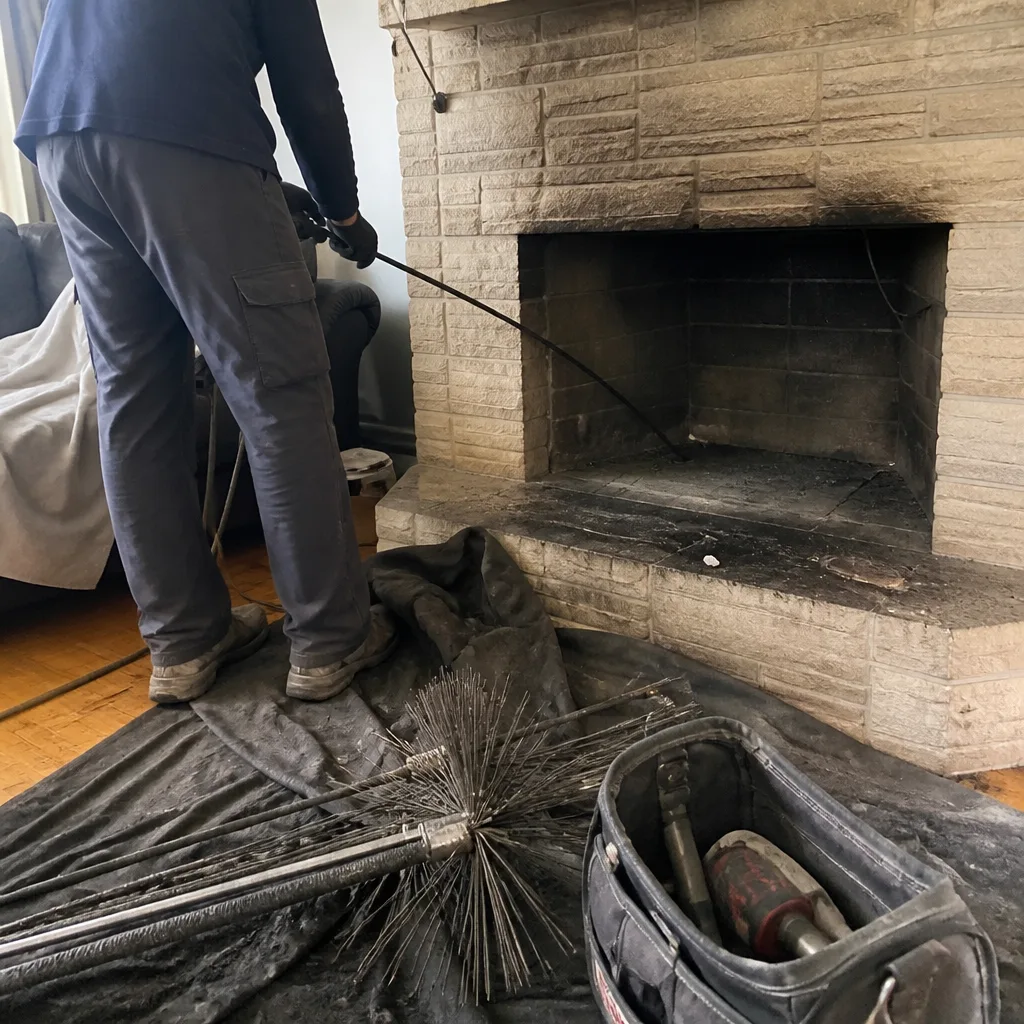 Before
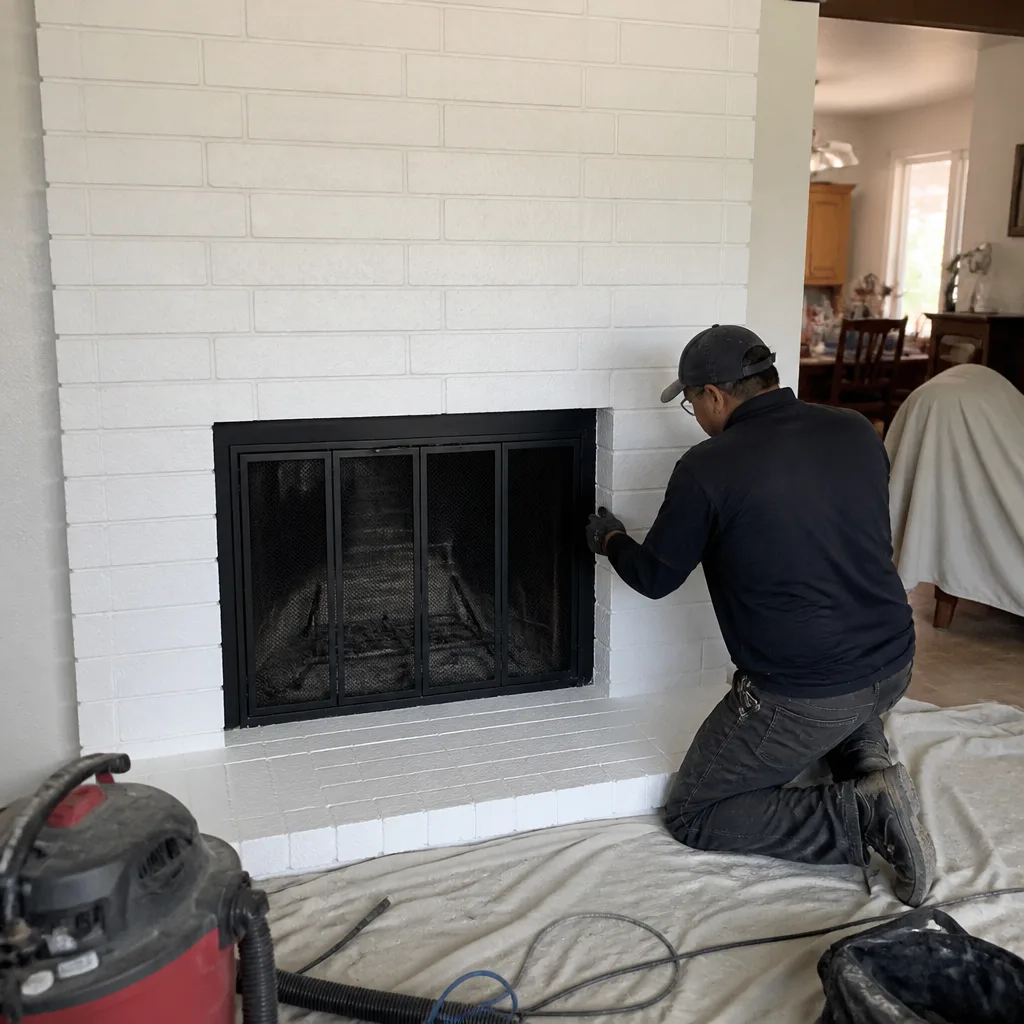 After
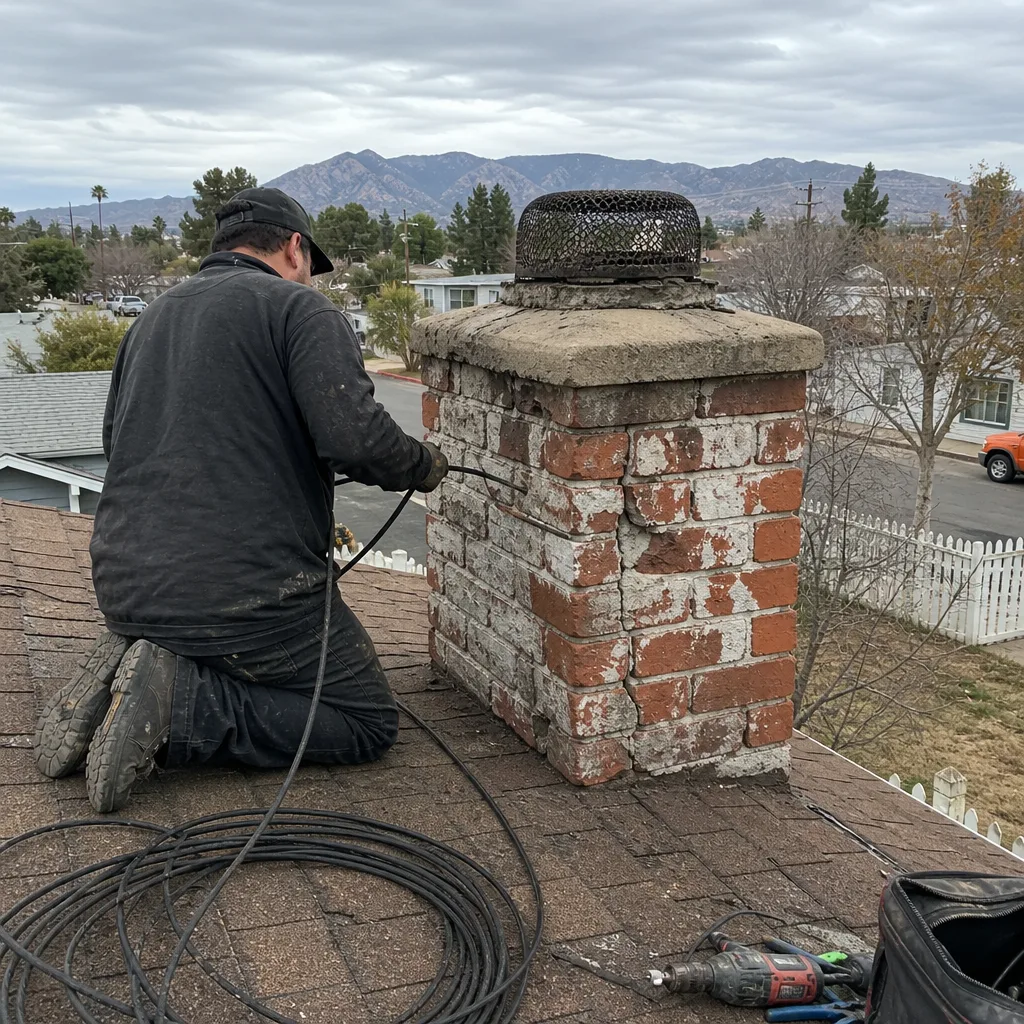 Before
 After
 Before
 After