
Last updated October 30, 2026
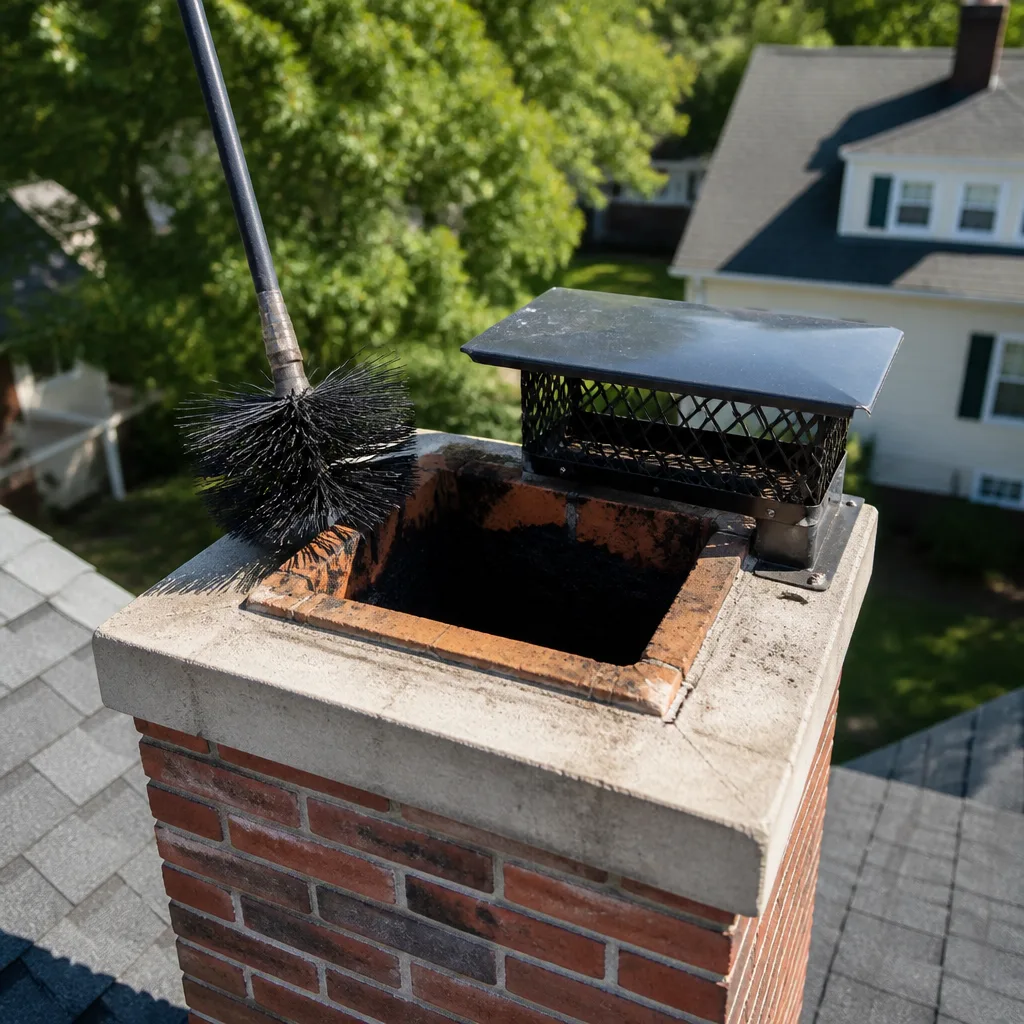 Sweep & inspection
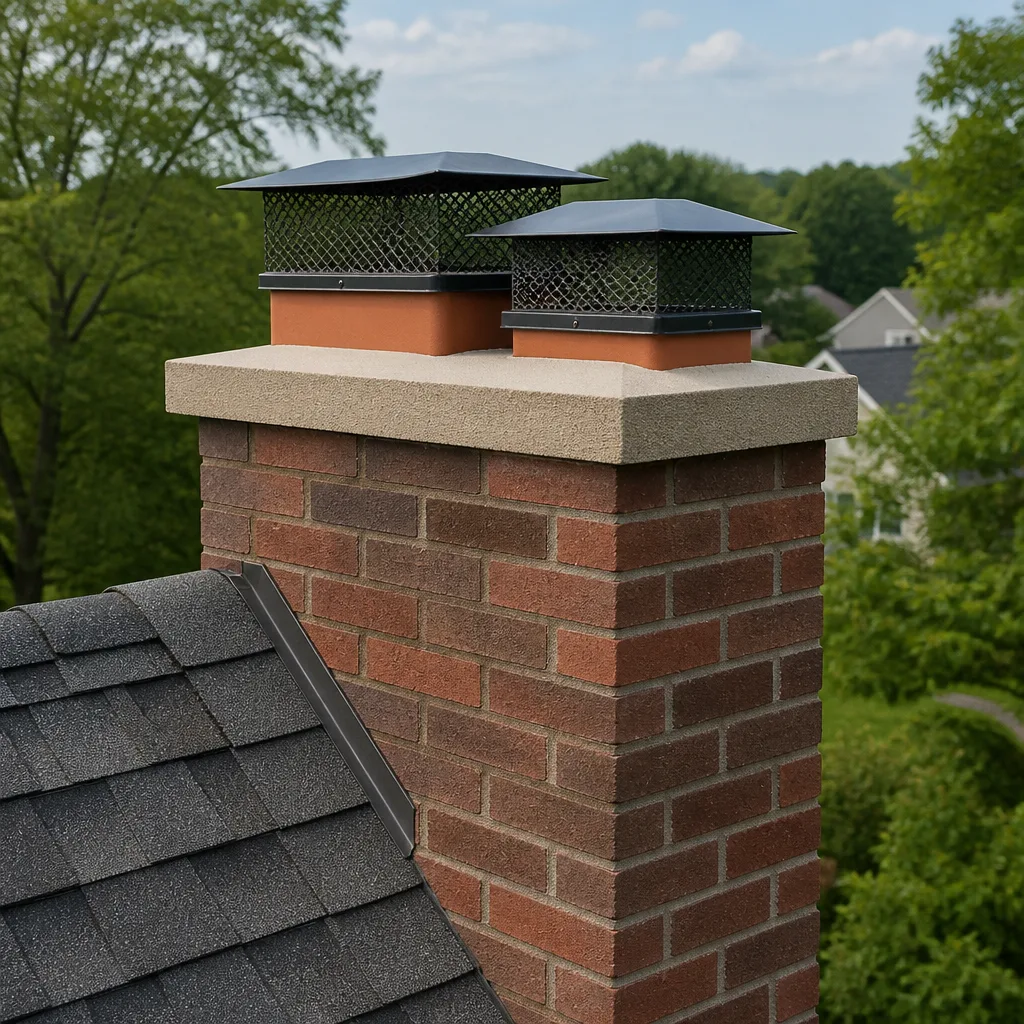 Caps & crowns
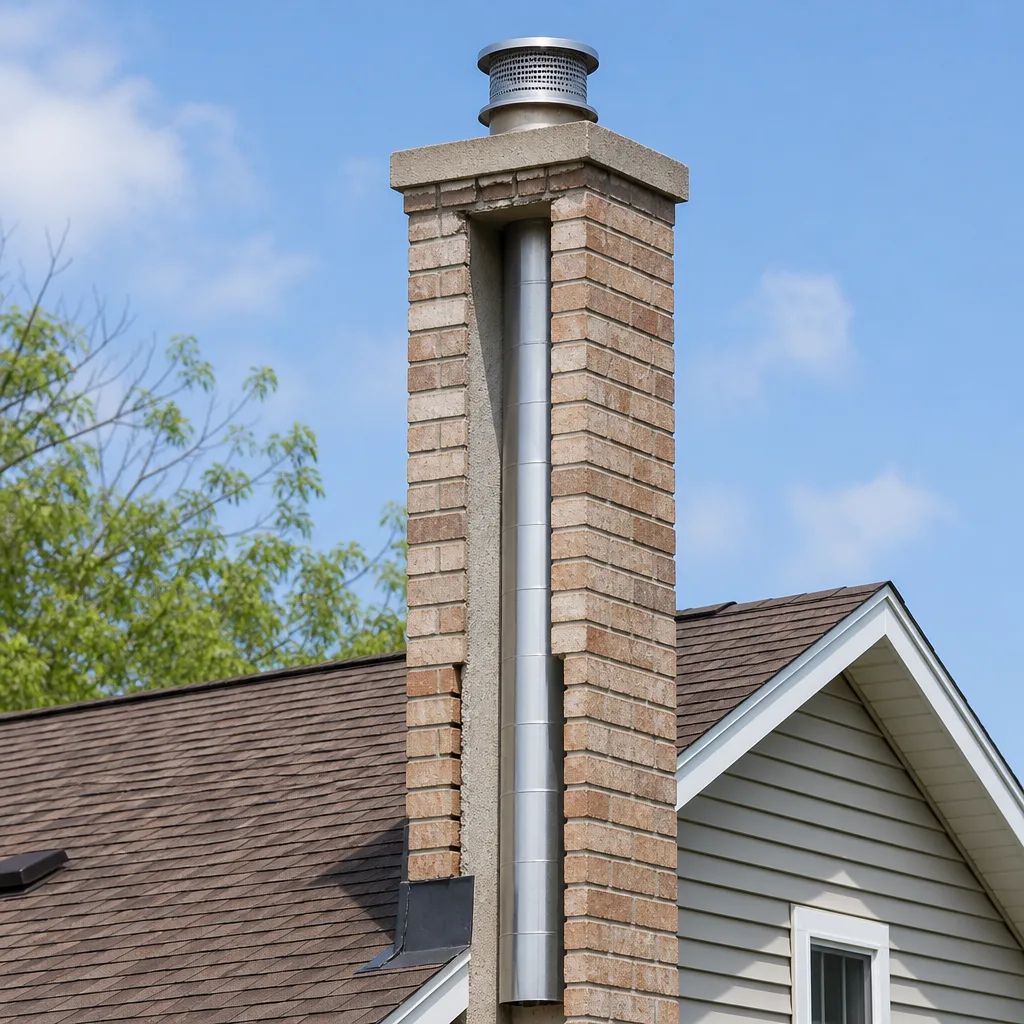 Flue relining
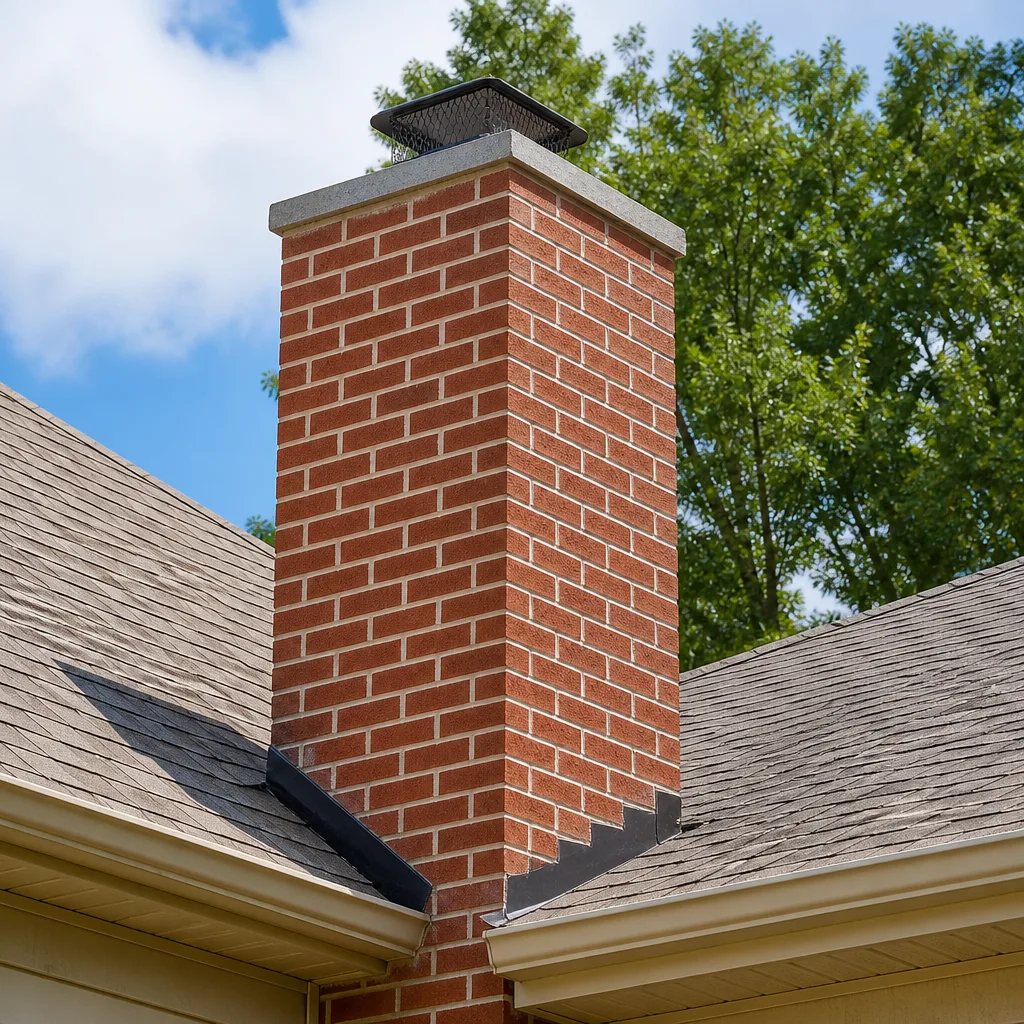 Masonry repair
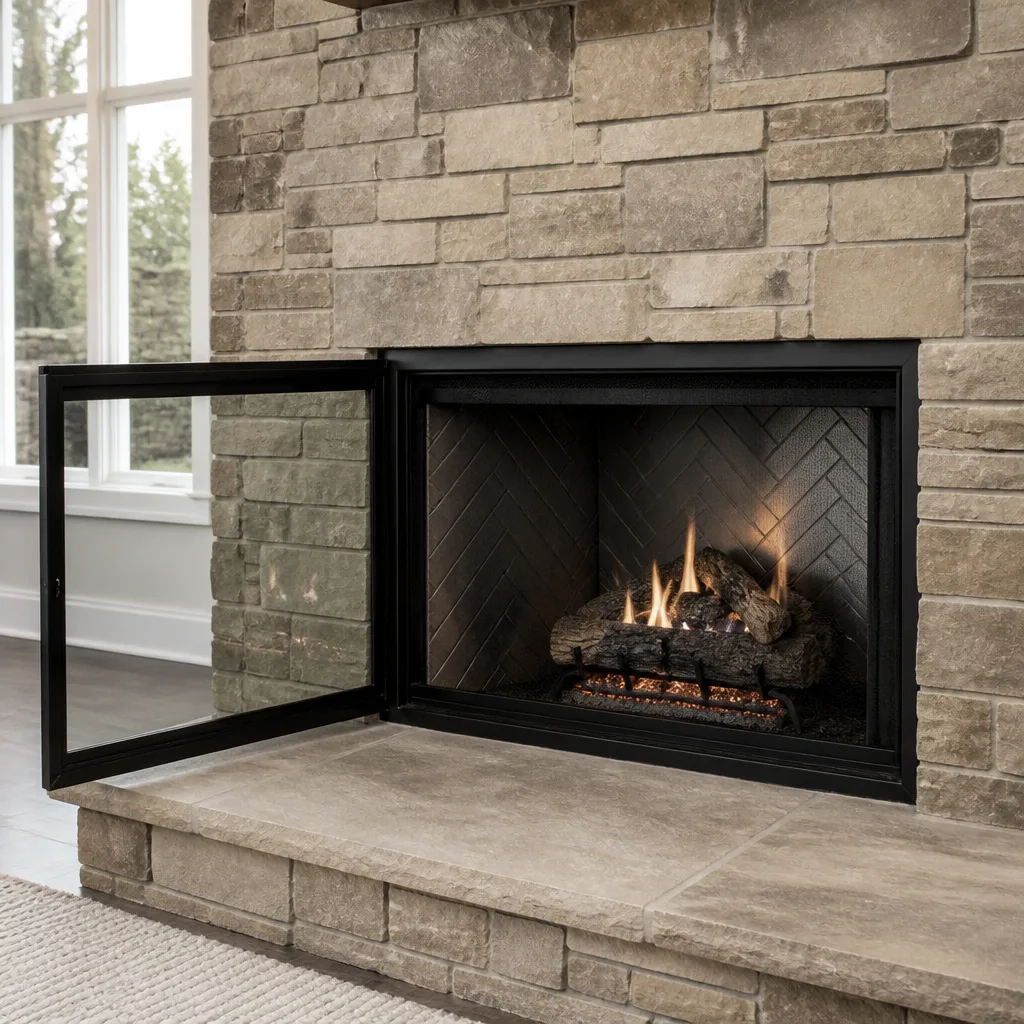 Gas fireplace service
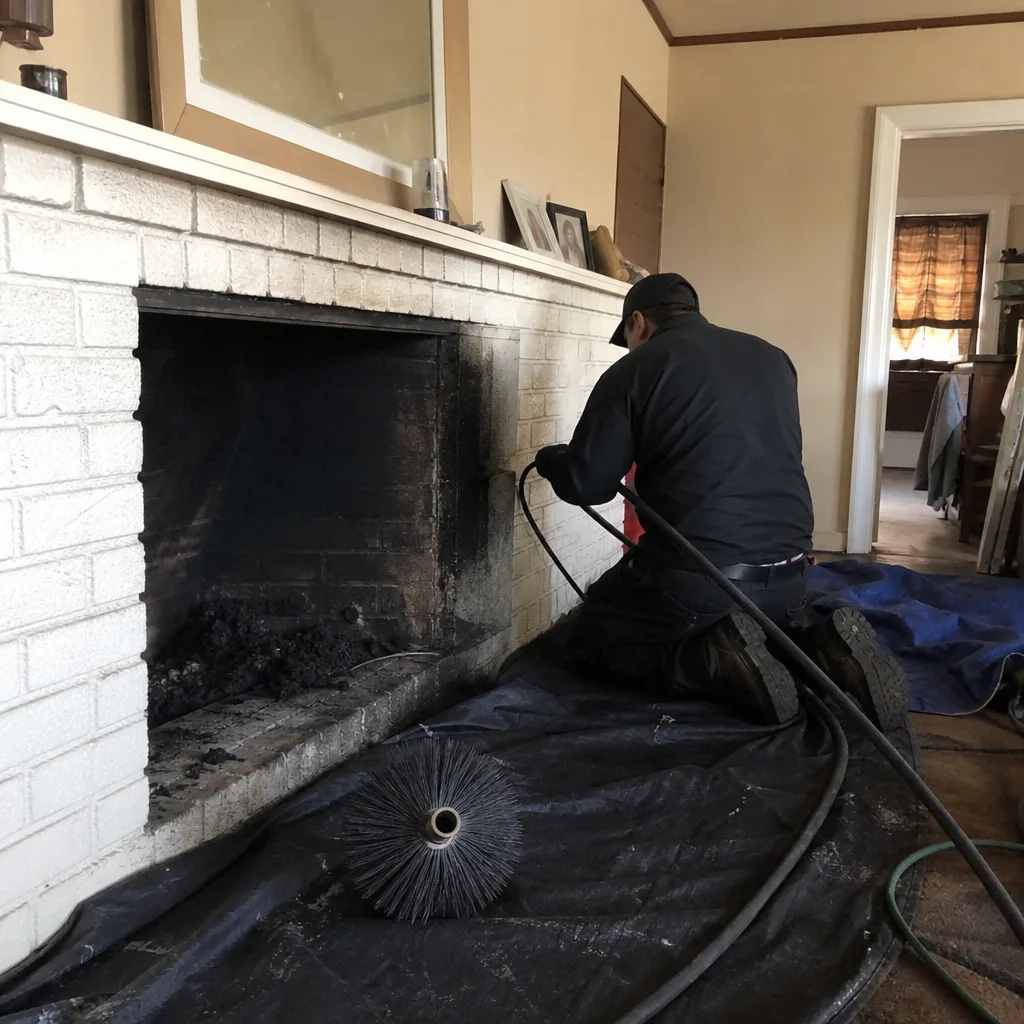
Level 1 sweep and inspection to the NFPA 211 annual standard - flue, crown, cap, and flashing checked and photographed
Chimney sweep logs do not sweep chimneys. They loosen some creosote - which then falls where a brush and vacuum still have to collect it.
The Complete Chimney Sweep Guide for Pomona Homeowners
Most Pomona homeowners fire up their fireplace fewer than 15 times a year. That sparse burn schedule, combined with relentless Santa Ana winds and a housing stock where many chimneys date back to the 1940s through 1970s, creates a set of chimney conditions that national maintenance advice simply doesn’t address. This guide explains what actually collects inside Pomona chimneys, when it collects, and why the standard “sweep once a year” rule can leave real hazards undetected. You’ll learn how to inspect your own chimney between professional Chimney Sweep services, what a proper sweep-and-assess should include, and how to time service around Pomona’s fire season rather than a calendar date.
Styles & brands we work with
Quick Answer
A chimney sweep in Pomona CA typically costs between $189 and $340 for a standard fireplace inspection and cleaning, with older homes from the 1940s through 1970s occasionally needing additional liner assessment. The real question isn’t just when to sweep, but whether your chimney needs a camera inspection, because Pomona’s infrequent burn pattern produces a glazed creosote profile that basic brushing may not fully clear. See DIY vs Professional Chimney Cleaning: The Pomona Homeowner’s Decision Guide to weigh your options. Schedule a sweep before your first fire of the season, not after months of accumulated soot and Santa Ana debris have already settled into the flue.
Table of Contents
- Why Pomona Chimneys Are Different
- What a Sweep-and-Assess Includes
- Pomona Housing Eras and Chimney Conditions
- Santa Ana Winds and Your Chimney
- Creosote Types and What They Mean for Pomona Homes
- A Pomona Seasonal Chimney Checklist
- Common Mistakes to Avoid
- When to Call a Professional
- Frequently Asked Questions
- The Bottom Line
Why Pomona Chimneys Are Different
Pomona sits in a dry, semi-arid climate where homeowners run fireplaces for ambiance on maybe a dozen cool evenings between November and February. That’s a fraction of the burn frequency seen in colder regions, which changes everything about creosote formation. In heavy-use chimneys, creosote builds in thick, soft layers that a standard chimney sweep brush removes fairly predictably. In Pomona, the pattern is different: each fire produces a thin, hot deposit that cools quickly, partially dries, and then gets baked again during the next Santa Ana wind event when warm air moves through the flue. Over the course of 18 to 24 months, these repeated heating and cooling cycles create a denser, glossier creosote that resists basic brushing.
This is the single biggest reason Pomona homeowners shouldn’t blindly follow annual-sweep advice written for climates with real winters. For a deeper look at local best practices, read The Complete Guide to Chimney Cleaning in Pomona. A fireplace that’s only used ten times a season can go two years without heavy soot buildup yet still develop a glaze layer that poses a serious chimney fire risk. The relevant number isn’t how many fires you’ve had since your last sweep. It’s how many heating and cooling cycles your flue has experienced, including days when no fire burned at all but the Santa Anas pushed hot, dry air through the chimney.
What we’ve seen repeatedly in Pomona homes is a three-part pattern: light surface soot from occasional fires, wind-driven debris from Santa Ana events, and a thin but stubborn creosote glaze that standard sweeping misses. A thorough Chimney Sweep in Pomona addresses all three, which is why the service should be framed as sweep-and-assess, not just cleaning. The assessment portion is what catches the glaze layer before it becomes a fire hazard.
This means the inspection interval question looks different here. A household that fires the fireplace eight times between December and February may not need a full sweep every single year. But it does need an annual inspection. In Pomona’s climate, the inspection is the non-negotiable annual service. The sweeping happens when the inspection says it’s needed. That’s not the advice you’ll find on most chimney websites, but it’s the advice that matches what our technicians actually document in Pomona flues season after season.
What a Sweep-and-Assess Includes
A sweep-only visit removes soot. A sweep-and-assess removes soot, then documents the condition of every component that could fail during the next burn season. For older Pomona homes, the difference matters more than it does in a newer subdivision. Here’s what a full-service visit covers:
- Flue brushing with appropriately sized wire or poly brushes, chosen based on whether the flue is clay tile, stainless steel, or masonry. The wrong brush material against a stainless liner causes scratching that accelerates future creosote adhesion.
- Creosote classification after brushing. The technician identifies whether remaining deposits are first, second, or third-degree glazed creosote. Third-degree glaze almost never comes out with brushing alone and typically requires ceramic resurfacing or liner replacement.
- Smoke chamber inspection, the section above the damper that narrows into the flue. In Pomona’s 1940s and 1950s homes, this area often shows cracked mortar and corbelled brick damage that smoke drafting slowly worsens.
- Damper function check, including whether the damper seats fully, whether the handle operates smoothly, and whether rust or warping prevents a tight close. A damper that won’t seal lets conditioned indoor air escape all summer, which is a year-round efficiency problem in Pomona, where air conditioning runs from May through October.
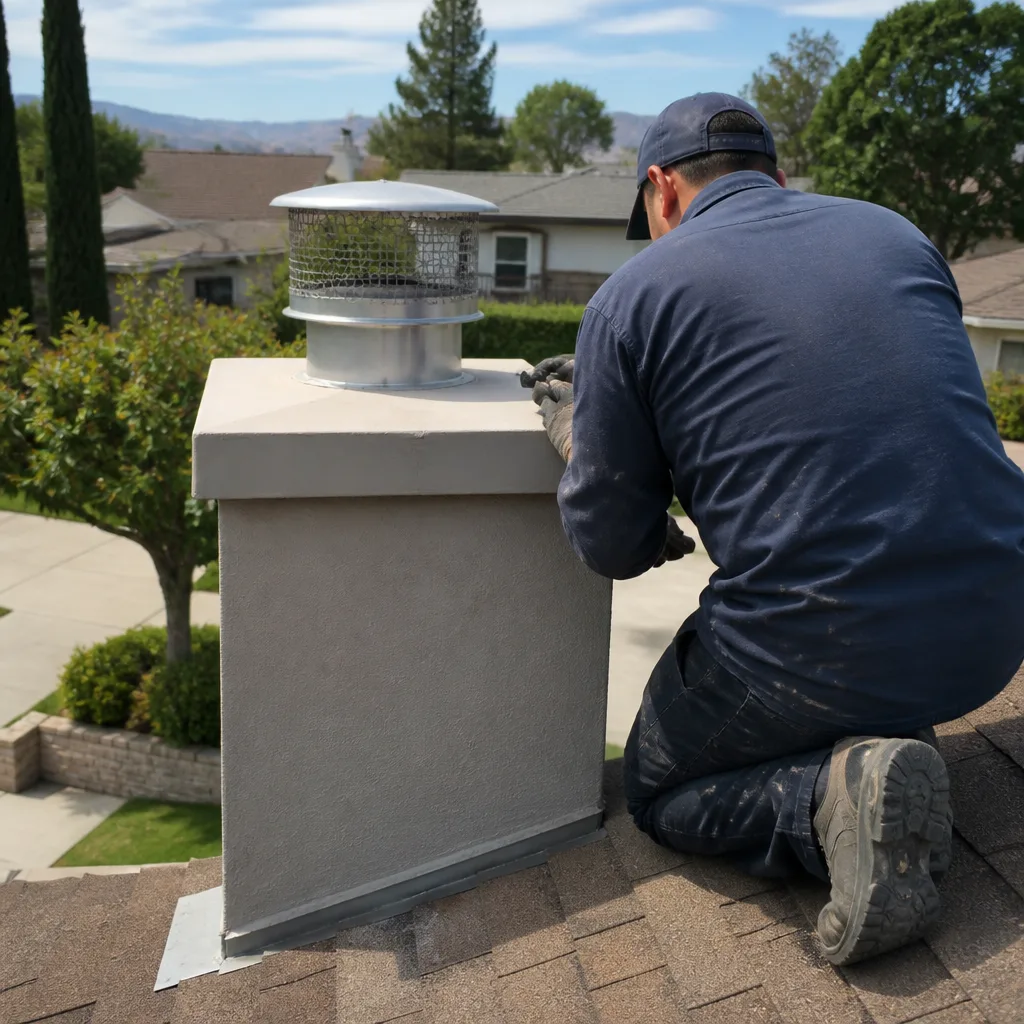
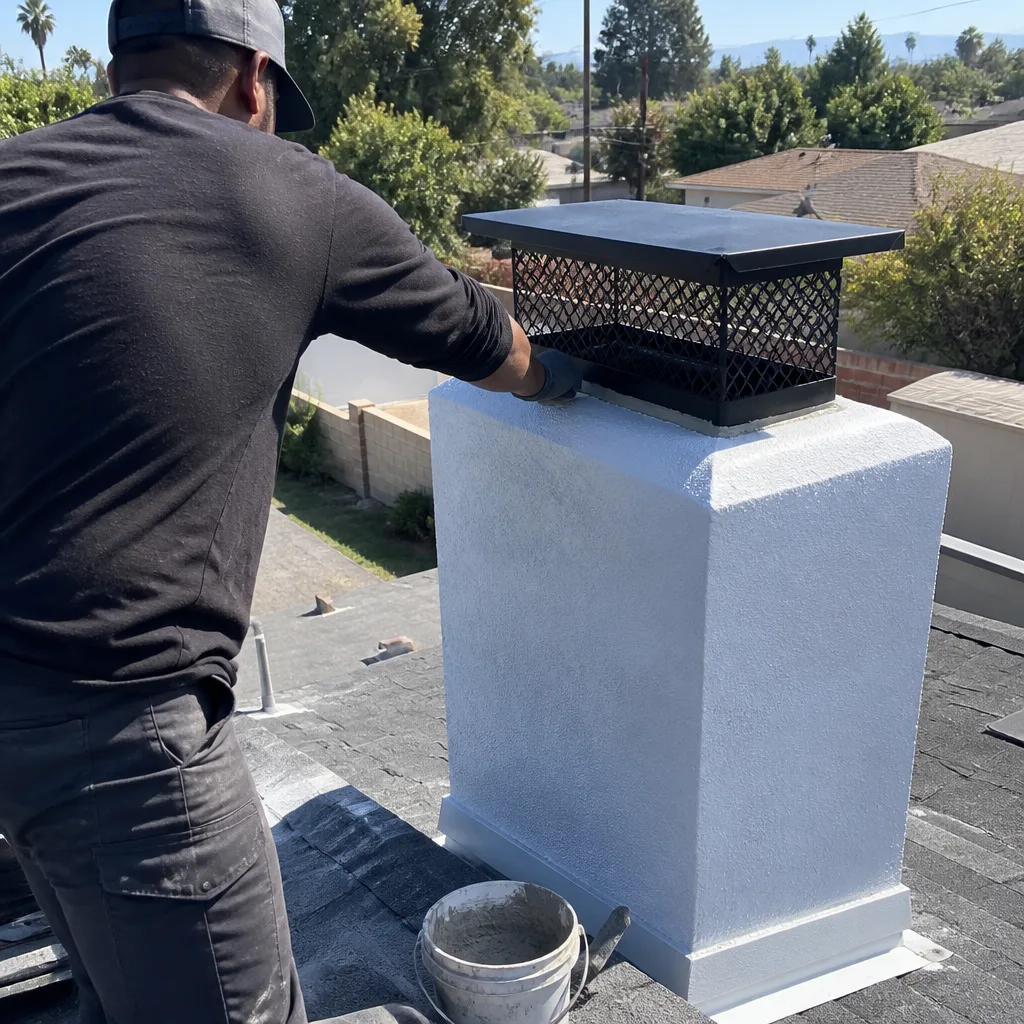
- Cap and crown evaluation. Missing or rusted chimney caps are common in Pomona because Santa Ana winds accelerate metal fatigue. A cracked crown lets water seep into the masonry, and in Pomona’s occasional heavy winter rain events, that water expands and contracts through freeze-thaw cycles that damage brick and mortar.
- Camera inspection of the flue interior. This is the step that turns a visual check into documented evidence. Homeowners see exactly what the technician sees: cracks in clay tiles, separated mortar joints, rusted stainless sections, or sections of missing liner. Nothing gets recommended without footage you can review yourself.
A sweep-only company can’t offer that camera-backed assessment. The crew sweeps, packs up, and moves to the next job. At Lantern Chimney Sweep, the sequence is literally sweep, assess, report. If the camera shows a problem, we can discuss fixes using the professional-supply materials we stock, including HeatShield ceramic resurfacing for eligible flues and DuraFlex liner systems for replacements. The repair happens on the same schedule, not as a referral to another contractor.
Pomona Housing Eras and Chimney Conditions
Pomona’s residential neighborhoods span roughly a century of building practices, and each era brings its own chimney failure patterns. Knowing what era your home falls into tells you what to watch for before anyone even opens the damper.
Pre-1940s Craftsman and Bungalow Homes
Older homes in neighborhoods near downtown Pomona and around Ganesha Park often have unlined brick chimneys or early clay tile liners that predate modern codes. The bricks themselves are typically sound, but mortar deterioration after 80 to 100 years of weather exposure is common. The critical concern in these homes is whether the flue still has an intact liner. Many pre-1940s chimneys in Pomona have fired clay liners with cracked segments that newer sweeps missed during earlier cleanings, either because the crews lacked cameras or because the homeowner wasn’t present to discuss findings.
1940s – 1950s Post-War Construction
The post-war building boom gave Pomona thousands of modest ranch homes with fireplaces built quickly to meet demand. Chimneys from this era typically have terracotta flue tiles, and the failure point is the mortar joints between those tiles. Decades of thermal cycling weaken the mortar, and once a joint opens, heat transfers directly into the surrounding framing. The spacing between flue tiles in 1940s and 1950s Pomona homes is also consistently tighter than modern code allows, which makes camera inspection more technically demanding but arguably more important.
1960s – 1970s Mid-Century Construction
Pomona’s mid-century stock, including tracts in the Phillips Ranch and Westmont areas, introduced prefabricated fireplace units and metal flues. These components have a finite service life of roughly 30 to 50 years, which means many are now past their original design horizon. Prefab units from this era can’t be repaired the same way as masonry chimneys. When a 1960s prefab chimney fails, the options are usually full unit replacement. Catching corrosion and panel separation early, via camera inspection during a routine sweep, sometimes extends the life of these units by several seasons.
1980s and Newer Construction
Newer Pomona construction uses stainless steel liners and modern prefabricated components. These are reliable but not inspection-free. The cap and flashing around the roofline remain vulnerable to Santa Ana wind stress, and dryer vents in these homes often route through walls in ways that make cleaning awkward. Chimney sweeping for newer Pomona homes is generally straightforward. The annual assessment still matters because even new components fail, and warranty claims require documentation that only a professional inspection provides.
Our Chimney Repair in Pomona page covers repair specifics in more detail. For this guide, the takeaway is simple: the age and construction style of your Pomona home dictates what your chimney inspection needs to focus on, and generic annual-sweep advice doesn’t account for those differences.
Santa Ana Winds and Your Chimney
Santa Ana wind events move through Pomona dozens of times each year, typically between September and March. These winds push dry air from the high desert toward the coast, and they interact with chimneys in ways most homeowners never consider. A chimney doesn’t need a fire to experience wind-driven stress. It needs only an opening at the top and another opening at the damper.
During strong Santa Ana events, wind creates a pressure differential across the chimney top. Air moves downward through the flue, carrying with it whatever debris is airborne: leaf fragments, twigs, dust, and fine particulates. In Pomona, where eucalyptus and pepper trees line many residential streets, the debris load is substantial. This material settles in the smoke chamber and on the damper shelf, where it dries in the arid conditions and becomes an accelerant for the first fire of the season.
Wind-driven backdrafts also affect indoor air movement even when the fireplace isn’t in use. A poorly sealing damper allows the pressure differential to pull conditioned air up the chimney, which means your air conditioning works harder during Pomona’s hot months and your heating works harder during the brief cool season. Homeowners in older Pomona homes often notice a faint sooty smell on windy days. That’s the negative pressure drawing chimney residue back into the living space, not an active fire dripping smoke into the room.
The practical mitigation here is a properly fitted chimney cap with a screen that blocks debris without restricting draft. In our experience, Pomona homes with intact caps show dramatically less wind-deposited debris than neighboring homes with missing or damaged caps. When we supply caps, we use Gelco or Copperfield components, which hold up better in sustained Santa Ana conditions than the thinner metal caps sold at home improvement stores. The difference is evident within one season. A cheap cap warps. A professional-grade cap stays seated through repeated wind events.
Creosote Types and What They Mean for Pomona Homes
Creosote is a byproduct of incomplete wood combustion, but not all creosote is equal. Understanding the three stages explains why some Pomona chimneys need nothing more than a good brushing while others need liner work. The stage is determined by inspection, not by guesswork.
- First-degree creosote is a soft, flaky soot that brushes off easily. It’s common in chimneys that burn dry, seasoned wood at adequate temperatures. A properly functioning Pomona fireplace that’s used a dozen times a season may accumulate only first-degree creosote, which is why some homes go 18 months between sweeps without issue.
- Second-degree creosote is a crunchier, granulated deposit that forms when flue temperatures fluctuate. In Pomona, second-degree creosote often appears in chimneys where fires burn short and hot, then cool quickly in the dry air. This stage still brushes off with effort, but it requires more thorough mechanical cleaning than first-degree.
- Third-degree creosote is the glazed, shiny coating that raises immediate concern. It forms when creosote bakes under high heat and then hardens into a tar-like layer. In Pomona’s low-burn-frequency chimneys, third-degree creosote can develop slowly over multiple seasons without ever producing the thick, soft buildup that triggers a standard sweep. A homeowner who fires the fireplace ten times a year for five years can have a flue interior coated in a dangerous glaze while the visible components look perfectly clean.
Third-degree creosote is a fire hazard. The glaze can ignite at temperatures reached during a normal fire, and once burning, it sustains a flue fire that can reach 2,000 degrees Fahrenheit. Clay tile liners crack under that heat. Mortar joints separate. Nearby framing in older Pomona homes sits closer to the chimney than modern clearances allow, which increases the spread risk.
When we encounter third-degree creosote in a Pomona home, brushing alone won’t resolve it. Our options are chemical treatment followed by mechanical removal, or, if the glaze has already caused liner damage, HeatShield ceramic resurfacing. HeatShield applies a ceramic coating directly inside the flue, restoring a smooth interior surface and sealing small cracks without the cost and disruption of a full liner replacement. It’s not right for every chimney, but for many older Pomona homes with early-stage liner damage, it’s the difference between a repair in the hundreds and a replacement in the low thousands.
A Pomona Seasonal Chimney Checklist
This checklist is timed to Pomona’s actual seasonal rhythm, not a generic calendar. Fire season here is a concern from late summer through the first winter rain. The burn season is brief. The months between are when physical damage accumulates unnoticed.
- September: Pre-Santa Ana visual check. Walk the exterior of your home and look at the chimney cap, crown, and flashing. High winds haven’t started in force yet, so this is the calm before the stress. Look for cracked crown mortar, rusted cap screens, or bricks that look wet after the last summer irrigation. Anything loose now will get worse by November.
- October: Schedule your sweep-and-assess. This is the month to book the service, before the holiday rush and before the first fire. A thorough Chimney Sweep in Pomona visit in October leaves the flue ready for whatever burn season brings. The camera inspection during this visit documents the flue interior before winter use.
- November: First fire test. After your sweep, light a small fire with dry wood and watch the draft. Smoke should move up and out without hesitation. A sluggish draft on the first fire usually means the damper isn’t fully open or the cap screen needs adjustment, not that the chimney failed.
- December through February: Burn season. Burn only dry, seasoned hardwood. Green wood or construction scraps create rapidly accumulating second-degree creosote, and in Pomona’s short burn season, a single bad fire can undo the benefit of a clean flue.
- March: Post-season assessment. After the last fire, note how the chimney performed. Was there any smoke spillage? Any unusual odor? Any fires that burned unusually hot? These details help a technician prioritize what to check during next season’s inspection.
- April through August: The dormant months. Keep the damper closed. Check the cap again after spring Santa Ana events. And if you haven’t had your Dryer Vent Cleaning in Pomona done, now is the time. Dryer vents collect lint year-round, and Pomona’s dry air makes that lint exceptionally flammable.
Pairing chimney service with dryer vent cleaning in a single appointment makes practical sense for Pomona homeowners. Both systems collect combustion byproducts and both pose a fire risk when neglected. One visit, two fire hazards addressed.
Common Mistakes to Avoid
- Assuming infrequent use means no buildup. In Pomona’s climate, the opposite is often true. Low burn frequency allows creosote to bake and glaze between fires, which is more dangerous than the soft soot that heavy use produces.
- Skipping the inspection because you skipped the fire. A chimney that sat unused all summer still needs its cap, crown, and damper checked. Santa Ana winds work on the structure whether or not a fire ever burned.
- Using the wrong wood. Burning unseasoned wood or construction lumber shortcuts the combustion process and floods the flue with creosote-forming particulates. In Pomona, where dry hardwood is readily available, there’s no reason to burn anything else.
- Ignoring the damper between seasons. An unsealed damper costs money every month in lost heating and cooling. It also allows wind-driven debris and negative pressure to work against the home year-round.
- Fixing caps with whatever fits. Hardware-store chimney caps warp, rust, and detach under sustained Santa Ana winds. Professional-supply caps from Gelco or Copperfield are sized to the flue and built for the conditions Pomona actually experiences.
- Trusting a visual sweep without camera documentation. A brush through the flue tells you nothing about what the flue walls look like afterward. If a company can’t show you camera footage, you have no way to verify their findings or the absence of liner damage.
- Putting off small repairs to keep costs down. A cracked crown or missing cap that goes unaddressed for two seasons becomes a masonry repair that costs multiples more. Small chimney problems in Pomona grow predictably because the dry climate stresses exposed mortar and metal continuously.
When to Call a Professional
Call a chimney professional when you notice any of the following: smoke spilling into the room during a fire, a sooty odor that lingers even when the fireplace is cold, visible cracks in the chimney crown or mortar joints, rusted or missing cap components, or any fire that burned unusually hot or produced excessive smoke. If you can’t remember the last time the flue was camera-inspected, that’s also a reason to schedule service. Lantern Chimney Sweep offers free estimates in Pomona, call (855) 341-8132 to schedule a sweep-and-assess, and we’ll send a technician with camera equipment and the full set of professional-supply repair materials if anything needs attention.
Frequently Asked Questions
A standard chimney sweep in Pomona CA generally runs between $189 and $340, depending on the flue type, the home’s construction era, and whether camera inspection is included. Older Pomona homes with clay tile liners sometimes cost slightly more because the smoke chamber requires additional attention. Call (855) 341-8132 for an exact quote, estimates are free and we’ll tell you what the price includes before we start.
If you burn fewer than 20 fires per season, the flue may only need a full sweep every 18 to 24 months. The annual inspection, however, should happen every year regardless of burn frequency, because Pomona’s Santa Ana winds and dry climate degrade chimney components even when the fireplace sits cold.
Sometimes a liner can be restored with HeatShield ceramic resurfacing rather than fully replaced. The deciding factors are the extent of cracking, the liner’s age, and whether the underlying structure is sound. We always show homeowners camera footage before recommending either option, and we never recommend replacement when resurfacing would be safe and durable.
If you skip sweeping, creosote accumulates and eventually reaches a stage where a routine fire can ignite it. If you skip inspection, you miss structural problems like cracked crown mortar or detached caps, which worsen through wind seasons and rain cycles. The costs of ignored chimney problems in Pomona rise steadily, never stay flat, and get called only after they’ve become visible, expensive, or dangerous.
Yes. Santa Ana winds create pressure differentials that push debris downward through the chimney and pull conditioned air upward into the flue. This happens whether or not a fire is burning. Homes near Pomona’s open corridors and canyons experience this effect more forcefully than sheltered neighborhoods.
Yes. Lantern Chimney Sweep handles both chimney sweeping and dryer vent cleaning, which means a single appointment covers two of the leading residential fire hazards. We use the same trade-standard components for both, including Famco-compatible vent parts. It’s the practical way to handle whole-home combustion safety in one trip. Explore more guides & resources on keeping your Pomona home safe.
The Bottom Line
Pomona chimneys live a different life than chimneys in cold climates. Low burn frequency, Santa Ana wind exposure, and aging housing stock combine to create inspection needs that the standard annual-sweep rule doesn’t cover. The annual inspection is the real non-negotiable service. The sweep happens when the inspection says it’s time. Camera documentation matters because it turns findings into evidence you can see. Small repairs, handled early, keep Pomona fireplaces safe without five-figure rebuilds. Pairing chimney work with dryer vent service makes the visit complete. Call (855) 341-8132 or visit the Lantern Chimney Sweep home page to schedule your sweep-and-assess before the next Santa Ana season arrives.
Written by the team at Lantern Chimney Sweep, serving Pomona since 2013.
See the difference
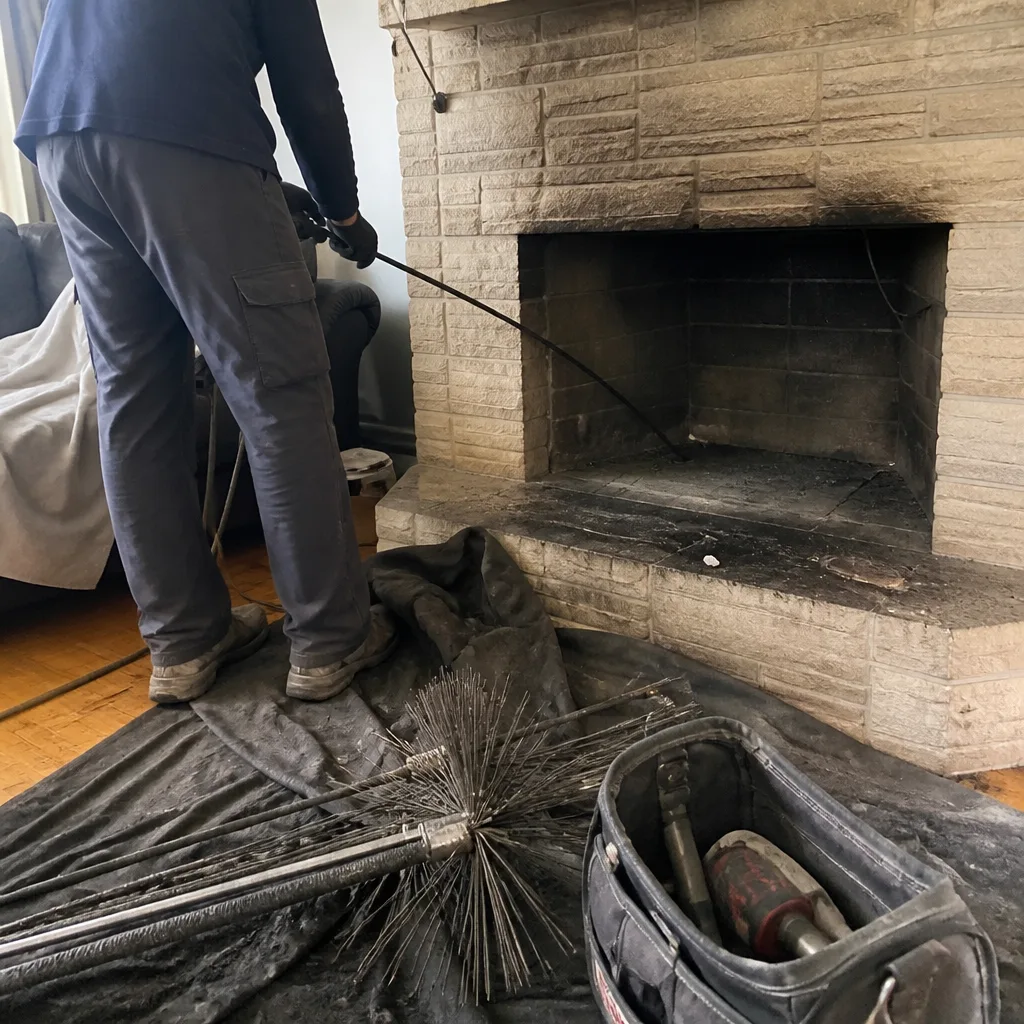 Before
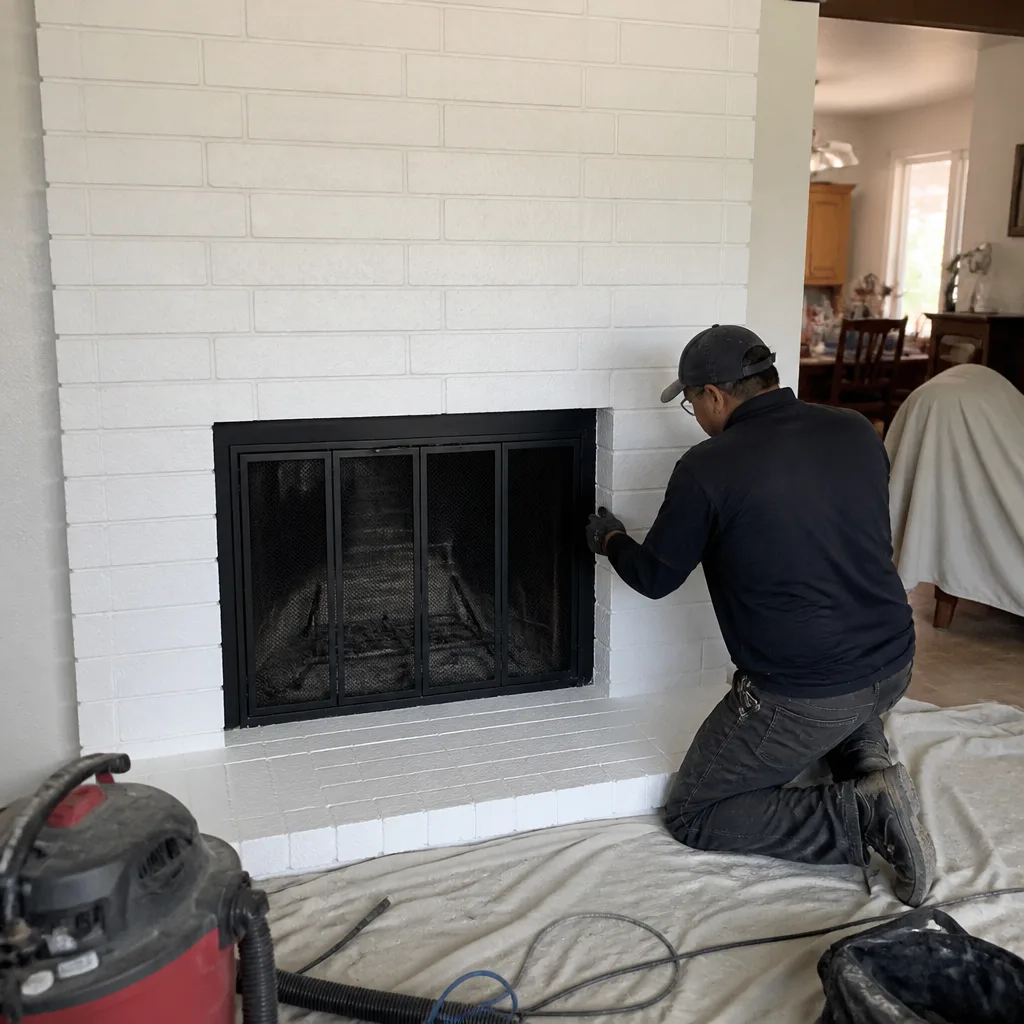 After
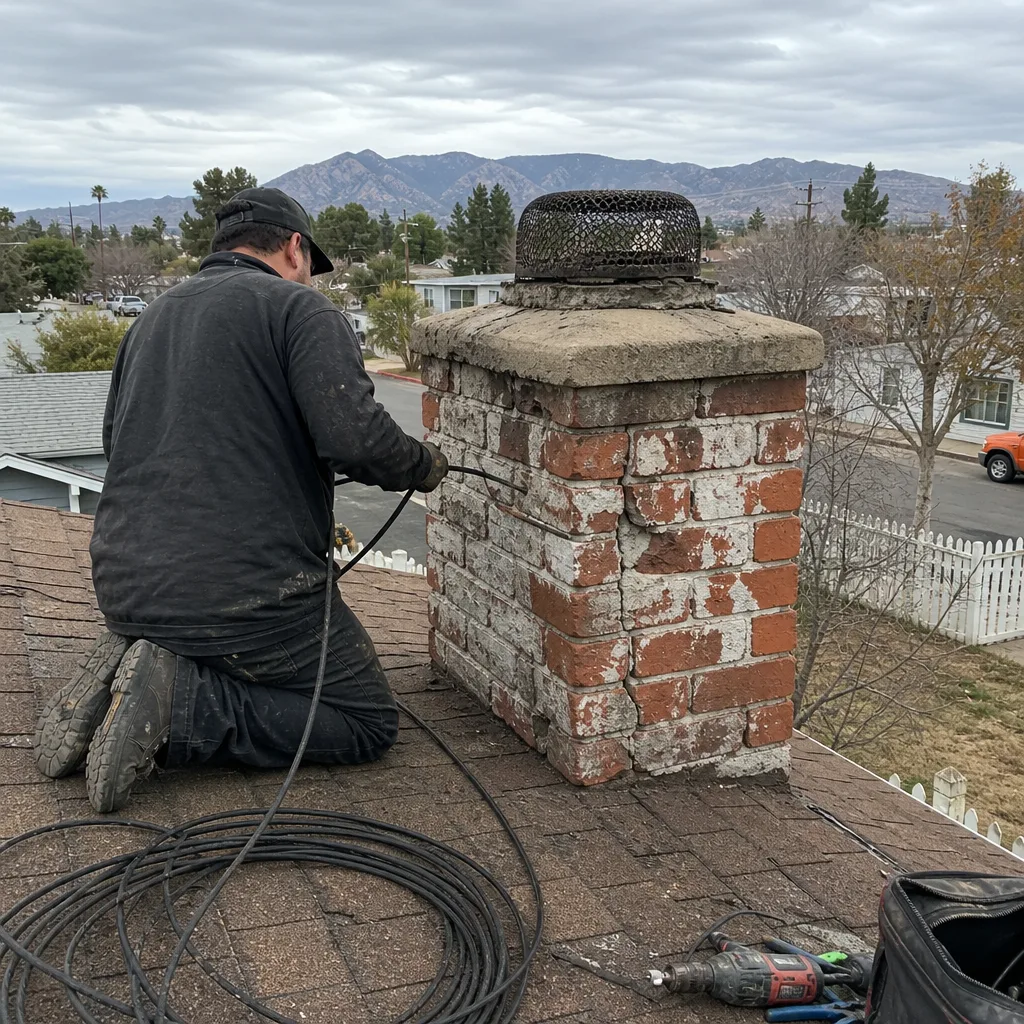 Before
 After
 Before
 After