
Last updated October 30, 2026
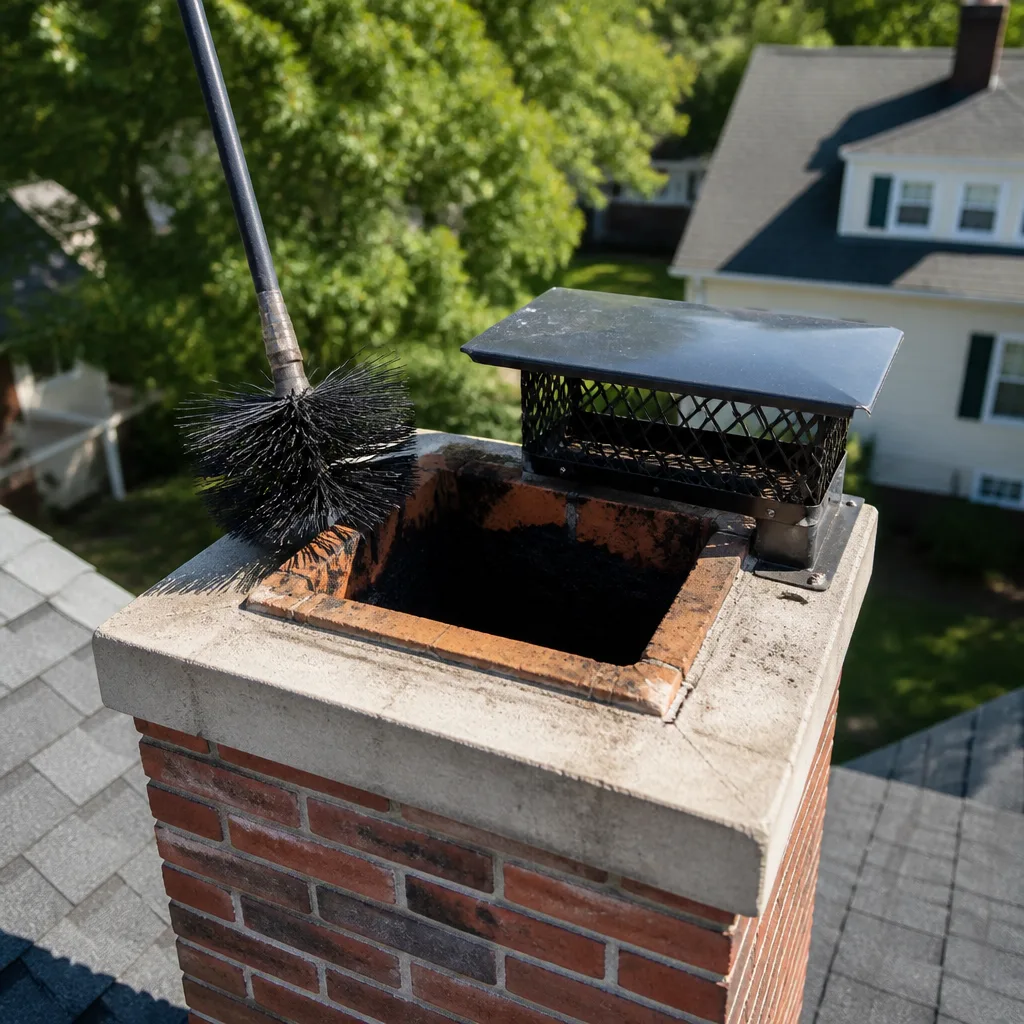 Sweep & inspection
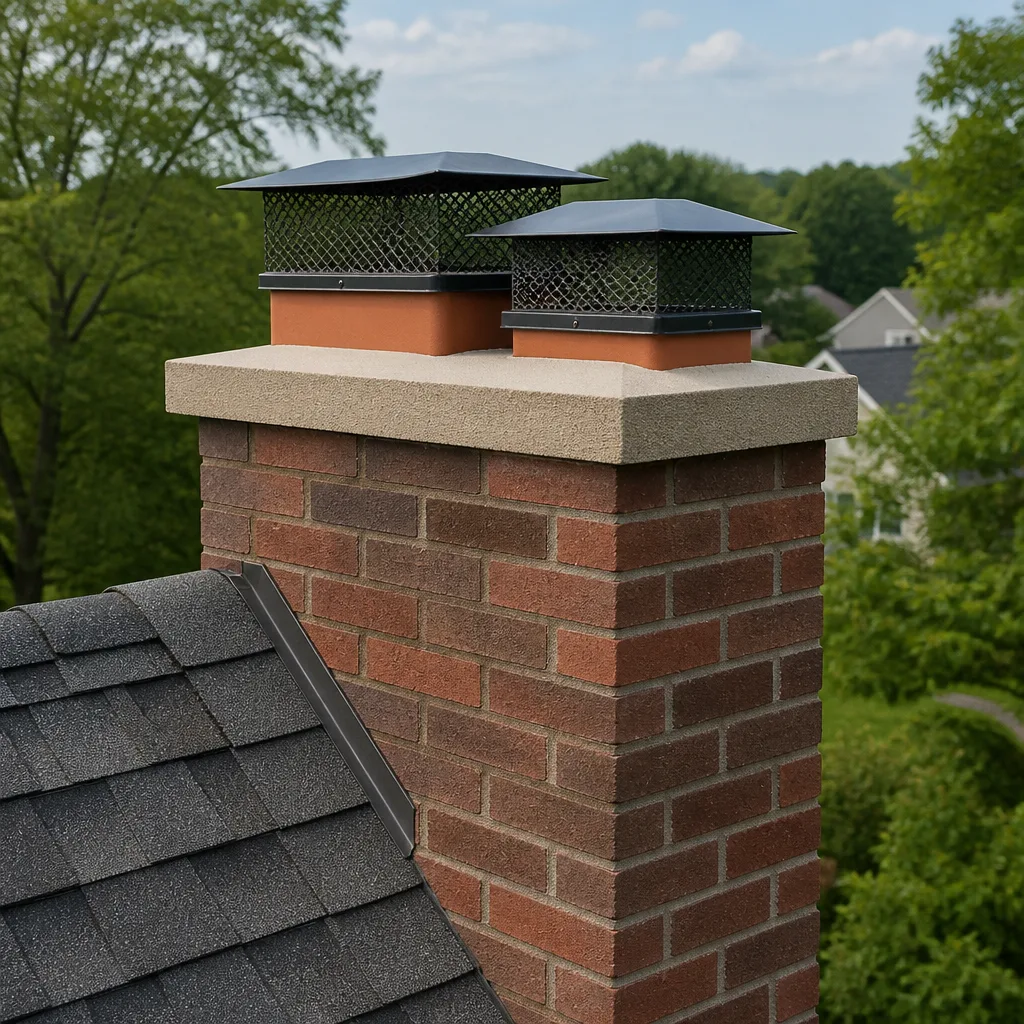 Caps & crowns
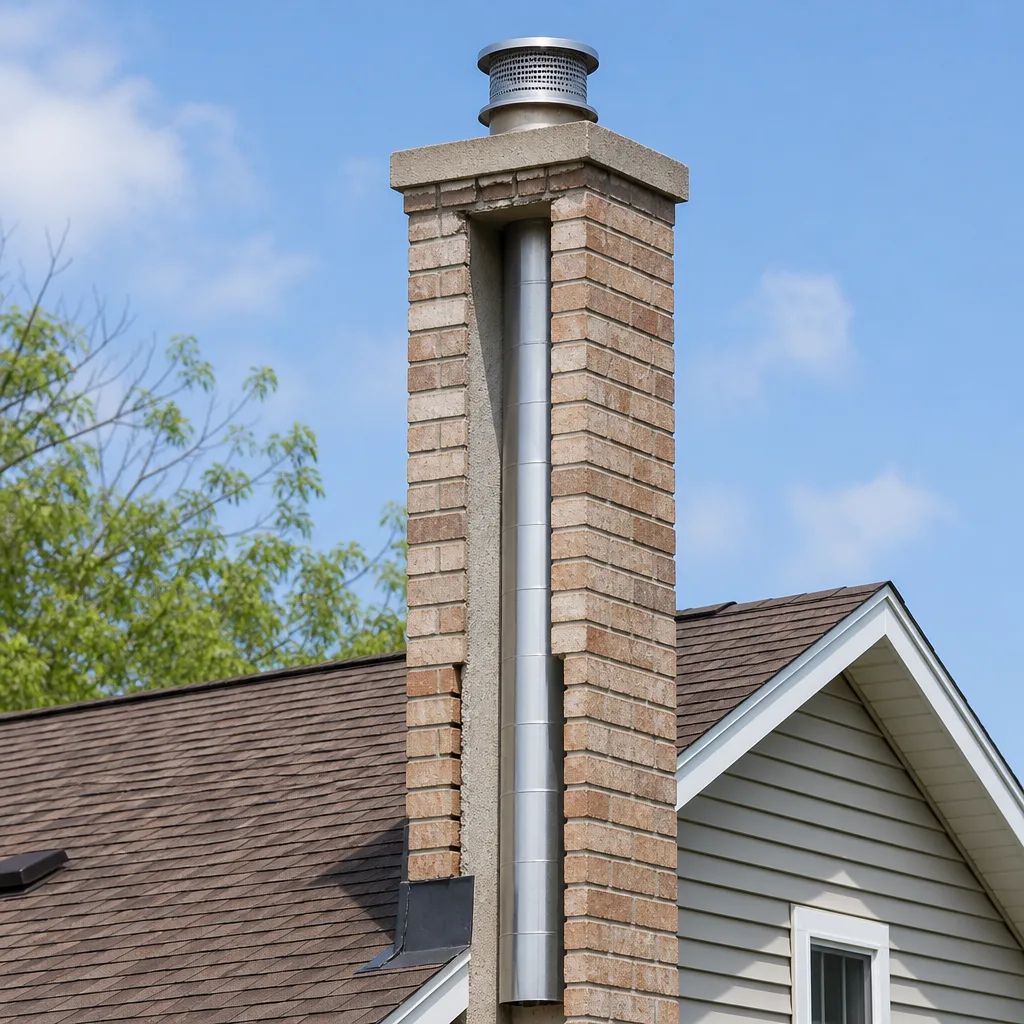 Flue relining
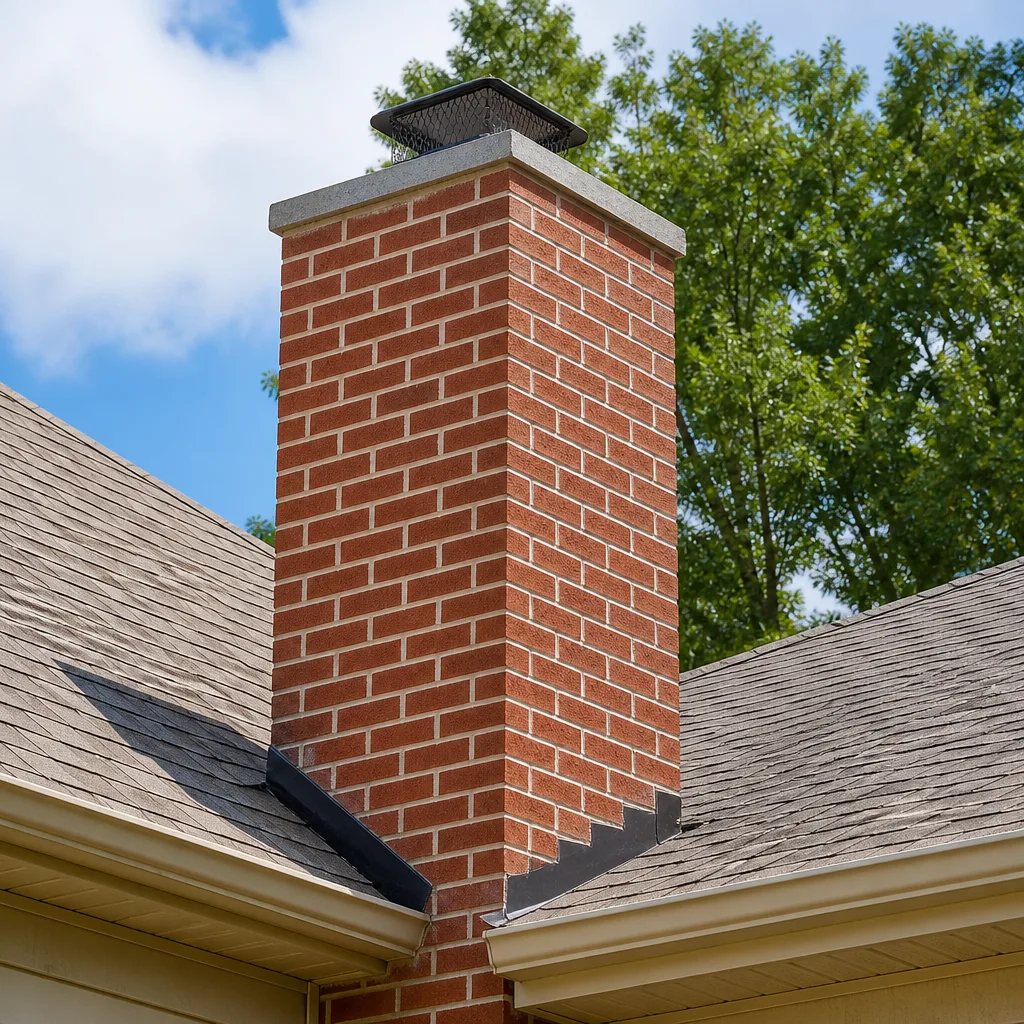 Masonry repair
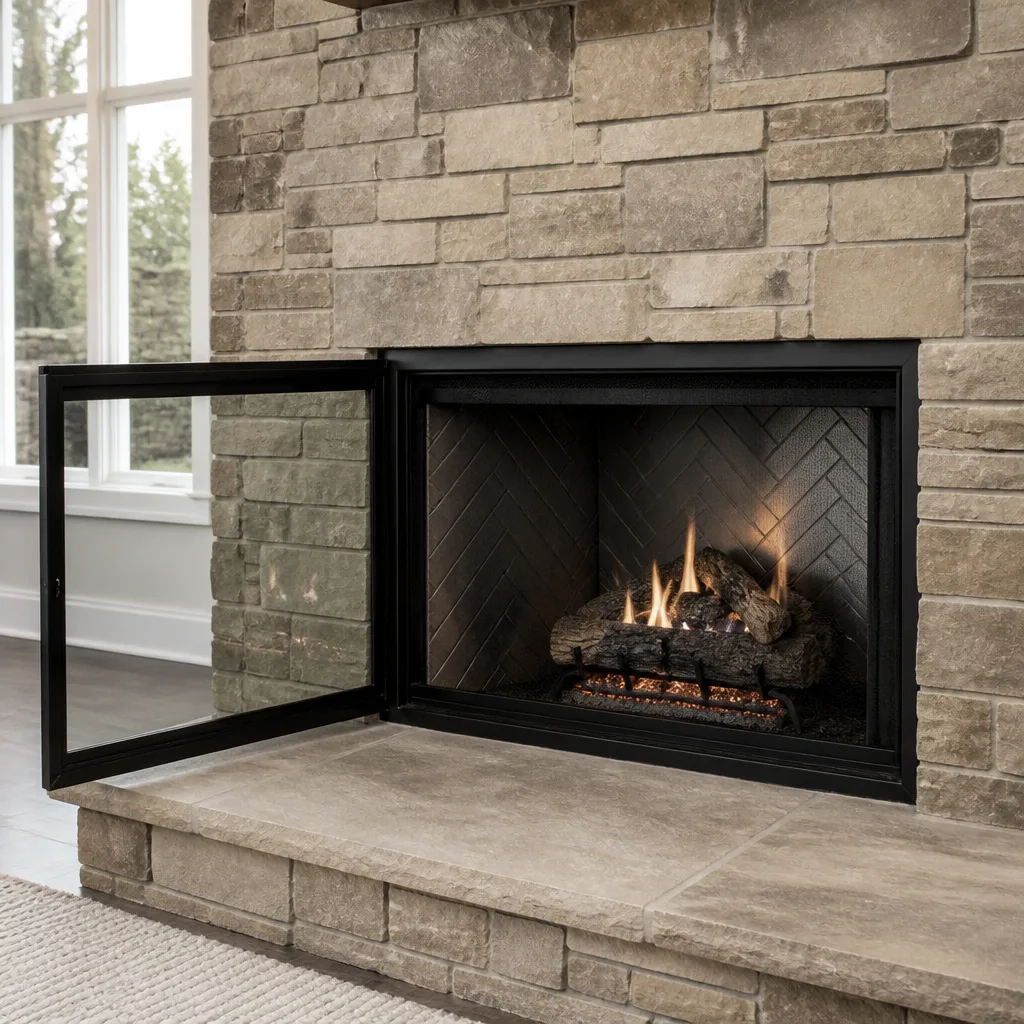 Gas fireplace service
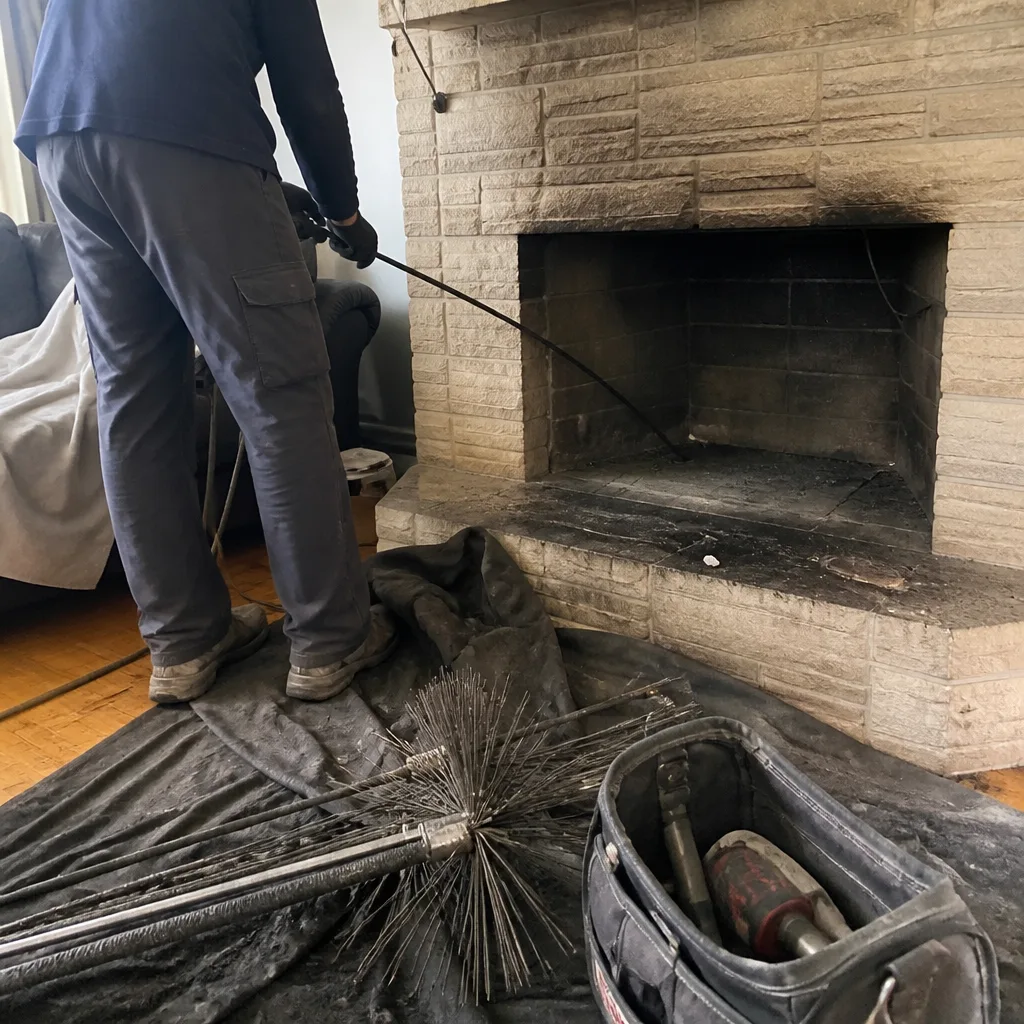
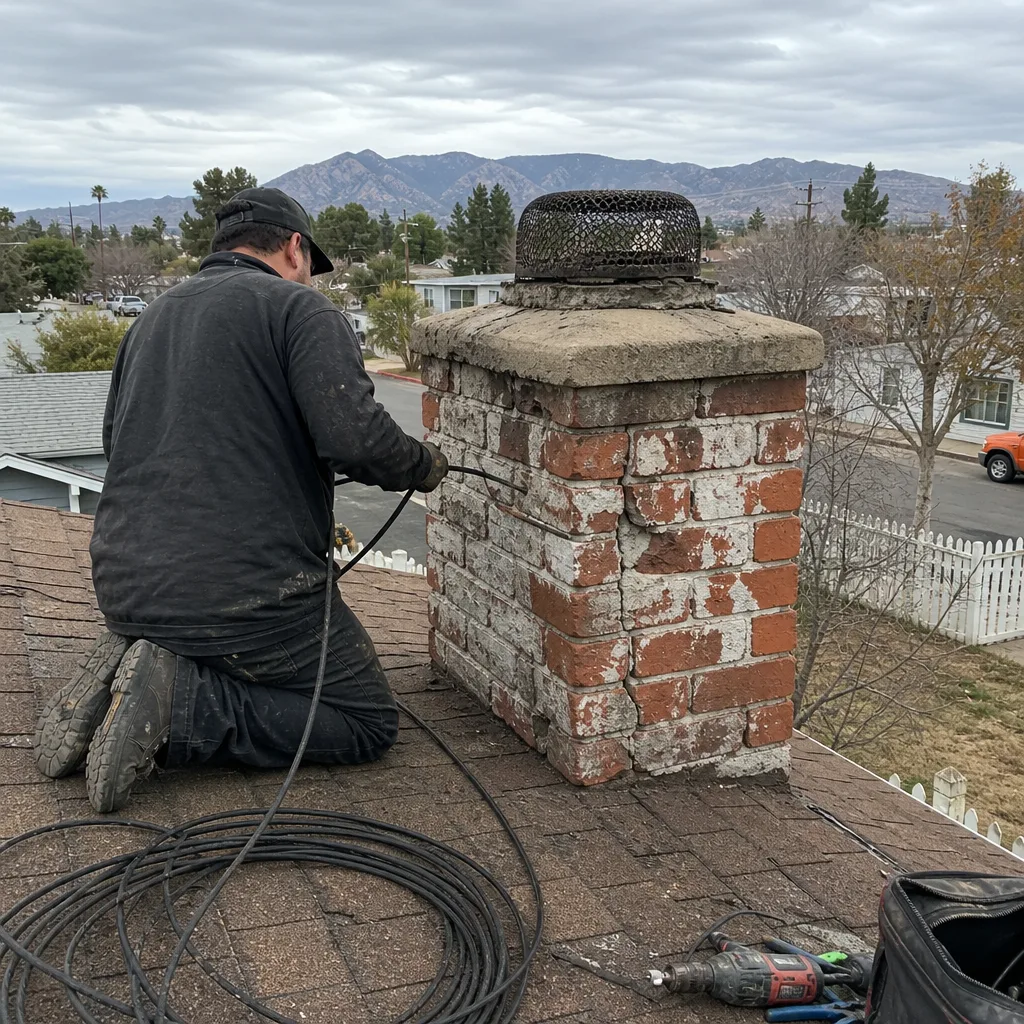
Level 1 sweep and inspection to the NFPA 211 annual standard - flue, crown, cap, and flashing checked and photographed
Chimney sweep logs do not sweep chimneys. They loosen some creosote - which then falls where a brush and vacuum still have to collect it.
The Complete Guide to Chimney Cleaning in Pomona
Most chimney fires don’t start during heavy use. They ignite on the second or third fire of the season, when a summer’s worth of animal nesting, moisture intrusion, and dried creosote meets the first real heat. Pomona homeowners who “barely use” their fireplace are often the most at risk, because the chimney sits dormant for months while the Inland Empire’s hot, dry air bakes whatever is inside it into something brittle and flammable. This guide maps what Pomona chimneys actually face, why generic cleaning advice misses the mark here, and how to make a cleaning appointment that actually protects your home rather than just checking a box. For seasonal chimney cleaning care for Pomona, see our year-round homeowner’s guide.
Styles & brands we work with
Quick Answer
Chimney cleaning in Pomona typically costs between $180 and $350 for a standard sweep with a Level 1 inspection, and should be scheduled annually before the first fall fire. Because Pomona’s hot, dry summers accelerate creosote drying and cracking, the city’s older housing stock often needs a Level 2 camera inspection rather than a basic visual check, especially after Santa Ana wind events. A legitimate full-service cleaning includes brushing, camera inspection, draft testing, and smoke chamber assessment, not just a brush run up the flue.
Table of Contents
- Why Pomona Chimneys Face a Different Risk Profile
- How Often Should You Clean a Chimney in Pomona?
- Level 1, 2, and 3 Inspections: Which One Does Your Pomona Home Need?
- Gas Fireplace Chimneys in Pomona: Why They Still Need Cleaning
- Chimney Liner Condition in Older Pomona Homes
- What a Legitimate Full-Service Cleaning Actually Includes
- What Does Chimney Cleaning Cost in Pomona?
- Common Mistakes to Avoid
- When to Call a Professional
- Frequently Asked Questions
- The Bottom Line
Why Pomona Chimneys Face a Different Risk Profile
Pomona sits in the eastern San Gabriel Valley, where summer temperatures routinely push past 95 degrees for weeks at a time and humidity stays low. That climate does something specific to chimneys that coastal guides never mention: it dries creosote faster and harder. In a humid coastal climate like Long Beach or Huntington Beach, creosote stays tacky and sticky for months. In Pomona, the same creosote bakes into a hard, glassy glaze that cracks and flakes. Those flakes ignite at lower temperatures than fresh creosote, and they feed a hotter, faster-burning chimney fire.
We’ve swept chimneys in Pomona where the creosote glazing was so brittle it shattered like peanut brittle when touched. That’s not normal wear. That’s a climate effect. And it changes the urgency of fall inspections here. A chimney that sat idle from March through October in Pomona is not the same as one in Orange County. The internal conditions have evolved differently.
Santa Ana winds add another local variable. When those winds push dry air through the passes, they pull air down chimneys and create pressure shifts inside the flue. Loose mortar, cracked tiles, and old bird nests get dislodged and repositioned. Debris that was safely packed in the smoke chamber in May can be sitting directly above the damper by October. That’s why a simple visual check from the firebox isn’t enough in Pomona. You need eyes inside the flue.
How Often Should You Clean a Chimney in Pomona?
The National Fire Protection Association (NFPA 211) recommends an annual inspection and cleaning as needed for any chimney in regular use. In Pomona, we treat that annual visit as the floor, not the ceiling. Here’s why:
- Wood-burning fireplaces used more than twice a week during winter need a sweep every year, no exceptions. Creosote accumulation in an active Pomona wood-burning fireplace can reach a quarter-inch of buildup in a single season.
- Occasional-use fireplaces (a fire every weekend in December and January) should still be swept annually. The risk isn’t less buildup. It’s buildup that has been baked, cracked, and dislodged during the idle months.
- Gas fireplaces in Pomona should be inspected every 2 to 3 years, with a sweep when debris or vent restrictions are found. More on this in the gas section below.
- Chimneys that show visible efflorescence (white staining on exterior brick) or spalling (flaking brick faces) may need more frequent attention because water intrusion accelerates internal deterioration.
If you just bought a home in Pomona and have no record of when the chimney was last cleaned, schedule a sweep with a Level 2 inspection before the first fire. Our step-by-step guide on hiring a chimney cleaning contractor in Pomona can help you choose the right company. We see too many cases where a new homeowner assumes the chimney is fine because the previous owner “never had any problems.” A camera inspection often reveals years of deferred maintenance.
Level 1, 2, and 3 Inspections: Which One Does Your Pomona Home Need?
Chimney inspections come in three levels defined by the NFPA. Most Pomona homeowners should understand the difference because choosing the wrong level leaves risk on the table.
- Level 1 inspection: A visual check of the readily accessible portions of the chimney. The sweep looks at the firebox, damper, smoke chamber (if visible), and the top of the flue from the roof. This is appropriate when the chimney has not changed in use or structure and there are no known problems. If you get a cleaning every year and nothing has changed, a Level 1 is typically sufficient.
- Level 2 inspection: Everything in a Level 1 plus a camera scan of the flue interior, a check of accessible attic and crawl space areas, and an evaluation of the chimney’s clearance to combustibles. A Level 2 is required when you buy or sell a home, after a chimney fire, after a seismic event, after a significant storm, or when you change fuel types (wood to gas, for example). After Santa Ana wind events in Pomona have shifted or dislodged flue tiles, a Level 2 is the minimum we recommend.
- Level 3 inspection: The most invasive level, involving removal of building components to access concealed areas. This is only appropriate when a Level 2 reveals a suspected problem that requires destructive access to confirm. Level 3 inspections are rare for routine maintenance and are typically coordinated with repair work.
In Pomona, where many homes were built between 1950 and 1980, we frequently recommend Level 2 inspections for first-time customers. The chimneys are old enough to have original clay liners with years of thermal stress, and the camera reveals what a visual check cannot. If you’re unsure which level applies to your situation, a Chimney Sweep in Pomona can assess your specific chimney during a free estimate visit.
Gas Fireplace Chimneys in Pomona: Why They Still Need Cleaning
Here’s a point most basic chimney guides skip entirely: gas fireplace chimneys in older Pomona homes still accumulate debris and require cleaning. The assumption that gas equals maintenance-free is wrong, and it’s a costly one.
Gas fireplaces vent combustion byproducts through a flue that was often originally designed for wood burning. When homeowners convert from wood to gas inserts or log sets, the existing flue usually gets a metal liner installed. But that liner sits inside the original chimney structure, which still has the same exposure to weather, animals, and age.
What we find in Pomona gas chimneys:
- Bird nests and nesting debris built during spring and summer months. Pomona’s tree-lined neighborhoods around Phillips Ranch and Ganesha Hills provide excellent habitat for chimney-nesting birds.
- Crushed or disconnected liner sections from thermal expansion and contraction during the Pomona Valley’s wide daily temperature swings.
- Corroded interior components from the slightly acidic condensate that gas appliances produce. This condensation is worse in homes that use the gas fireplace frequently.
- Accumulated soot and pet hair that finds its way into the vent path and restricts airflow, especially in homes that also have pets. Restricted vents create incomplete combustion and carbon monoxide risk inside the living space.
A gas chimney in Pomona should be inspected with a camera at least every two to three years, even if the fireplace “works fine.” The danger with gas appliances is that they don’t produce visible smoke to warn you when venting fails. Carbon monoxide is odorless and invisible, and a partially blocked gas flue is a silent problem. For homes that run a clothes dryer regularly, we recommend pairing the chimney inspection with Dryer Vent Cleaning in Pomona to address both vented combustion appliances in a single visit.
Chimney Liner Condition in Older Pomona Homes
Pomona’s housing stock tells a story about liner condition. A significant portion of the city’s single-family homes were built before 1980, meaning original clay tile liners have been in service for 40 to 70 years. Clay tile liners crack. They crack from thermal shock, from chimney fires, from seismic activity, and from simple age. When a clay tile liner cracks, the chimney loses its separation between combustion heat and the home’s framing.
Here’s what liner condition means for cleaning frequency and method in Pomona:
- Cracked liners require gentler brushing. A standard wire brush run against a cracked clay liner can enlarge the damage. That’s why we assess liner condition before we sweep, not while we sweep.
- Liner damage changes cleaning recommendations. If a Level 2 camera inspection in a Pomona home reveals cracked tiles or missing mortar joints, the priority shifts from cleaning to repair. Sweeping a chimney with a compromised liner doesn’t make it safe. It just makes it clean and still unsafe.
- Older liners absorb more creosote. Clay tile is porous. Over decades, creosote becomes embedded in the tile surface, making it harder for a brush to remove all residue. Homes with 50-year-old liners often retain more creosote after cleaning than homes with newer stainless liners.
When liner damage is found, home owners have options. Full relining is one path, but it’s not the only one. For eligible flues, Chimney Repair in Pomona can include ceramic resurfacing with HeatShield, a system that restores liner integrity without a full tear-out and reline. The material is applied as a ceramic coating that seals cracks and joints, restoring a smooth, insulated surface inside the existing flue. Not every chimney qualifies, but when it does, the difference in cost and disruption compared to full relining is significant.
For chimneys that do require full relining, we specify DuraFlex stainless steel liners, a professional-grade system that restoration contractors trust. Hardware-store flex pipe doesn’t carry the same clearances or longevity, and in a Pomona home where the liner runs through a tightly framed chase, material quality matters.
What a Legitimate Full-Service Cleaning Actually Includes
There’s cleaning, and then there’s cleaning with an assessment attached. In Pomona, where chimney condition varies widely from neighborhood to neighborhood and home to home, the difference matters. A legitimate full-service cleaning includes:
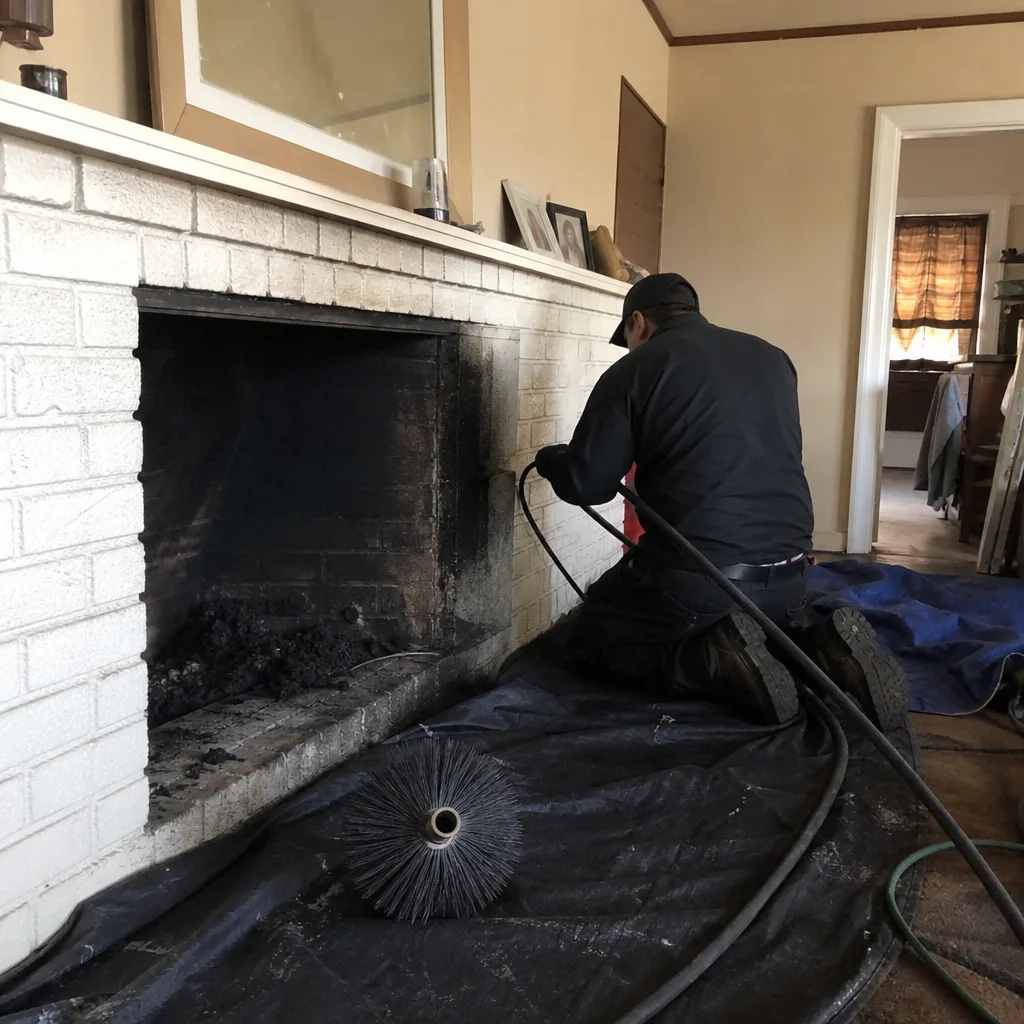
- Flue brushing with the correct brush for your liner type. Wire brushes for clay tile, poly brushes for stainless liners. Using the wrong brush on a stainless liner scratches the surface and creates creosote adhesion points.
- A camera inspection of the flue interior after brushing. This is the step that separates real assessment from surface-level service. The camera shows what the brush couldn’t reach, what the brush uncovered, and whether the flue wall is intact.
- Draft testing. A burning chimney needs proper draft to pull smoke up and out. A draft test after cleaning confirms that air moves correctly through the system. Poor draft after a cleaning usually indicates a structural problem, not a cleanliness problem.
- Smoke chamber assessment. The smoke chamber sits above the firebox and below the flue, and it’s a notorious creosote trap. In older Pomona homes with corbeled brick smoke chambers, creosote accumulates in the ledges and gaps that a flue brush never touches. We inspect and clean this area directly.
- Firebox, damper, and cap inspection. The accessible components that wear out from heat, moisture, and use. Damper plates warp. Cap mesh corrodes. Firebox refractory panels crack. These items get checked during a full-service visit, not skipped.
If a chimney sweep quote in Pomona only includes “brushing the flue” without camera inspection or draft testing, you’re not getting a full-service cleaning. You’re getting a partial job. The Lantern name is built on the sequence: Sweep. Assess. Repair. The sweep is the opening step, not the final product.
What Does Chimney Cleaning Cost in Pomona?
Chimney cleaning prices in Pomona vary by chimney height, liner type, accessibility, and inspection level. Here’s a realistic breakdown of current market pricing based on what we see across the Pomona Valley:
| Service | Typical Pomona Price Range | What It Includes |
|---|---|---|
| Standard chimney sweep with Level 1 inspection | $180 – $250 | Flue brushing, firebox and damper visual check, cap check from roof access |
| Chimney sweep with Level 2 camera inspection | $300 – $450 | Full sweep plus interior flue camera scan, smoke chamber assessment, draft test |
| Gas fireplace inspection and cleaning | $150 – $275 | Vent path check, component inspection, debris removal, gas log or insert assessment |
| Dryer vent cleaning (as add-on) | $99 – $180 | Full vent path brushing from interior to exterior termination, airflow check |
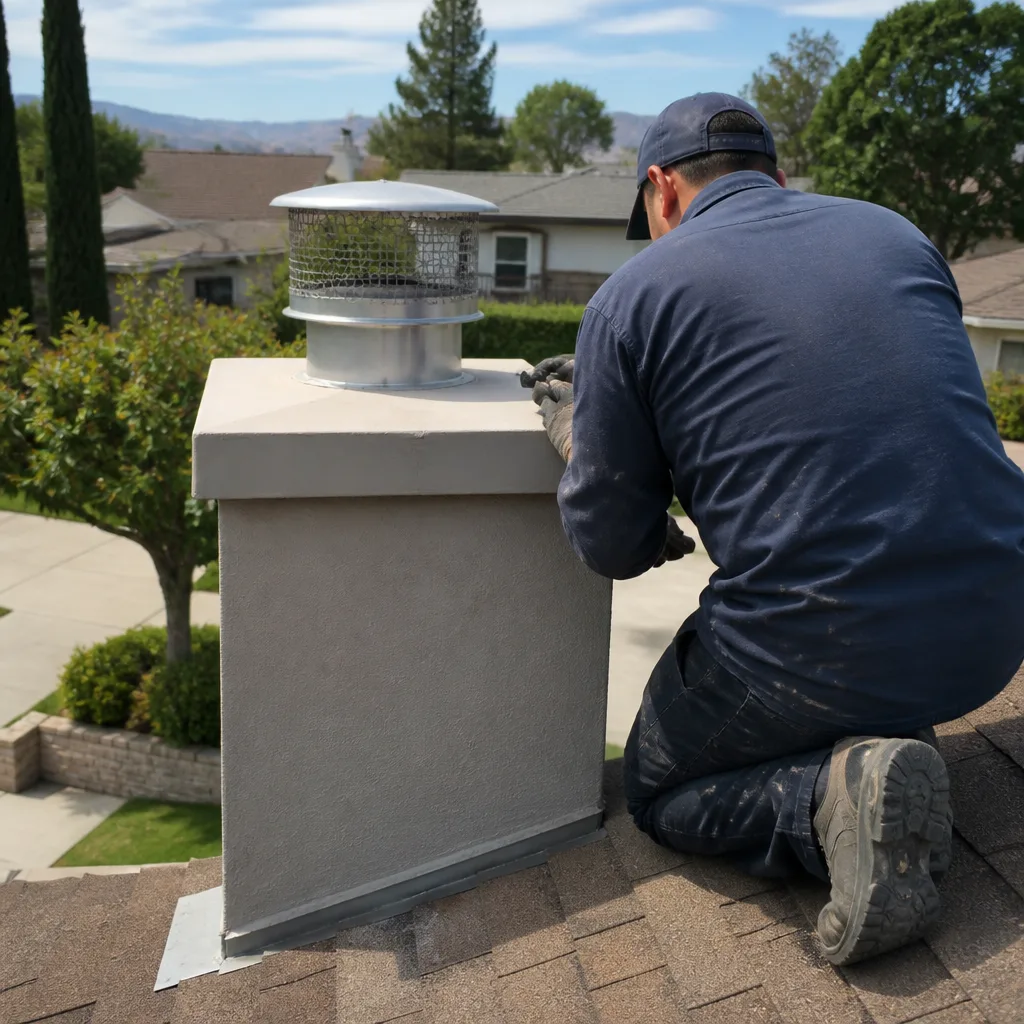
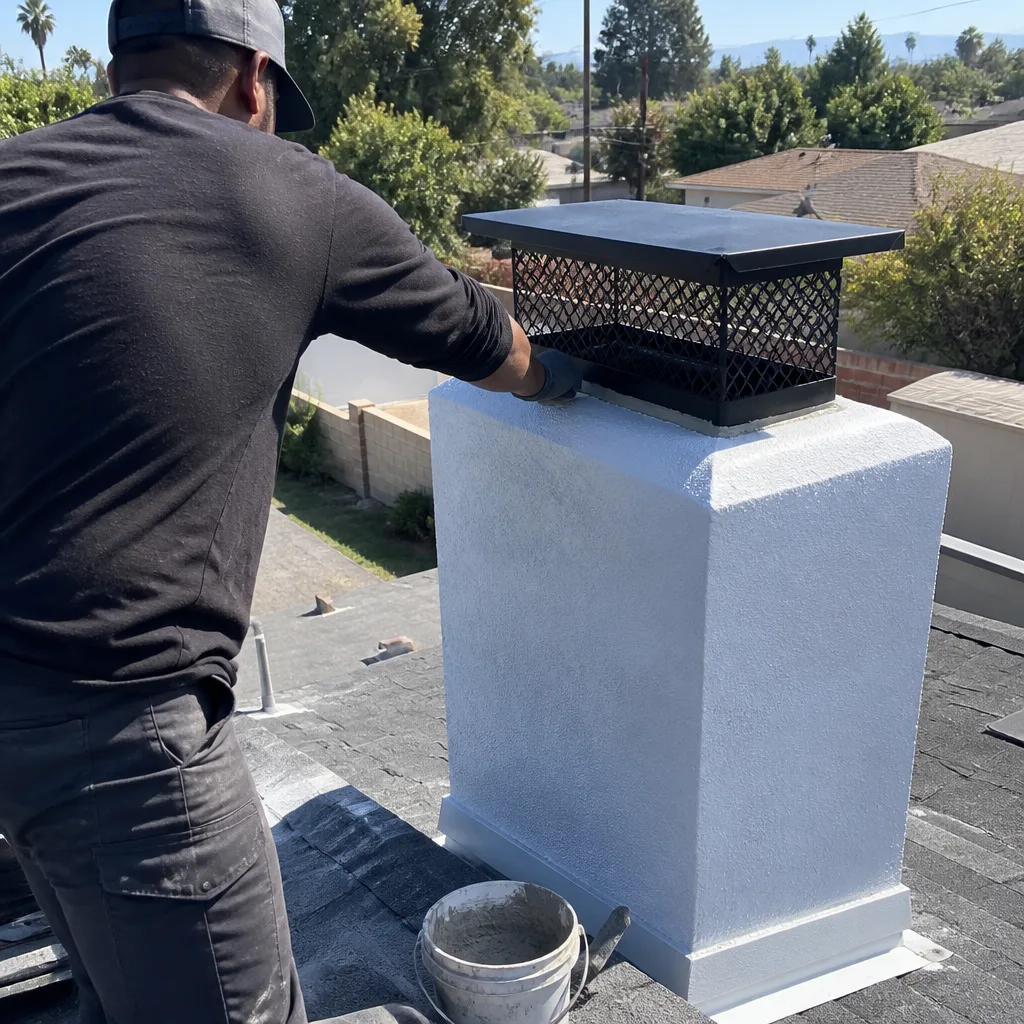
| Chimney cap replacement with Gelco cap | $220 – $400 | Removal of old cap, installation of Gelco chimney cap, mesh and spark arrestor check |
| HeatShield ceramic resurfacing (eligible flues) | $1,800 – $3,200 | Liner assessment, prep, ceramic application, post-application inspection |
These ranges reflect what Pomona homeowners should expect from a legitimate full-service company. Sub-$99 “chimney cleaning specials” usually mean a brush run up the flue with no camera, no draft test, and no smoke chamber access. That’s the equivalent of a doctor who only takes your temperature.
Call (855) 341-8132 for an exact quote on your Pomona chimney. Estimates are free, and we tell you the scope before any work begins, not after we’re on the roof.
Common Mistakes to Avoid
- Skipping the annual inspection because the fireplace “works fine.” A chimney can look fine from the firebox and hide a cracked liner, a disconnected flue section, or a bird nest above the damper. The visible surface is not the safety surface.
- Using a chimney sweep log instead of a physical sweeping. Chemical logs loosen some creosote but don’t remove it. The loosened creosote falls into the smoke chamber where it creates a new, more concentrated fire hazard.
- Assuming a gas fireplace needs no maintenance. Gas flues in Pomona accumulate debris, corrosion, and animal nesting. The absence of smoke doesn’t mean the absence of risk.
- Waiting until after the first cold snap to book a cleaning. By late October, Pomona chimney sweeps are booked two to four weeks out. The first fire of the season happens before the cleaning appointment, and that’s when the risk is highest.
- Ignoring visible spalling or efflorescence on exterior brick. Water penetration into Pomona chimney masonry accelerates with every rain cycle. The visible white staining or flaking brick is a structural warning, not a cosmetic complaint.
- Choosing a sweep who doesn’t use a camera. “We cleaned it” without camera evidence means you’re trusting a visual description of a space that can’t be visually inspected from either end. A camera scan is standard in legitimate full-service sweeping.
When to Call a Professional
Call a professional when you see smoke spilling into the room during a fire, when you smell a persistent smoky odor even when the fireplace is cold, when you find animal sounds or debris coming from the chimney, when you notice white staining on exterior brick, or when you’ve just purchased a Pomona home and have no chimney maintenance records. Any of these signals means the system needs eyes and tools in the flue, not a homeowner guess. Lantern Chimney Sweep offers free estimates in Pomona – call (855) 341-8132.
Frequently Asked Questions
A standard chimney sweep with a Level 1 inspection in Pomona costs $180 to $250, and a sweep with a full Level 2 camera inspection costs $300 to $450. The final price depends on chimney height, liner condition, roof access difficulty, and whether additional services like cap replacement or smoke chamber cleaning are needed. Call (855) 341-8132 for an exact quote – estimates are free.
You should not accept a liner replacement recommendation without camera evidence. A legitimate Pomona chimney company will show you the cracked tile, the separated joint, or the corrosion on screen before recommending any liner work. If a sweep tells you that you need a $3,000 reline but can’t show you why, get a second opinion. For eligible flues, HeatShield ceramic resurfacing can restore liner integrity without full relining at roughly half the cost. The honest answer depends on what the camera shows.
A wood-burning chimney used regularly should be swept annually, and in Pomona the hot, dry summer makes that annual service more urgent than in coastal climates because creosote dries and cracks into a more flammable state. Gas fireplace chimneys should be inspected with a camera every two to three years. Call (855) 341-8132 to schedule your Pomona chimney sweep before you light the season’s first fire.
Creosote accumulates into a hard, glazed layer that becomes more difficult and expensive to remove the longer it sits. In Pomona, the heat cycling from 90-degree days to 45-degree nights accelerates creosote cracking, which increases chimney fire risk. Soot and debris can also restrict draft, pushing carbon monoxide back into the living space. The risks compound, and they don’t announce themselves with a warning light.
You can, but you won’t get the same result as a professional camera-assisted sweep. Hardware store brushes are often the wrong diameter for your flue, they don’t reach the smoke chamber effectively, and they can’t show you what was left behind. More importantly, working on a roof in Pomona’s sloping neighborhoods around Ganesha Hills or Phillips Ranch carries real fall risk for anyone without training and proper equipment. We recommend a professional for both safety and thoroughness.
Yes. Buyers in Pomona frequently request chimney inspections during escrow, and a clean chimney with a documented inspection report removes a negotiation point. A Level 2 inspection is standard during real estate transactions, and showing that the home has been maintained by a Lantern Chimney Sweep home service visit can expedite the close.
The Bottom Line
Chimney cleaning in Pomona isn’t a generic maintenance task. The Inland Empire’s dry heat, Santa Ana winds, and aging housing stock create a specific set of risks that demand a local understanding. A legitimate cleaning here means brushing the flue, running a camera, testing the draft, and assessing the smoke chamber. It means looking at liner condition honestly and offering repair options when needed, from HeatShield resurfacing to DuraFlex relining to Gelco cap replacement. The goal isn’t a clean chimney. It’s a safe, functioning chimney. One visit, two fire hazards addressed. That’s the standard we hold in Pomona.
Written by the team at Lantern Chimney Sweep, serving Pomona since 2013.
See the difference
 Before
 After
 Before
 After
 Before
 After