
Last updated October 30, 2026
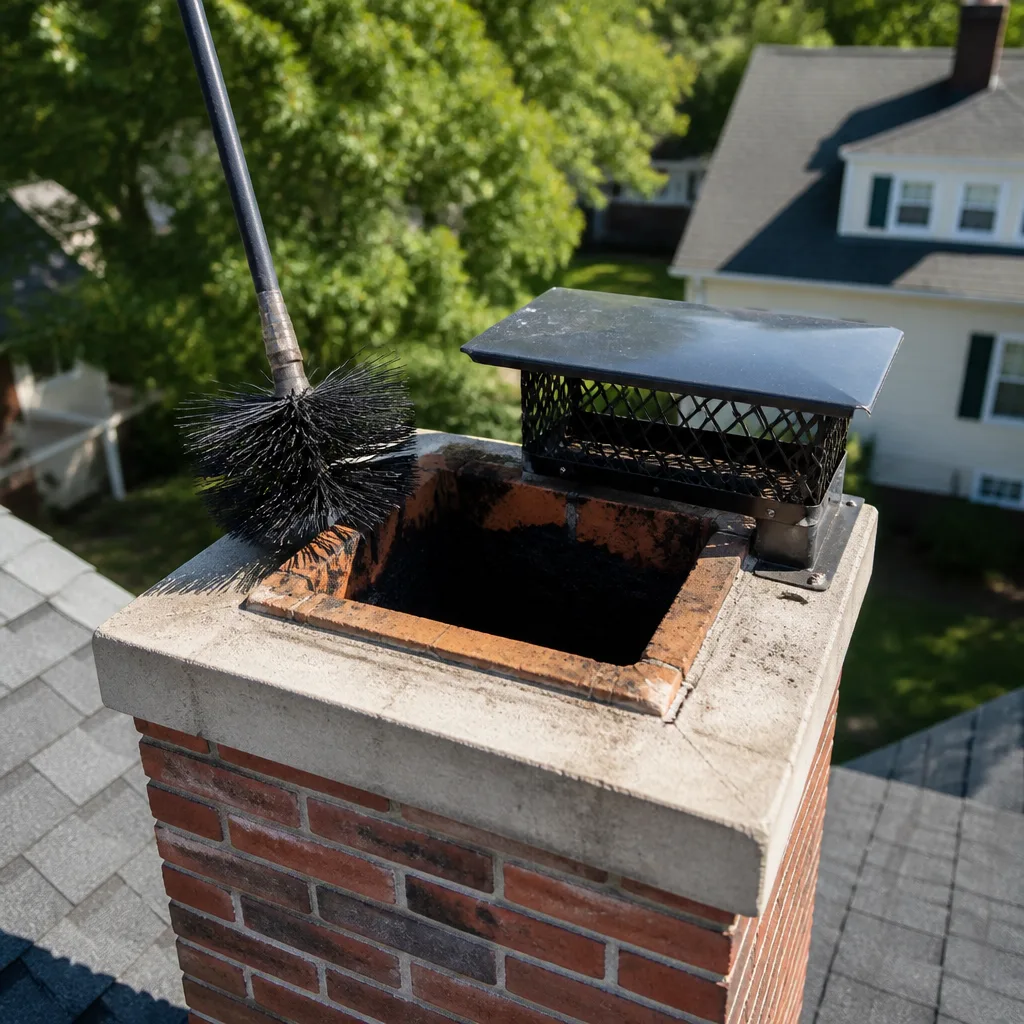 Sweep & inspection
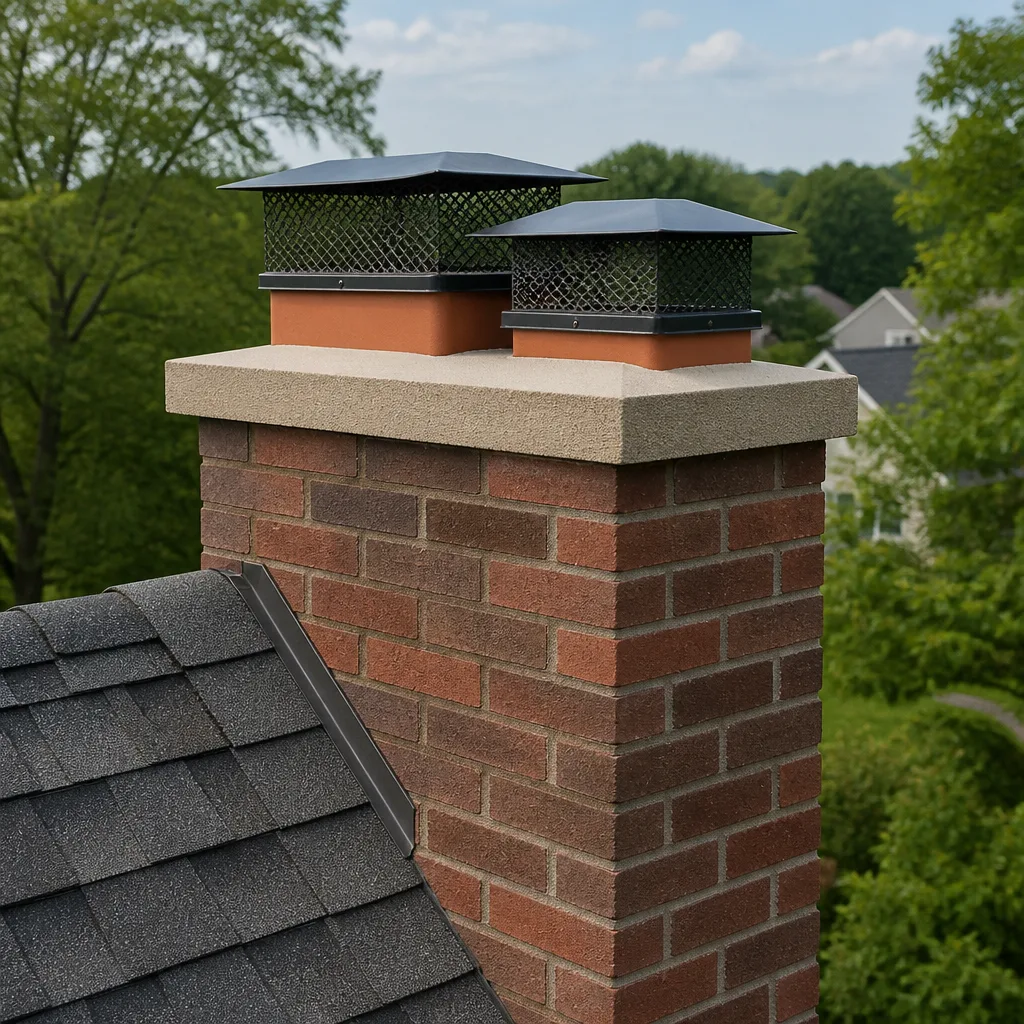 Caps & crowns
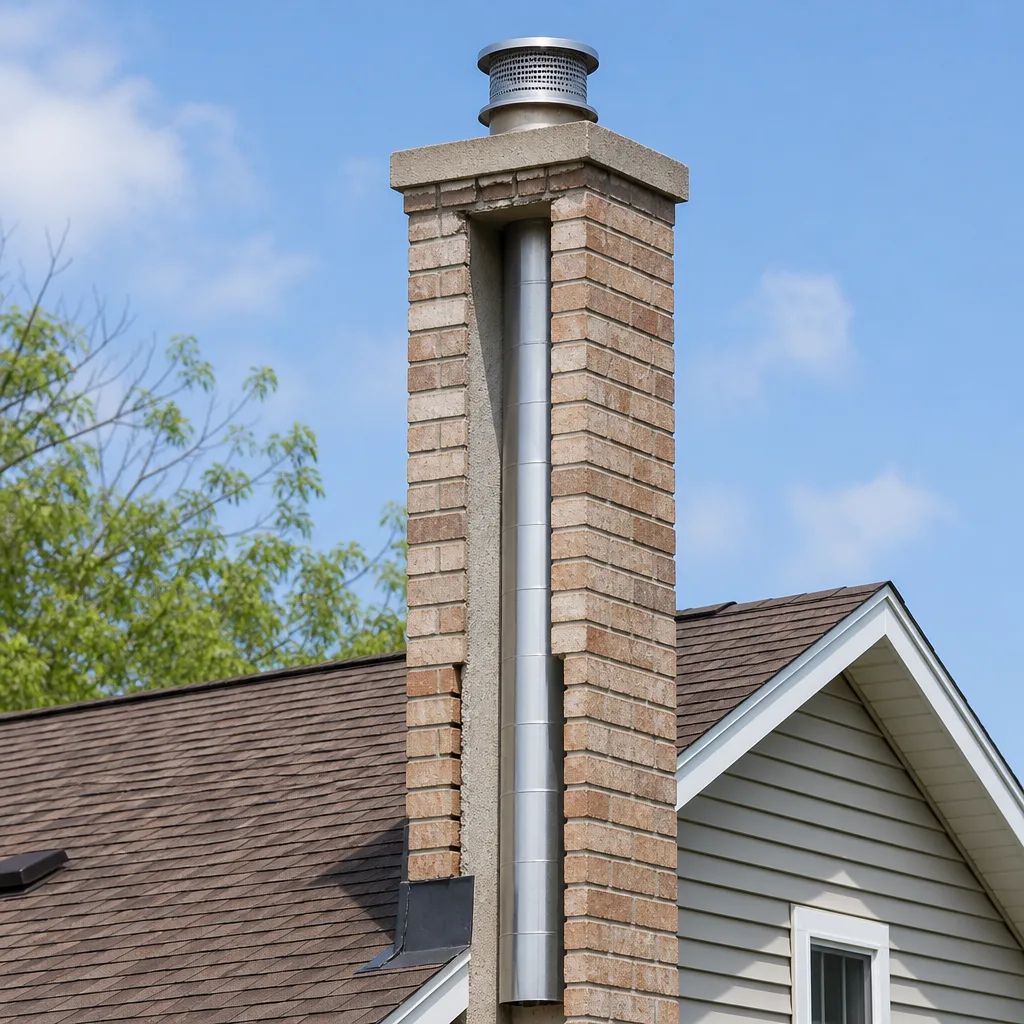 Flue relining
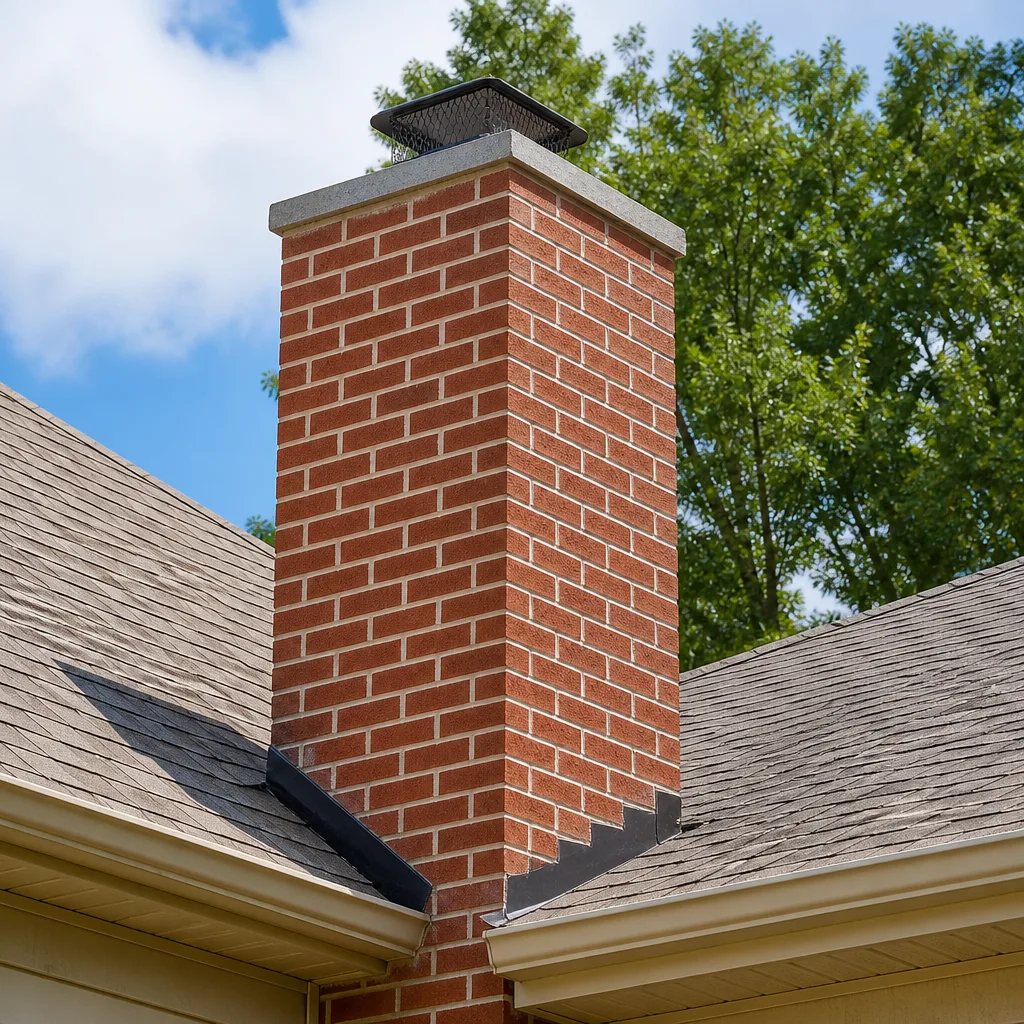 Masonry repair
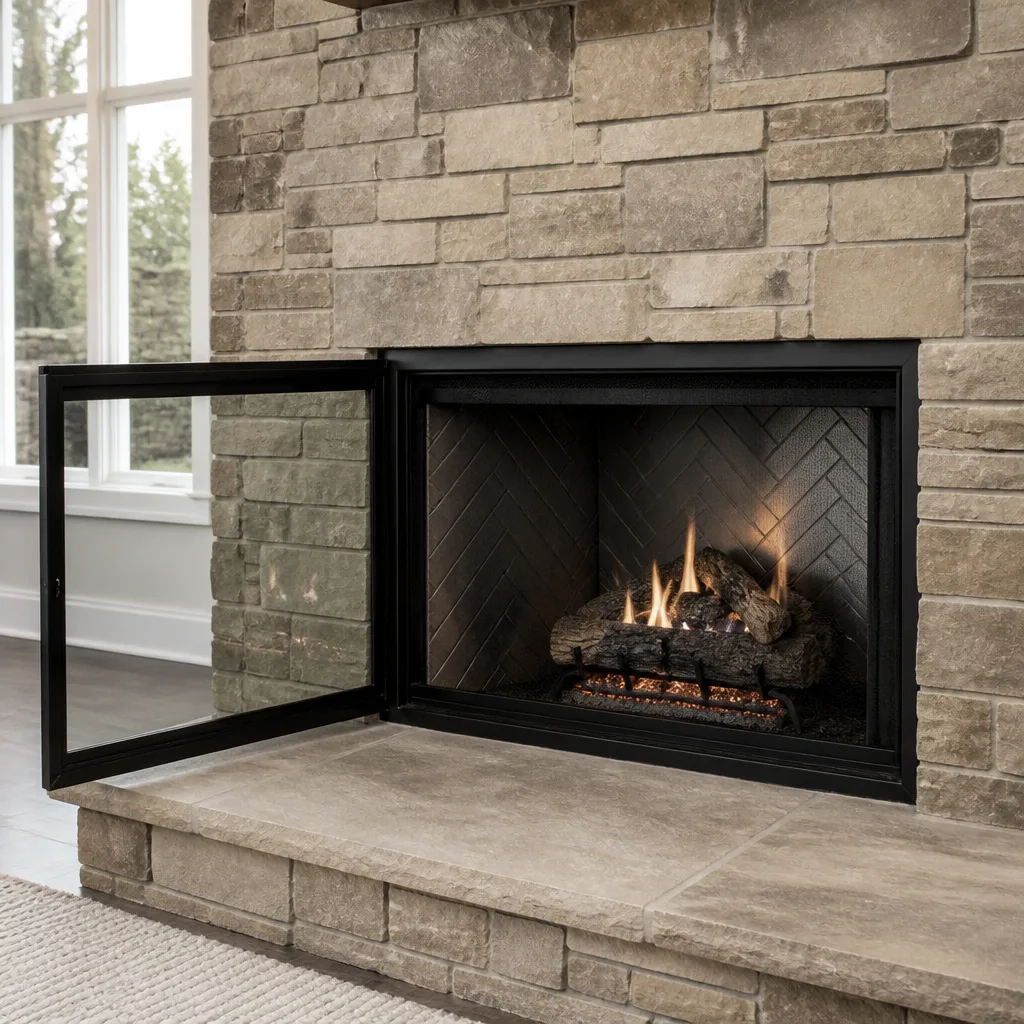 Gas fireplace service
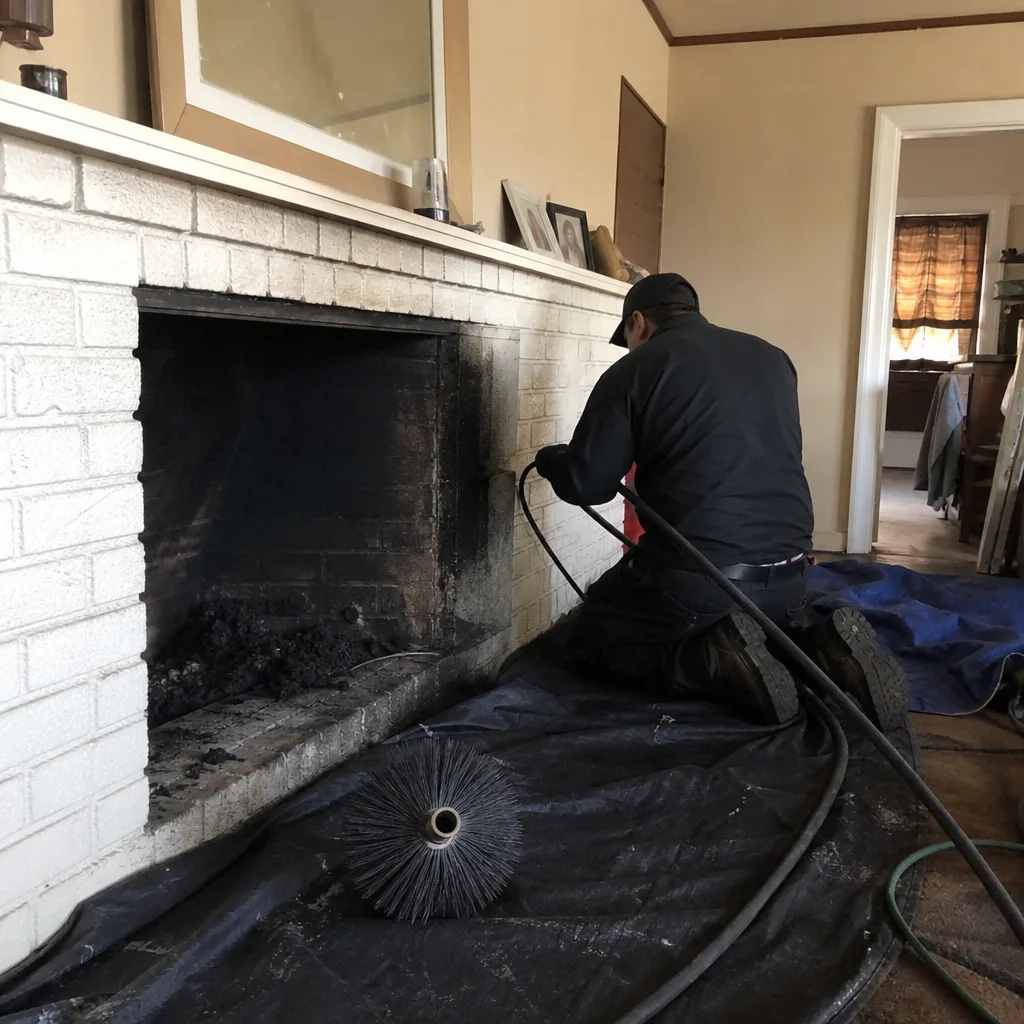
Level 1 sweep and inspection to the NFPA 211 annual standard - flue, crown, cap, and flashing checked and photographed
Chimney sweep logs do not sweep chimneys. They loosen some creosote - which then falls where a brush and vacuum still have to collect it.
Seasonal Chimney Cleaning Care for Pomona: Year-Round Homeowner’s Guide
Most chimney maintenance advice opens with the same line: “Schedule your sweep before winter arrives.” That counsel was written for Minnesota, Michigan, and New England, where sub-zero nights and six-month heating seasons make October the obvious deadline. But Pomona doesn’t live on that calendar. Here, you might light your fireplace three times in January, not touch it again until Thanksgiving, and spend the intervening ten months with a flue baking under 95-degree inland sun while Santa Ana winds push debris, dust, and ember risk through every crack in your chimney system. The maintenance logic is completely different. This guide rebuilds the seasonal chimney care calendar around what Pomona chimneys actually experience, month by month, so you can protect your home without following advice written for a climate 2,000 miles away.
Styles & brands we work with
Quick Answer
In Pomona, the most important chimney maintenance window is early fall (September through October), before Santa Ana fire season peaks and before you light the season’s first fire. A professional chimney sweep and inspection during this window costs less than most homeowners expect and catches creosote buildup, cap damage, and liner deterioration before they become winter fire hazards or expensive spring repairs. Summer months require simple visual checks for heat-related mortar and cap damage, while winter demands attention to condensation and cold-start fires, and post-Santa Ana wind inspections round out a year-round approach that costs far less than reactive repairs.
Table of Contents
- Why Pomona’s Climate Demands a Different Chimney Calendar
- Fall in Pomona: The True Action Window for Chimney Care
- Santa Ana Winds: A Maintenance Trigger Most Guides Ignore
- Winter in Pomona: Cold Starts, Condensation, and Brief Burn Seasons
- Spring: The Assessment Season for Repair Planning
- Summer in Pomona: What Heat Does to Mortar, Crowns, and Caps
- How Seasonal Care Reduces Total Cost Over Time
- Common Mistakes to Avoid
- When to Call a Professional
- Frequently Asked Questions
- The Bottom Line
Why Pomona’s Climate Demands a Different Chimney Calendar
Pomona sits in the Pomona Valley, roughly 30 miles east of downtown Los Angeles, where the inland climate produces conditions that punish chimney systems in ways coastal cities never see. Summer temperatures routinely exceed 95 degrees, with stretches above 100. Winter lows occasionally dip into the high 30s. Rain falls almost entirely between November and March, often in brief but intense bursts. And then there are the Santa Anas, the hot, dry downslope winds that arrive most often between September and February, gusting at 30 to 60 miles per hour through the valley.
Each of these conditions creates a specific stress on your chimney. Heat expands mortar joints and cracks them. Rain exploits those cracks and accelerates brick spalling. Santa Ana winds drive debris into flues and create negative pressure conditions that pull smoke backward into living spaces. And because Pomona homeowners use fireplaces sporadically rather than daily, creosote doesn’t build up the way it does in colder climates. Instead, it accumulates in thin, hard, glaze-like layers that bake under summer heat and become more difficult to remove than the fluffy creosote northeastern sweeps deal with.
The standard “sweep every fall” advice still applies here, but the reasoning is different. In Pomona, the fall sweep isn’t about preparing for a long heating season. It’s about clearing out what accumulated during the previous winter’s brief burn season, addressing what summer heat and Santa Ana winds did to your mortar and cap, and ensuring your system is safe before the highest-risk fire conditions of the year arrive.
We’ve worked with hundreds of Pomona homeowners, from Phillips Ranch to Lincoln Park, from Westmont to Ganesha Hills, and we see the same pattern repeat: chimneys that receive attention once every three to five years, usually after something visibly fails. The homeowners who follow a Pomona-specific seasonal schedule spend less, avoid emergency calls, and catch liner damage before it becomes a structural problem. That’s what this guide teaches.
Fall in Pomona: The True Action Window for Chimney Care
September and October are the months that matter most for Pomona chimney maintenance, and the reasoning has less to do with cold weather than with fire weather. The National Weather Service consistently identifies late September through November as peak Santa Ana season in Southern California. These wind events, combined with low humidity and dried-out vegetation, create the conditions under which chimney-related structure fires spread fastest.
Here’s the sequence that puts Pomona homeowners at risk each fall:
- Summer heat dries out creosote inside the flue. Creosote that sat dormant through 90-degree August days becomes brittle and flammable. What was a sticky residue in February is now a hardened fuel source.
- First cool nights trigger the season’s first fires. Pomona nights drop into the 50s by late October, and that’s when fireplaces get lit again. If the flue hasn’t been swept, the first fire ignites whatever creosote has accumulated.
- Santa Ana winds arrive within weeks. If a chimney fire starts during a Santa Ana event, the wind can carry embers from the chimney cap to nearby roofs, dry brush, or neighboring properties. This is the worst-case scenario every fire marshal in Southern California warns about.
- Debris from the previous winter blocks proper draft. Sticks, leaves, and sometimes bird nests accumulated during spring and summer restrict airflow, forcing smoke and carbon monoxide back into the home.
This is why we recommend booking a chimney sweep in Pomona during September or early October, before the first cold snap and before peak Santa Ana conditions. The sweep removes creosote, the inspection identifies cap damage or liner cracks, and any chimney repair in Pomona work gets scheduled while weather is still mild enough for mortar and sealant to cure properly.
Fall is also the right time to check for wildlife intrusion. Spring and summer are when birds, squirrels, and raccoons nest in uncapped or damaged chimneys. By September, those nests are abandoned and dry, which makes them both easier to remove and more flammable. A fall inspection catches these before you light a fire under them.
Fall action list for Pomona homeowners:
- Book your annual chimney sweep and inspection for September or early October.
- Visually check the chimney cap from the ground. If it’s missing, rusted through, or visibly tilted, schedule a replacement before fire season.
- Note any water stains on the ceiling or walls near the fireplace, a sign that summer monsoon rains found a way in.
- Clear any vegetation that has grown against the chimney exterior during the summer months.
- Test the damper. If it’s stuck, rusted, or won’t seal, add that to your repair list.
Santa Ana Winds: A Maintenance Trigger Most Guides Ignore
No seasonal chimney guide written for a generic American suburb mentions Santa Ana winds, and that omission is exactly why Pomona homeowners need location-specific advice. Santa Ana events are not background weather. They are the most mechanically active force your chimney faces all year, and they create three distinct problems that deserve their own maintenance response.
Debris intrusion. Santa Ana winds strip leaves, twigs, and small branches from trees across the Pomona Valley and drive them horizontally at high speed. An uncapped or poorly capped chimney becomes a collection point. Even a properly capped chimney can accumulate debris around the cap’s screen, restricting airflow. After any significant Santa Ana event, it’s worth a ground-level visual check of your chimney cap. If you can see debris piled against the screen from the ground, the cap needs clearing.
Negative pressure and draft reversal. High-velocity winds passing over a chimney opening create a low-pressure zone at the top of the flue. In homes with tight envelopes or competing exhaust systems (bathroom fans, range hoods, dryer vents), this pressure differential can reverse the draft, pulling smoke and carbon monoxide backward into the living space. This is especially common in newer Pomona construction, where homes are sealed more tightly than older stock. If you smell smoke indoors during a Santa Ana event while your fireplace is burning, stop using the fireplace immediately and have the draft dynamics assessed.
Ember carry during active chimney fires. If a creosote fire does ignite inside your flue during a Santa Ana event, the wind dramatically increases the danger. A chimney fire that might otherwise be contained to the flue can eject burning embers from the chimney top, where 40-mph gusts carry them to roofs, gutters, dry brush, or neighboring properties. This is the scenario where a chimney fire becomes a neighborhood fire. The correlation between Santa Ana conditions and structure fire spread is well documented by Cal Fire and local fire authorities.
After a significant Santa Ana event (sustained winds above 40 mph), a quick post-wind assessment is reasonable. Check for visible cap damage, debris accumulation, or new cracks in the exposed chimney structure. If anything looks different from your last inspection, it’s worth a professional look. In our experience, most post-Santa-Ana chimney damage is cap-related: screens torn loose, cap surfaces bent, mounting brackets shifted. These are inexpensive fixes when caught early and expensive problems when ignored.
Winter in Pomona: Cold Starts, Condensation, and Brief Burn Seasons
Pomona winters are short and mild by national standards, but they create a specific set of chimney conditions that homeowners in colder climates never encounter. The core issue is intermittent use. In a Minnesota winter, the fireplace or wood stove burns daily for five months, keeping the flue warm and driving moisture out. In Pomona, you might light a fire on three weekend evenings in December, skip January entirely, and use the fireplace twice more in February. Each cold start happens in a flue that has been cold for weeks, and each cold start creates condensation.
Here’s what happens. When you light a fire in a cold flue, the hot combustion gases hit the cold chimney liner and cause water vapor to condense on the interior surface. This condensation mixes with creosote to form an acidic slurry that accelerates liner corrosion. In a daily-use chimney, the flue stays warm enough to minimize this effect. In a Pomona-style intermittent-use chimney, condensation happens on every cold start, and the acidic residue sits on the liner between fires, slowly eating at it.
This is one reason we see more liner damage in lightly used Pomona fireplaces than in heavily used fireplaces in cold climates. The wear mechanism isn’t volume of use. It’s the cycling between cold, damp, and hot, with long idle periods in between.
Winter maintenance for Pomona homeowners looks like this:
- Burn hot, brief fires rather than long smoldering ones. Hot fires produce less creosote and warm the flue quickly, reducing condensation. Smoldering fires are creosote factories.
- Use seasoned hardwood only. Green or unseasoned wood produces more smoke, more creosote, and more condensation. Kiln-dried or properly seasoned oak, almond, or fruitwood burns cleaner. Avoid pine and other softwoods, which are common but poor fireplace fuels.
- Open the damper fully and keep it open until the fire is completely out. Closing the damper too early traps moisture and combustion byproducts in the flue.
- Check for water intrusion after winter rain events. Pomona gets most of its annual rainfall between December and March. If your chimney cap is damaged or your crown is cracked, winter rain is when the damage happens. Watch for water stains on the ceiling near the fireplace, damp smells from the firebox, or efflorescence (white mineral deposits) on the exterior chimney brick.
If you notice any of these water-intrusion signs during winter months, don’t wait until spring to address them. The chimney repair team at Lantern Chimney Sweep can diagnose the entry point and fix it before additional rain events compound the damage. Water is the slow destroyer of chimney systems. What starts as a hairline crown crack in December becomes a spalled brick face and a leaking firebox by March if left alone.
Spring: The Assessment Season for Repair Planning
Spring in Pomona is brief and often barely distinguishable from summer. March brings temperatures in the 70s and 80s, April adds occasional heat spikes, and by May, summer conditions have arrived. For chimney care, spring’s role is assessment and planning. The burn season is over. Rain season is winding down. Any damage from winter use, winter rain, or winter Santa Ana events is now visible and measurable, and there’s a window of mild weather to address it before summer heat arrives.
Spring is an ideal time for a professional inspection if you didn’t get one in the fall. The Lantern Chimney Sweep home team performs video inspections that show you exactly what’s happening inside your flue, from hairline liner cracks to early-stage spalling. We use camera inspection and photo reports as standard practice, because we believe homeowners should see the evidence before they approve any repair. If the liner is fine and the masonry is sound, you’ll see that plainly. If repairs are needed, you’ll see exactly what and where.
Spring-specific assessment checklist:
- Exterior masonry check. Look for new cracks, spalled brick faces, or crumbling mortar joints. Winter rain followed by spring warm spells accelerates freeze-thaw cycling damage (though Pomona rarely freezes, the expansion and contraction from temperature swings still stresses mortar).
- Interior water stains. If winter rains found a path into your home through the chimney, the evidence is on your ceiling or walls now.
- Creosote assessment. If you used the fireplace over winter, there’s fresh creosote in the flue. A spring sweep removes it before summer heat bakes it into a hardened glaze that’s harder to remove.
- Dryer vent check. Spring is a smart time to consider dryer vent cleaning in Pomona as well. Lint accumulates through winter laundry season, and dryer vents and chimneys share a common failure mode: neglect until something visible goes wrong. One visit can address both combustion hazards.
Spring repairs are easier than summer repairs in one important respect: sealants and mortar cure better in moderate temperatures. Many chimney repair materials, including the professional-grade products we use, have specified temperature ranges for proper curing. Scheduling repointing, crown repair, or cap replacement in spring means the materials set in 70-degree weather rather than 95-degree heat, which produces a better bond and longer-lasting repair.
Summer in Pomona: What Heat Does to Mortar, Crowns, and Caps
Pomona summers are the quiet season for chimney use. Nobody lights a fire in July. But they are not the quiet season for chimney damage. In fact, summer heat is a slow, relentless stressor that most homeowners never attribute to their chimney problems. Let’s look at what actually happens to each chimney component during a Pomona summer.
Mortar joints. Mortar expands slightly when heated and contracts when cooled. In Pomona, the daily temperature swing in summer is often 30 degrees or more: 60 degrees at dawn, 90-plus by mid-afternoon. Multiplied across thousands of cycles per season, this expansion and contraction works mortar joints loose. The effect is most pronounced on south-facing and west-facing chimney faces, which absorb direct afternoon sun. Over years, this produces the crumbling mortar, loose bricks, and structural weakness that homeowners mistake for simple aging.
Chimney crowns. The crown is the concrete slab that caps the chimney structure, directing water away from the flue and masonry. Under relentless summer sun, crown concrete loses moisture and shrinks. The resulting cracks may be hairline at first, but they widen with each summer cycle. By the time winter rain arrives, those cracks are open channels for water intrusion. In Pomona, crown damage is one of the most common findings on homes with chimneys over 15 years old.
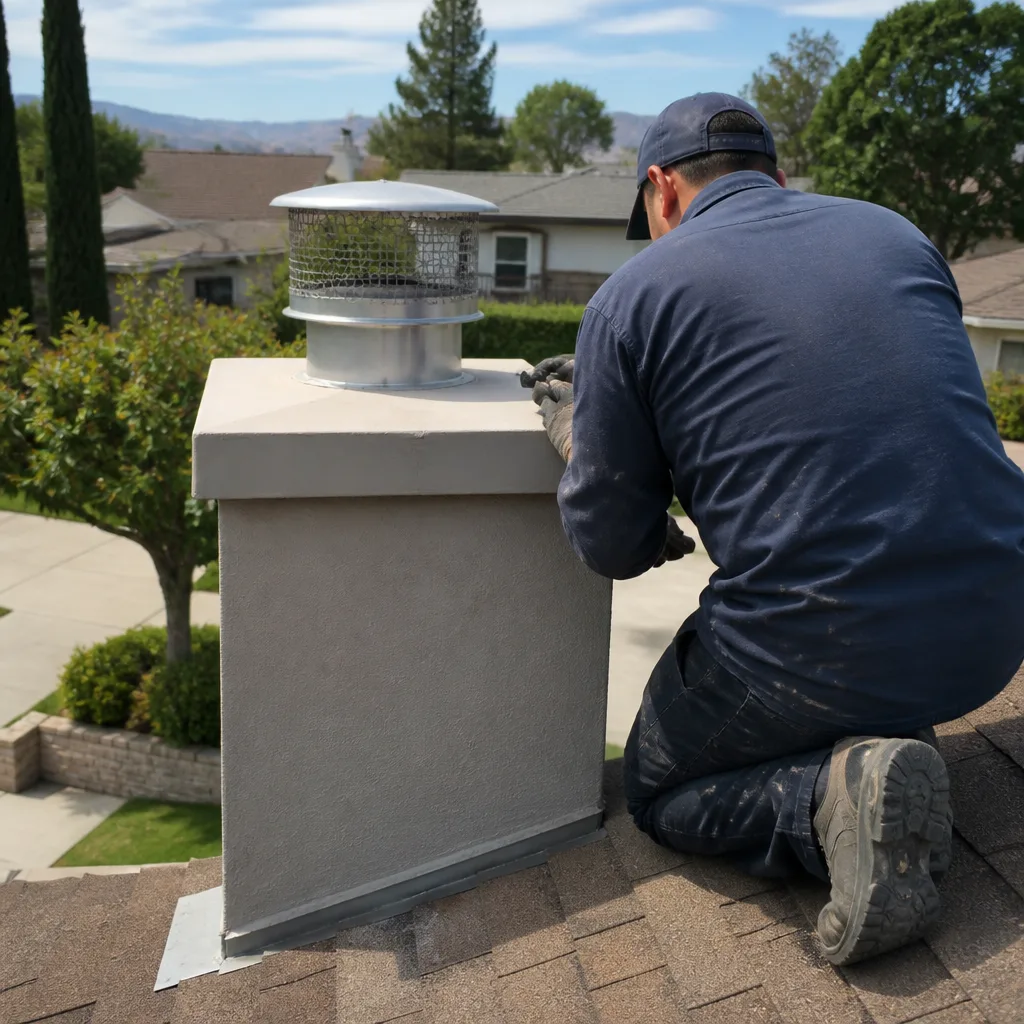
Chimney caps. The metal cap that sits over the flue opening takes direct sun, wind, and (during fire season) occasional airborne embers from nearby brush fires. Galvanized caps rust, especially at the seams and mounting points. Powder-coated caps fade and eventually expose the underlying metal. A failing cap doesn’t stop rain and doesn’t keep animals out. In Pomona, cap failure is also a fire-safety issue: a damaged cap can allow embers from a chimney fire (or from a nearby wildfire) to enter the home.
Summer visual checks you can do from the ground:
- Check for visible cracks in the crown using binoculars if needed.
- Look for spalled brick faces (brick surfaces that have flaked or broken away).
- Note any rust streaks on the chimney cap or visible warping.
- Check for vegetation growing from the chimney structure, a sign that moisture has penetrated and created a root-hold.
- After any extreme heat wave, re-check for new cracks that may have developed during peak temperatures.
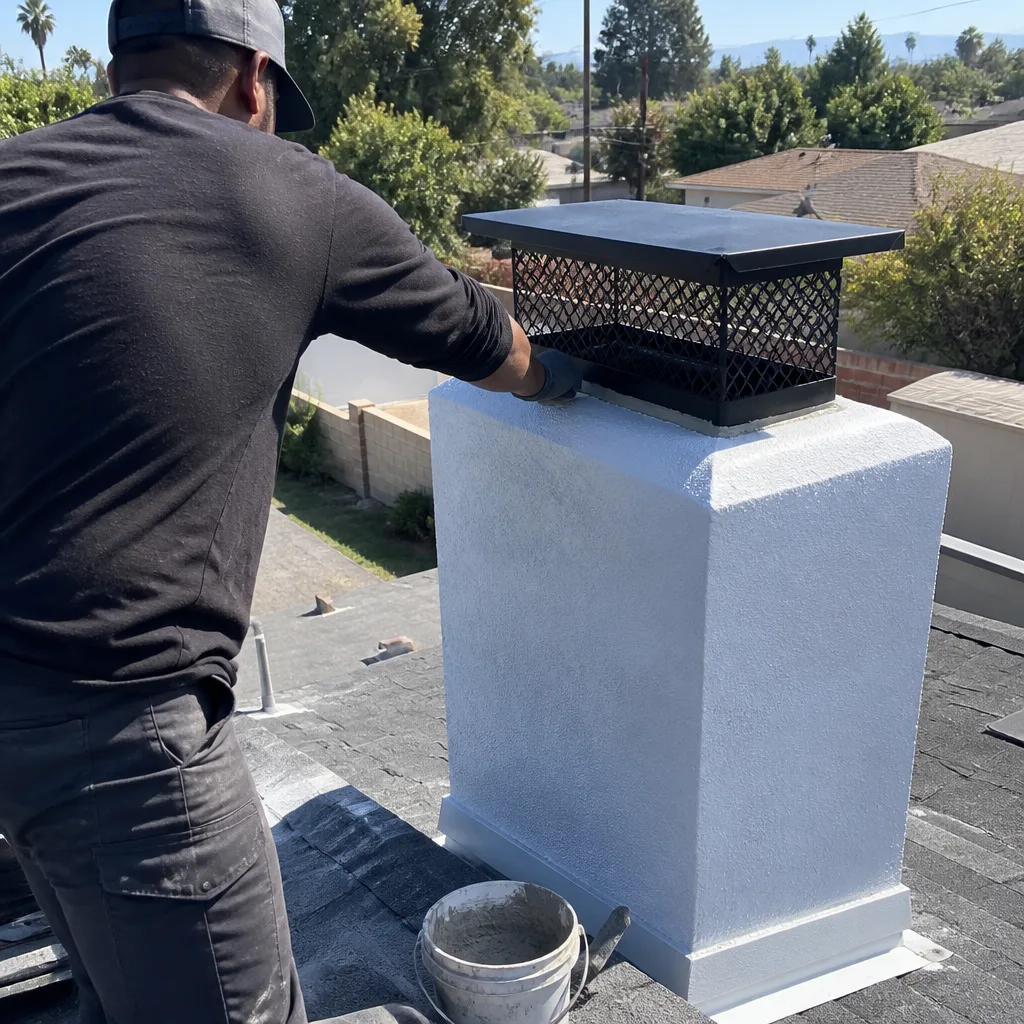
Most of these conditions can be repaired, not just patched. When we find crown cracks, we seal them with professional-grade materials specified for chimney crowns. When caps have failed, we install Gelco chimney caps and covers, which are manufacturer-grade components built for years of Pomona sun exposure. When mortar has deteriorated, we repoint with materials matched to the existing masonry. The difference between a patch and a repair is the difference between repeating the fix next summer and forgetting about it for a decade.
How Seasonal Care Reduces Total Cost Over Time
The financial argument for seasonal chimney care is straightforward once you see the numbers. Most Pomona homeowners follow a reactive model: ignore the chimney until something fails, then pay for an emergency repair. The seasonal model spends a small amount each year on maintenance and catches problems before they become failures. Here’s how those two paths diverge in practice.
The reactive path: The homeowner waits until a chimney issue becomes impossible to ignore. Maybe it’s a visible crack in the living room ceiling from water intrusion. Maybe it’s smoke backing into the house on a windy night. Maybe it’s a chimney fire that scorches the flue. At that point, the repair bill reflects the full extent of accumulated damage. We regularly see chimneys where the eventual repair includes a new DuraFlex liner, crown reconstruction, cap replacement, and repointing, with total bills running into the thousands. Had the same chimney received annual maintenance, the total repair would have been a fraction of that.
The seasonal path: A $150 to $250 annual sweep and inspection catches a hairline crown crack in year one, before water has penetrated. A $200 sealant application fixes it. The cap is inspected annually and replaced when it shows early rust, not when it falls apart. The liner is inspected with video, and early-stage deterioration is treated with HeatShield ceramic resurfacing while it’s still a small repair, not a full relining. Over ten years, the seasonal path might total $2,000 to $3,000 including the occasional mid-range repair. The reactive path often exceeds that amount in a single emergency job.
There’s a second financial factor that’s specific to intermittent-use climates like Pomona. In cold climates, chimney failure is often caused by heavy use, and the repair need is obvious: the fireplace stops working. In Pomona, failure is caused by neglect during idle periods, and the damage accumulates invisibly. Heat cycling cracks crowns in summer. Condensation corrodes liners in winter. Santa Ana winds strip caps year-round. By the time the fireplace fails, the damage is years old. Seasonal care is the only way to catch these slow-motion failures early.
The maintenance interval model also prevents the compounding effect. A cracked crown lets water into the masonry, which expands when heated, which widens the crack, which lets in more water. A rusted cap allows birds to nest, and the nest blocks the flue, which creates smoke backdraft, which deposits more creosote, which increases chimney fire risk. Every stage of the cascade is cheaper to stop at stage one than at stage three. That’s the entire case for seasonal care in one sentence: it stops damage at stage one.
Common Mistakes to Avoid
- Skipping the fall inspection because “we barely use the fireplace.” In Pomona, light use doesn’t mean low risk. Intermittent fires in a cold flue create more condensation and acidic wear than steady use, and months of idle time allow debris and wildlife intrusion to accumulate unnoticed. Light use is actually a reason to inspect more carefully, not less.
- Burning softwoods or unseasoned wood from Pomona’s urban trees. Pine, eucalyptus, and freshly cut tree trimmings produce heavy creosote deposits and smoky fires. They’re abundant in Pomona after tree trimming season, and they’re tempting because they’re free. They also build up creosote faster than any other fuel source.
- Ignoring chimney cap damage because “it’s just a piece of metal.” In Pomona, the cap is the front line against Santa Ana debris, wildfire embers, and wildlife from the adjacent foothills. A damaged cap turns an otherwise safe chimney into an open flue. Cap replacement is one of the least expensive chimney repairs and one of the highest-value.
- Assuming a visual check from the ground is enough. The inside of a flue is invisible from ground level, and so are most early-stage liner failures, creosote buildups, and internal moisture problems. Only a professional inspection with video equipment can show you what’s actually happening inside. We tell every Pomona customer: what you can see from the ground is maybe 10 percent of the story.
- Waiting until after the first Santa Ana event to address known chimney problems. If you already know about a cracked crown, a missing cap, or a partially blocked flue, the Santa Ana season is the worst possible time to defer the repair. Wind events convert existing chimney problems into active fire and smoke hazards.
- Treating chimney sweeping and chimney repair as two separate companies’ problems. When the sweep company finds damage but can’t fix it, the homeowner is left to coordinate a second contractor, get a second quote, and wait for a second appointment. This is how chimney problems get deferred. A company that both sweeps and repairs closes that gap in one visit.
- Neglecting the dryer vent while maintaining the chimney. Dryer vents are the second most common source of residential fires in Pomona homes. We pair dryer vent cleaning with chimney sweeping because both are combustion-safety systems, both accumulate flammable material, and both are ignored by most homeowners until something visible goes wrong.
When to Call a Professional
Call a professional chimney sweep when you see any of these conditions: visible smoke entering the living space during a fire, a strong smoky or musty smell from the fireplace even when it’s not in use, water stains on the ceiling or walls adjacent to the chimney, visible cracks in the crown or chimney structure, rust on the cap or damper, or debris visible in the flue from the ground. Also call for an annual inspection as a baseline practice, even if nothing appears wrong. Most of what goes wrong inside a flue is invisible from the ground. Lantern Chimney Sweep offers free estimates in Pomona. Call (855) 341-8132 to book an inspection or discuss what you’re seeing. We sweep, assess, and repair, so one visit resolves the diagnostic question and the fix.
Frequently Asked Questions
A standard chimney sweep and inspection in Pomona typically ranges from $150 to $250, depending on the chimney’s condition, height, and accessibility. Additional services like video inspection, cap replacement, or creosote treatment add to the total. Call (855) 341-8132 for an exact quote, and our estimates are free.
Once per year is the right interval for most Pomona homeowners who use their fireplace occasionally during the winter months. Even light seasonal use produces creosote, and the long idle periods between burn seasons allow debris, moisture, and wildlife to accumulate. If you use your fireplace heavily (multiple fires per week during winter), a mid-season sweep may be warranted.
Not necessarily. In eligible cases, we restore liners using HeatShield ceramic resurfacing rather than full relining, which costs less and avoids the disruption of removing the old liner. We never recommend liner work without showing you video evidence of the damage first. If the damage is localized and the flue is otherwise sound, resurfacing is often the right call. If the liner has failed structurally, a DuraFlex replacement liner is the correct long-term fix.
Creosote accumulates inside the flue, and over time it becomes a hardened, flammable glaze. The next fire you light can ignite that creosote, producing a chimney fire that reaches temperatures over 2,000 degrees. In Pomona, where Santa Ana winds can carry embers from a chimney fire to nearby structures, this is a neighborhood-level risk, not just a house-level one. Even without a fire event, neglected flues accumulate debris that blocks draft and sends carbon monoxide into the home. Call us at (855) 341-8132 if it’s been more than a year since your last sweep.
Yes, particularly in Pomona. An unused chimney still accumulates debris, still hosts wildlife, and still suffers from heat, rain, and wind damage to its exterior components. The flue is still connected to your home’s envelope. A cap that fails on an unused chimney allows rain and animals into your house just as effectively as one on a used chimney. Annual or biennial inspection catches these issues before they become structural.
Yes. We schedule dryer vent cleaning as part of a whole-home combustion-safety visit, pairing chimney sweeping with dryer vent cleaning in one appointment. Both systems accumulate flammable material, both are leading causes of residential fires, and addressing both in a single visit saves you a second service call.
The Bottom Line
Pomona’s chimney care calendar doesn’t look like the generic advice you’ll find in most guides. The key window is September and October, before Santa Ana season peaks and before the first cold snap. Santa Ana events themselves are maintenance triggers that deserve a post-wind visual check. Winter demands attention to cold-start condensation and brief burn cycles. Spring is the repair-planning season, and summer is when heat does its slow damage to crowns, mortar, and caps. The homeowners who follow this calendar spend less over time, avoid emergency repairs, and keep their homes safer during the exact conditions that make Pomona fire weather so serious. A swept, inspected, and properly capped chimney is the lowest-cost insurance policy a Pomona homeowner can buy. Call (855) 341-8132 to schedule a free estimate.
Written by the team at Lantern Chimney Sweep, serving Pomona since 2013.
See the difference
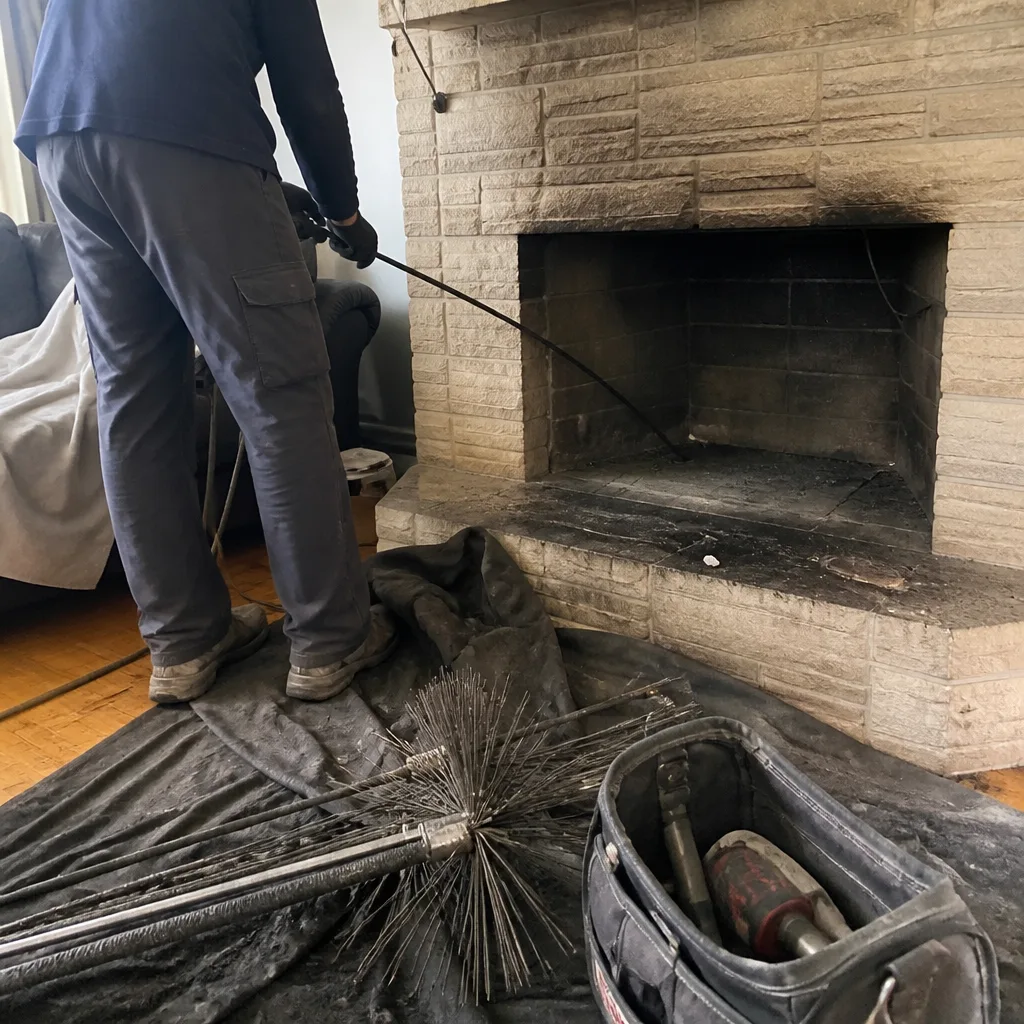 Before
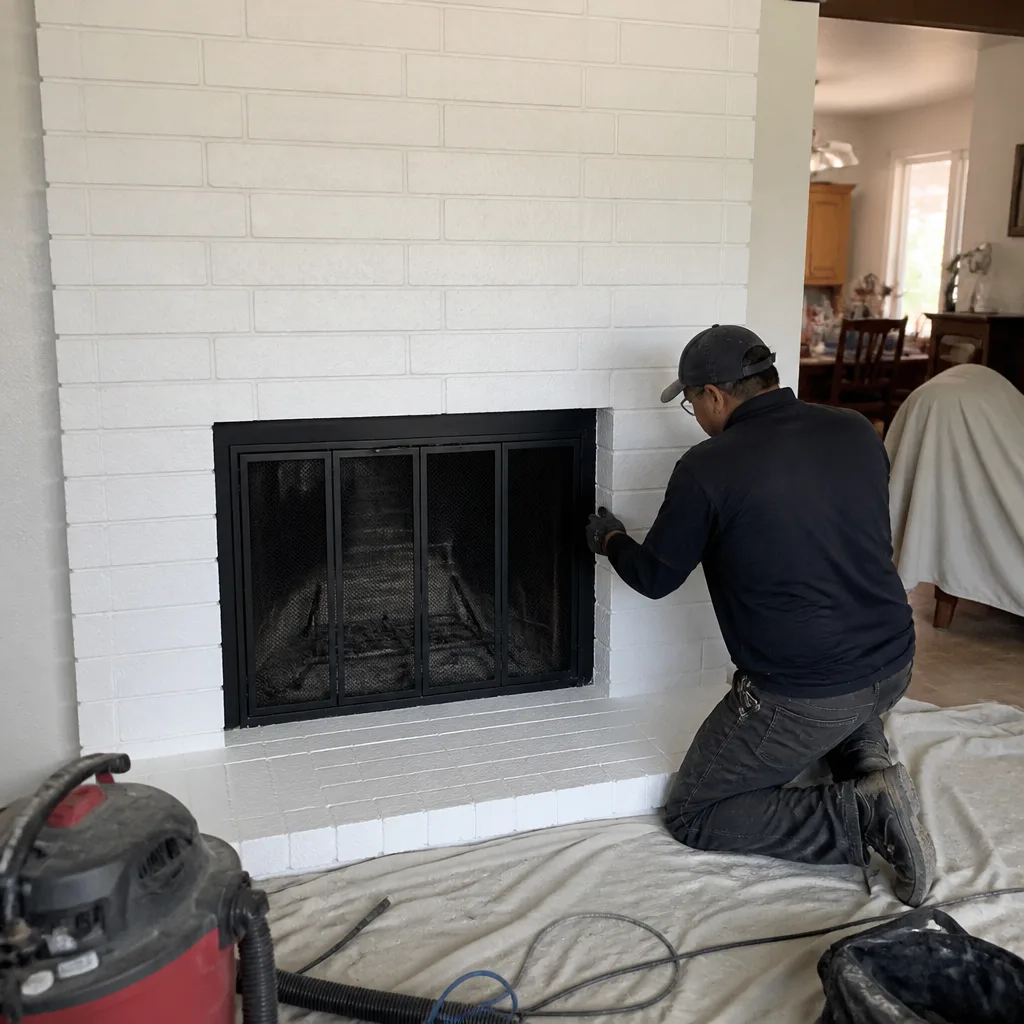 After
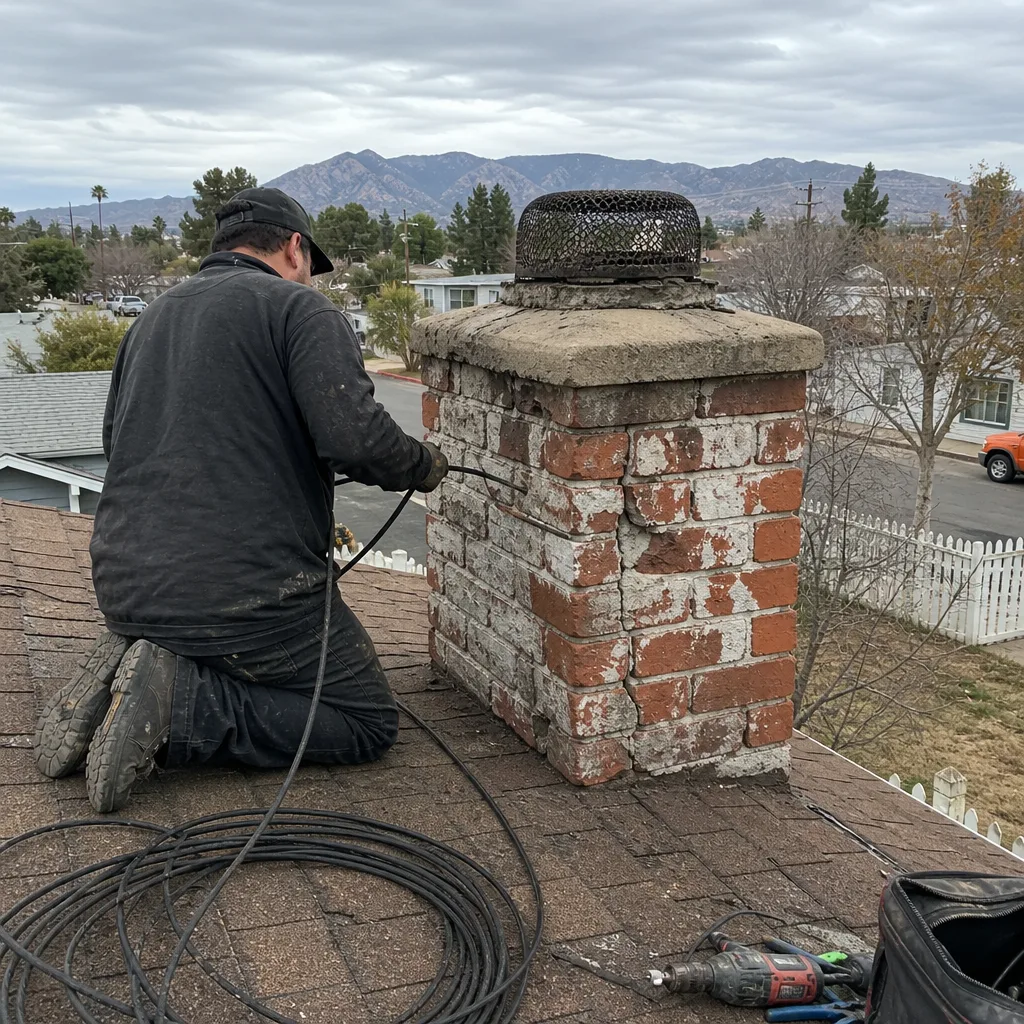 Before
 After
 Before
 After