
Last updated October 30, 2026
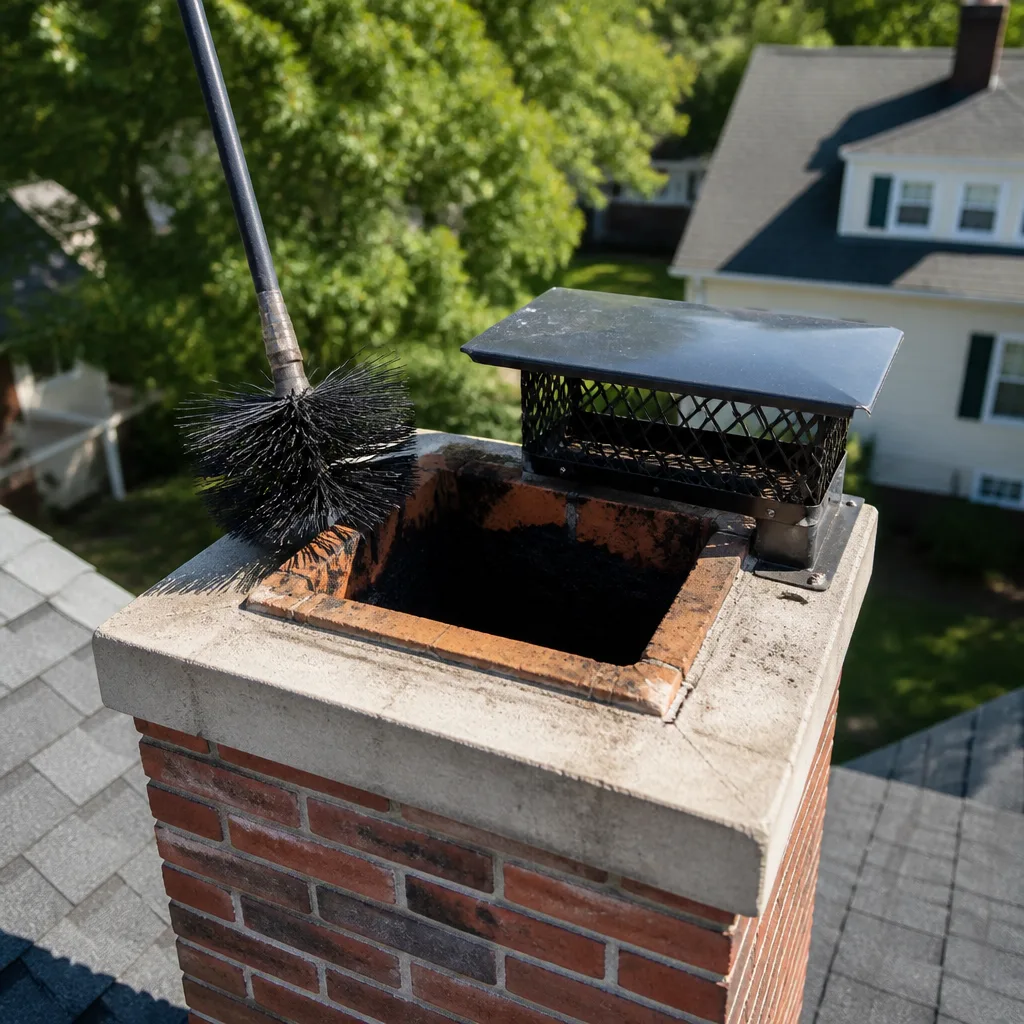 Sweep & inspection
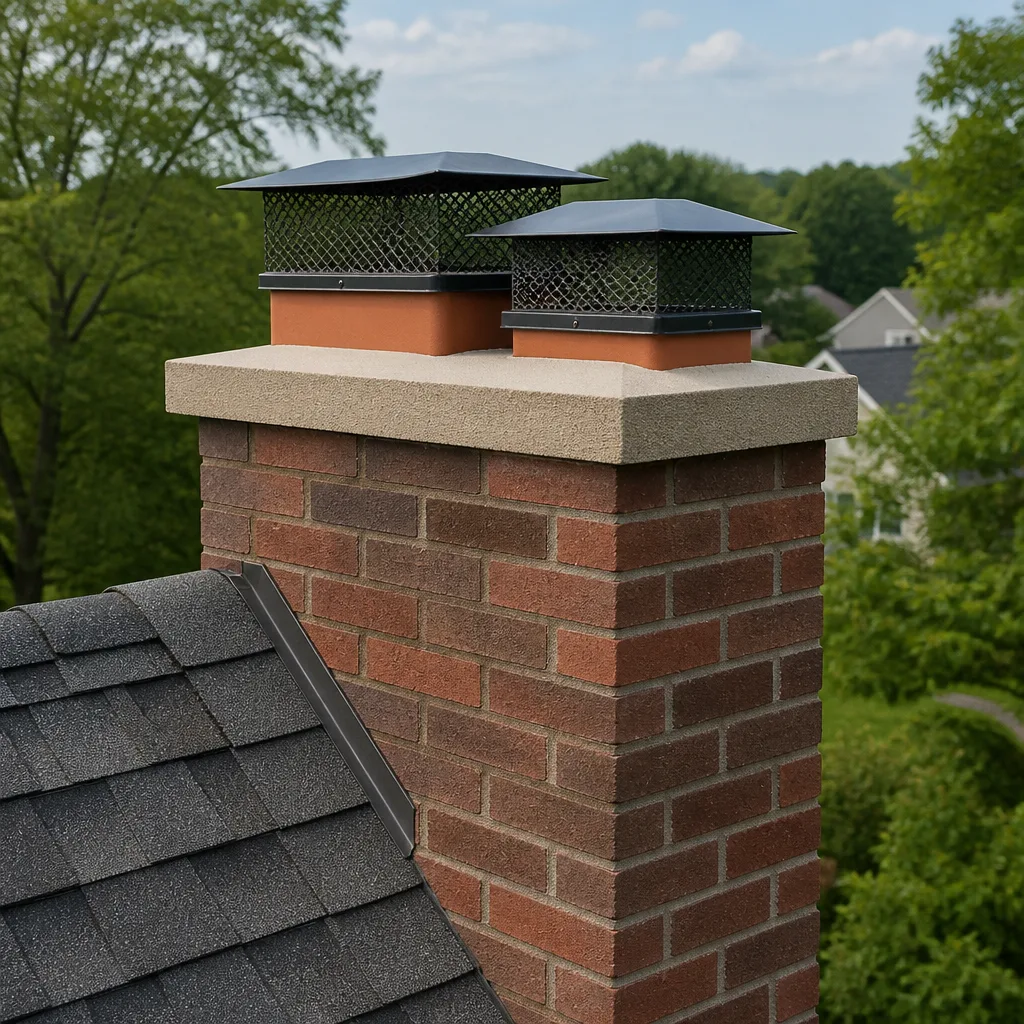 Caps & crowns
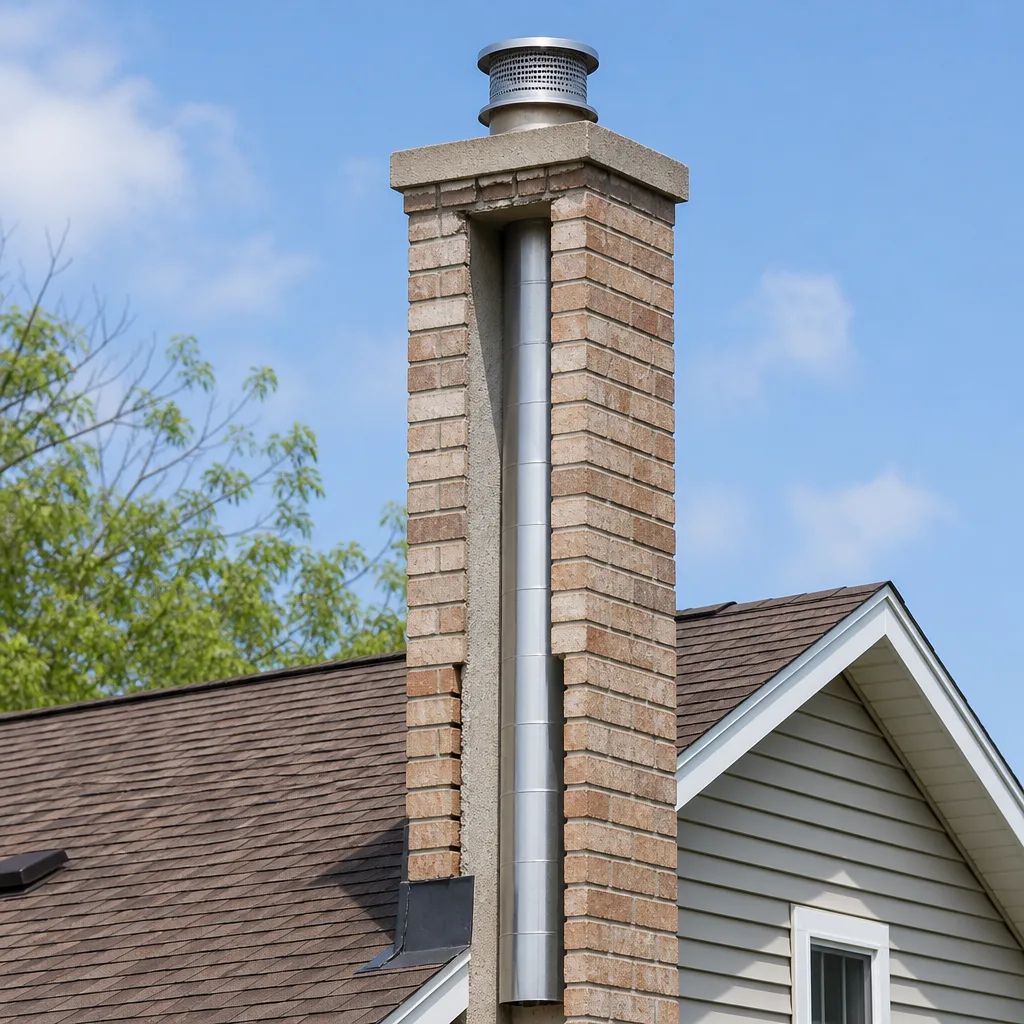 Flue relining
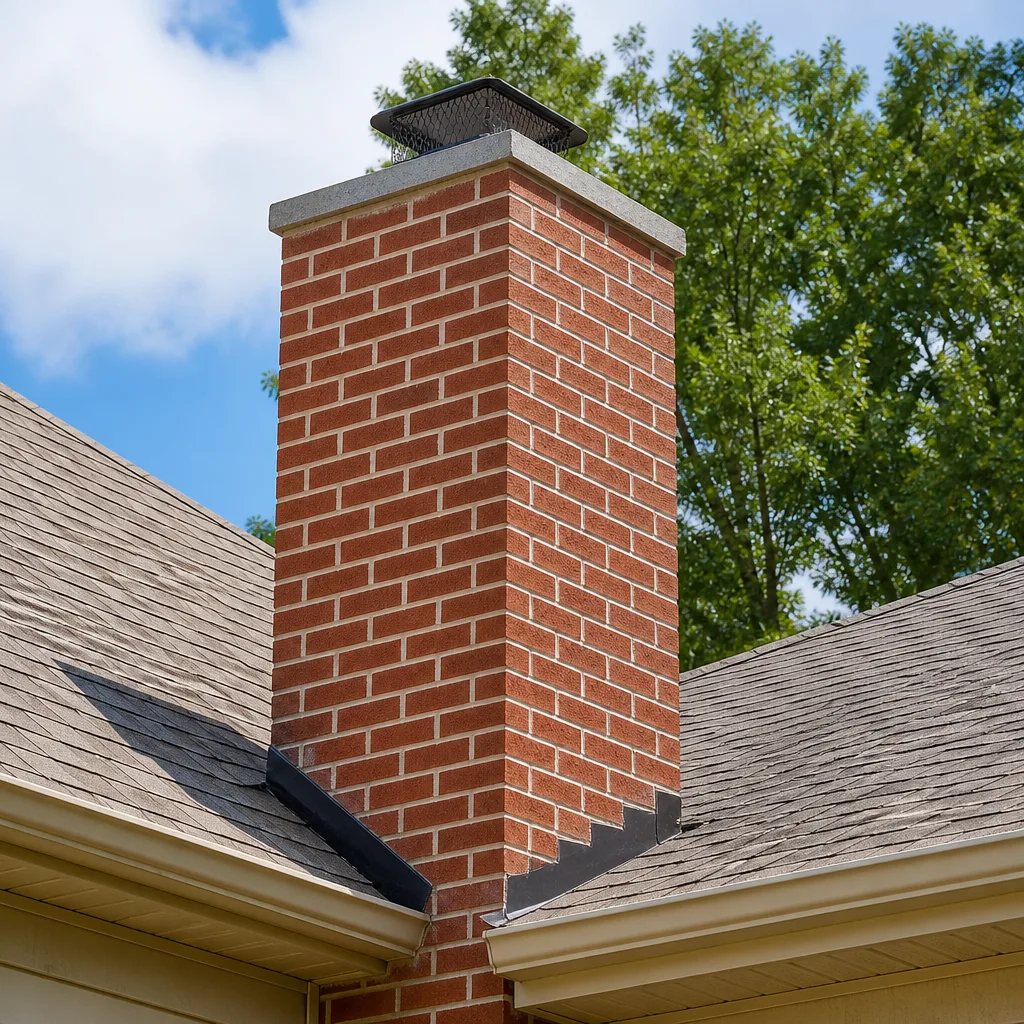 Masonry repair
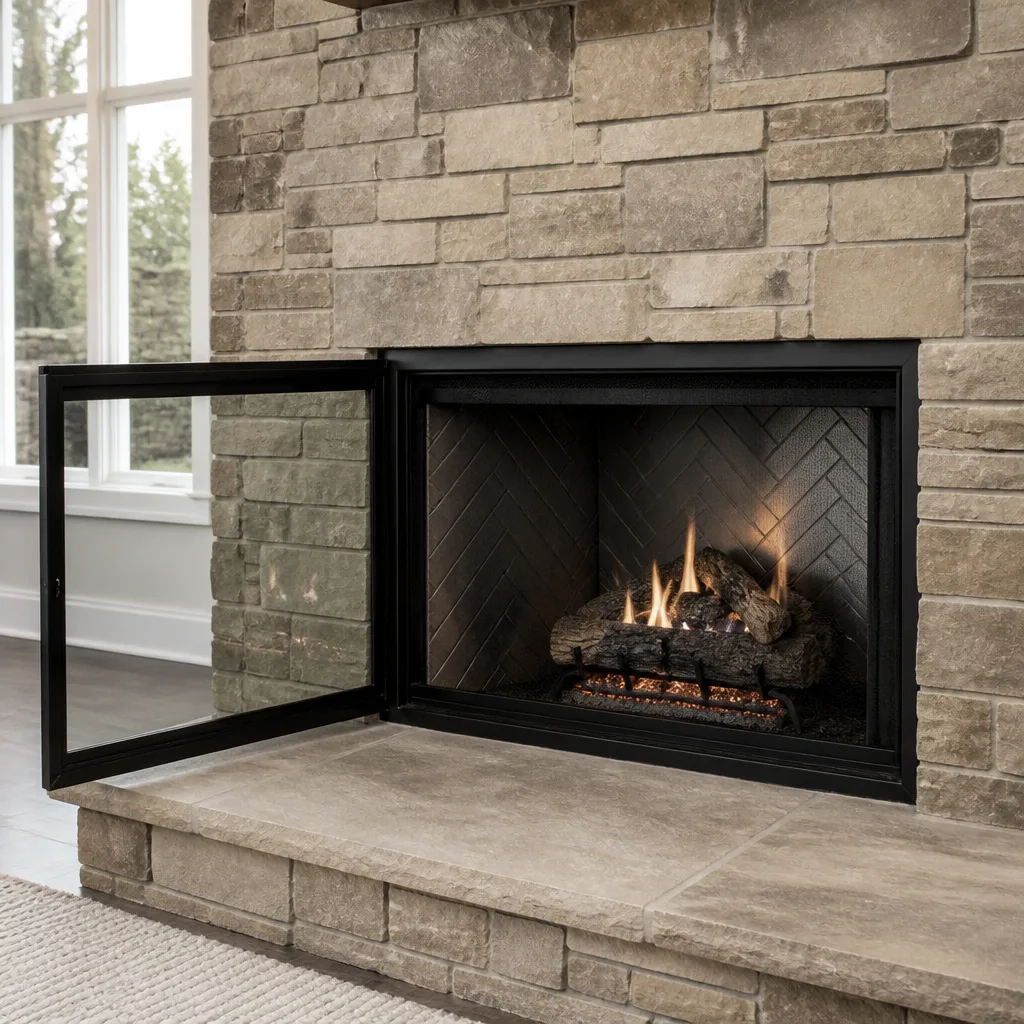 Gas fireplace service
Level 1 sweep and inspection to the NFPA 211 annual standard - flue, crown, cap, and flashing checked and photographed
Chimney sweep logs do not sweep chimneys. They loosen some creosote - which then falls where a brush and vacuum still have to collect it.
DIY vs Professional Chimney Cleaning: The Pomona Homeowner’s Decision Guide
Walk into any hardware store in Pomona and you’ll find chimney brushes hanging on a rack alongside dryer-vent kits and fireplace tools. The marketing on the packaging suggests the job takes an afternoon, and technically, the brushing motion isn’t complicated. What the packaging doesn’t tell you is that sweeping a chimney is only half the work. The other half is knowing whether what you’re seeing up there is seasonal buildup or the early signs of a flue that’s starting to fail. That diagnostic piece is where DIY hits a hard ceiling, and in a city like Pomona where winter nights drop low enough to push fireplaces back into regular rotation, the distinction matters more than most homeowners realize. This guide walks through what you can realistically do yourself, what you shouldn’t, and how to make the call without second-guessing it. For more guides & resources, visit our blog.
Styles & brands we work with
Quick Answer
DIY chimney cleaning is reasonable for light, fluffy Stage 1 creosote in a recently inspected flue, but most Pomona homeowners should schedule a professional sweep every 50 to 70 fires because a trained eye catches liner damage, cap failures, and Stage 2 or 3 creosote that a brush alone won’t address. A professional chimney sweep in Pomona typically costs $180 to $350 and includes inspection, while DIY equipment runs $80 to $150 and leaves you without documentation for insurance purposes. See our Chimney Cleaning Cost Breakdown: The Pomona Homeowner’s Reference for 2026 for a detailed price analysis. If your last professional inspection was more than two years ago, or you’ve never had one, start there instead of with a brush kit.
Table of Contents
- What DIY Can Realistically Accomplish
- The Equipment Gap: What Professionals Bring That DIY Kits Don’t
- Stage 1 vs Stage 2/3 Creosote: Why the Type Matters More Than the Amount
- The Insurance Dimension: Documented Service History vs DIY Maintenance
- The Decision Matrix: Four Variables That Determine Your Best Option
- Pomona-Specific Considerations: Climate, Code, and Housing Stock
- What Actually Happens If You Skip a Season
- Common Mistakes to Avoid
- When to Call a Professional
- Frequently Asked Questions
- The Bottom Line
What DIY Can Realistically Accomplish
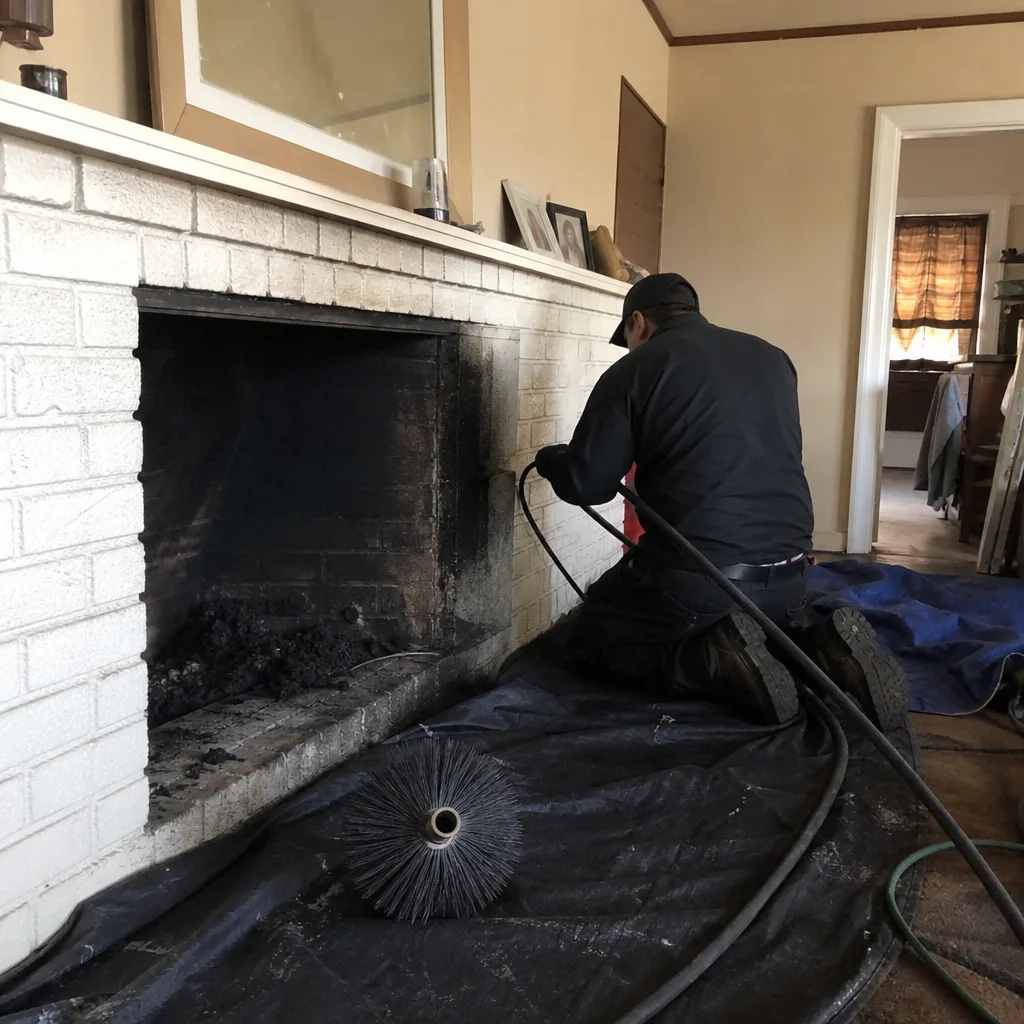
Let’s be honest about what a homeowner with a hardware-store brush kit can actually do. If you have a masonry chimney with a clay tile liner that was professionally inspected within the last 12 to 18 months, and you’ve burned only seasoned wood since, and you’re seeing light brown or gray powdery flakes on the flue walls, then yes, a DIY sweep is within reach. That’s Stage 1 creosote, and a poly brush on flexible rods can knock most of it down into the firebox where you can vacuum it out. This is the narrow window where DIY works: an accessible flue, known condition, and light deposits.
What DIY cannot do is tell you whether those deposits are actually as light as they look from below. The angle from your hearth looking up is deceptive. A flue that appears to have a dusting of soot can have a quarter-inch of tar-like buildup around the bend or at the top where you can’t see without getting on the roof. In Pomona, where many homes date to the 1950s and 1960s and have original clay liners, that blind spot is where problems hide. We’ve found cracked flue tiles on chimneys that looked perfectly fine from the firebox.
Conditions That Make DIY Appropriate
- Professional inspection within 18 months: You’re not flying blind. Someone with a camera has verified liner condition.
- Burning seasoned hardwood only: No green wood, no manufactured logs with additives, no trash or cardboard. Seasoned oak and maple produce far less creosote than softwoods or unseasoned wood.
- Accessible flue: A straight run chimney that doesn’t require roof access with a steep pitch. If you’re uncomfortable on a roof, that’s your answer right there.
- Light gray or brown powdery residue: You can see it and it’s clearly not sticky or shiny. If it glistens, that’s a different animal entirely.
- One-story roof with safe access: Most Pomona neighborhoods like Phillips Ranch or Westmont have single-story ranch homes, but Lincoln Park and Ganesha Hills have steeper terrain and trickier roof pitches.
If all five conditions are true, a DIY sweep can hold you over between professional cleanings. But understand what you’re doing: maintenance, not diagnosis. You’re removing material, not assessing the system. And the assessment matters every bit as much as the cleaning.
The Equipment Gap: What Professionals Bring That DIY Kits Don’t
The hardware store kit includes a brush, some rods, and maybe a tarp for the firebox floor. That’s a cleaning kit. A professional sweep arrives with a diagnostic toolkit, and the difference is the whole reason the profession exists. A chimney sweep in Pomona who takes the craft seriously will bring at minimum three things no DIY kit contains.
First, a chimney camera. This is a waterproof camera on a flexible push rod that runs the full length of the flue, top to bottom, recording everything as it goes. A camera reveals hairline cracks in clay tiles, gaps at mortar joints, rust-through in metal liners, and animal nests you’d never know were there. Without a camera, you’re sweeping blind. You might remove the creosote and never learn that a flue tile cracked three winters ago and has been leaking heat into the wall cavity ever since.
Second, a draft gauge. This measures the pressure difference that makes your chimney draw properly in the first place. A chimney that draws too strongly wastes heat. One that draws too weakly spills carbon monoxide back into the living space. The gauge reading tells us whether the system is functioning as designed or whether something else is going on, like a cap that’s wrong for the flue or a chase that’s too short for the roofline.
Third, the materials. When a professional finds a problem, the next step matters. If your sweep identifies a deteriorating flue liner, the right response might be a HeatShield ceramic resurfacing application rather than a full reline. That’s a proprietary system that restores the interior surface of an eligible flue without tearing out walls or dropping a whole new liner in. Most sweep-only companies can’t offer it because they don’t stock the material or hold the certification. A company that does chimney repair in Pomona alongside sweeping can diagnose and fix in one visit. That’s the practical difference: the sweep who can repair is doing a different job than the sweep who can only clean and refer.
Stage 1 vs Stage 2/3 Creosote: Why the Type Matters More Than the Amount
Creosote is not one substance. It’s a family of combustion byproducts that forms differently depending on flue temperature, wood quality, and burn habits. The National Fire Protection Association and every serious chimney professional classify creosote in three stages, and the stage you’re dealing with determines whether DIY is safe at all.
Stage 1 is what most people picture: a thin, flaky, gray or brownish coating that brushes off with relative ease. It’s lightweight, powdery when dry, and a poly brush handles it fine. This is the only stage where DIY makes sense, and even then, only when all the other conditions we discussed hold true.
Stage 2 looks different. It’s darker, shinier, and it doesn’t flake off, it smears. Think of burnt pancake residue on a skillet. Stage 2 contains hardened tar and requires mechanical removal with rotary loops or specialized chemical treatment. A basic brush won’t touch it, and the homeowner who tries will find themselves working far harder than expected while achieving very little. Worse, they’ll think they’ve cleaned when they haven’t. Stage 2 is the stage where we regularly find homeowners who’ve been diligently brushing for years while the deposit kept building underneath their brush’s reach.
Stage 3 is a hard, shiny, tar-like glaze that carpets the flue interior. It’s essentially concentrated fuel coating the inside of your chimney. Stage 3 creosote cannot be brushed off by any means, DIY or otherwise. It requires chemical treatment, rotary chain or head removal, and often multiple passes. In some cases, when Stage 3 has caused pitting or cracking of the liner, the repair includes HeatShield resurfacing to restore what the creosote and heat have degraded. If you look up your flue and see anything shiny, stop. Do not burn. Do not brush. Call a professional.
How to Identify What You’re Seeing
- Turn off all lights and shine a strong flashlight up the flue from the firebox. Daylight helps too.
- Look for texture, not just color. Flaky and powdery is Stage 1. Smudgy and sticky-looking is Stage 2. Smooth, shiny, and glassy is Stage 3.
- Check the damper area specifically. Creosote concentrates where airflow changes, so the damper and the smoke chamber above it usually show the most advanced stage present.
- If you see anything shiny or tar-like, close the damper and call a professional. This is not a brushing project anymore. It’s a removal job that requires tools and training you don’t have at home, and the fire risk is real.
In Pomona’s fireplace-heavy housing stock, we see a lot of Stage 2. The climate encourages occasional fires rather than daily burns, which means flue temperatures often don’t get hot enough to burn off Stage 1 before it cures into Stage 2. Our Seasonal Chimney Cleaning Care for Pomona: Year-Round Homeowner’s Guide explains how local weather patterns affect your maintenance schedule. Occasional burners are actually at higher risk for Stage 2 deposits than daily burners, which runs counter to what most people assume.
The Insurance Dimension: Documented Service History vs DIY Maintenance
Ask yourself a question: if a chimney fire damaged your home tomorrow, what would your insurer ask for? The answer, in nearly every case, is maintenance records. Homeowners insurance policies generally require that homeowners maintain their properties in reasonable condition, and chimney maintenance falls under that umbrella. If you’ve had professional sweeps with documented dates and findings, you have a paper trail showing diligence. If you’ve been brushing the flue yourself for six years, you have no third-party record at all.
This matters in two directions. First, a documented service history supports your claim if something does go wrong. It demonstrates that you treated the fireplace as the combustion appliance it is, with professional attention at reasonable intervals. Second, and more subtly, a professional sweep creates a record before problems become emergencies. If a sweep notes “Stage 2 creosote, recommend follow-up in 12 months” and you ignore it, that’s a different conversation than never having had anyone look at all. The documentation protects you, but it also holds you accountable, which is exactly what an insurer wants to see.
The DIY alternative leaves you with no log, no notes, no photographs. If you sweep your own chimney and something fails, you’ll be explaining to an adjuster why you believed your own maintenance was sufficient, and you’ll be doing it without any evidence. The couple hundred dollars a professional sweep costs starts to look like a cheap insurance policy in its own right.
The Decision Matrix: Four Variables That Determine Your Best Option
If you want to cut through everything and make a decision in ten minutes, here’s the framework we use. Four variables, each with clear thresholds.
Variable 1: Use Frequency
- Under 25 fires per season: DIY might be reasonable, provided other variables check out. Light use produces light deposits.
- 25 to 70 fires per season: This is regular use, and it’s the zone where professional sweeping every year makes sense. You’re producing real creosote and your burn habits matter more than your brush technique.
- Over 70 fires per season: You’re a heavy user. Professional cleaning at least once per burning season, possibly twice depending on wood type and flue condition. DIY is not sufficient at this volume.
Variable 2: Chimney Age
- Under 10 years old: If it was built to current code and properly installed, somewhat more forgiving. DIY is more defensible here.
- 10 to 30 years old: This is the age range where tile cracks and mortar joint degradation start appearing. Professional assessment annually is the smart move. Pomona homes built in the 1990s and 2000s fall here.
- Over 30 years old: Original clay liners from the 1950s through 1980s are at highest risk for hidden damage. Professional inspection with camera is non-negotiable. Most of Pomona’s housing stock falls in this category.
Variable 3: Last Professional Inspection Date
- Within 12 months: You know the current condition. DIY maintenance between inspections is reasonable.
- 1 to 3 years ago: Enough can change in that window that you should schedule a professional clean rather than DIY. Animals move in, liners crack, caps fail.
- Over 3 years or never: Do not DIY under any circumstances. You have no baseline. Get a professional inspection before burning another fire.
Variable 4: Appliance Type
- Open fireplace with masonry chimney: The classic Pomona setup. Produces the most creosote and benefits most from professional attention.
- Wood stove with metal chimney: Burns hotter and produces less creosote, but metal liners fail differently than clay. Camera inspection still matters.
- Gas fireplace: Very little creosote, but gas appliances have their own inspection needs: log positioning, venting integrity, carbon monoxide risk. A different kind of professional visit.
- Manufactured or factory-built fireplace: These have specific clearance requirements and components that DIY sweeping can damage. Professional cleaning is the safer call.
Run your situation through all four variables. If three or four point toward professional, that’s your answer, and it’s not close.
Pomona-Specific Considerations: Climate, Code, and Housing Stock
Pomona sits in the Pomona Valley’s transition zone, where the marine layer burns off by late morning but winter nights still drop into the 40s and sometimes the 30s. That means fireplaces here aren’t decorative props. They get used, and they get used inconsistently, which produces the stop-start burn cycles that turn light creosote into Stage 2 deposits faster than many homeowners realize.
The city’s housing stock compounds the issue. A significant portion of Pomona’s single-family homes were built between 1945 and 1975. Those homes have masonry chimneys with original clay tile liners, and clay tiles from that era are now 50 to 75 years old. They crack from thermal stress, they deteriorate from decades of acidic creosote contact, and they fail in ways that are invisible from the firebox. If you live in Westmont, Lincoln Park, or the neighborhoods around Garfield Park and you’ve got an original chimney, the odds that your liner is in pristine condition are low. That’s not alarmism, that’s material science. Clay tile liners have a service life, and most of Pomona’s stock has exceeded it or is close.
Local code also factors in. The city enforces California building codes that require working smoke alarms and carbon monoxide detectors in all residences. Those detectors matter, because a cracked flue liner doesn’t just leak heat. It can leak carbon monoxide into wall cavities where it migrates into living spaces. The detector is your last line of defense. The professional inspection that finds the crack before it becomes a leak is a better one.
There’s also the wildlife question. Pomona’s mature tree canopy, especially in older neighborhoods, creates raccoon and squirrel habitat. Animals find chimneys attractive, and an uncapped or poorly capped flue is an invitation. A professional sweep in Pomona frequently starts with “there was a nest in there.” DIY equipment doesn’t handle animal removal, and the health and safety questions that come with it are real.
What Actually Happens If You Skip a Season
Let’s be specific about consequences instead of vague about danger. If you skip a season, three things happen, and only one of them is dramatic.
First, creosote accumulates. This is the boring, inevitable consequence. Every fire produces some creosote, even with the best wood and the hottest burns. Skip a season and the next sweep takes longer, costs a bit more, and the deposit stage advances. Stage 1 becomes Stage 2. Stage 2 becomes Stage 3, which is when it stops being a cleaning job and starts being a removal-and-restoration job.
Second, small problems become bigger ones. A loose cap that would’ve taken twenty minutes to re-secure now allows rain in, which accelerates liner deterioration and mortar damage. A hairline tile crack that would’ve been noted and monitored now widens with each thermal cycle. The repairs scale accordingly. What was a sweep plus a cap adjustment becomes a flue resurfacing or relining project.
Third, and this is the one people think about first but should think about last, chimney fires become possible. Not likely with one skipped season on a clean chimney, but possible, and the probability climbs each season you skip. A chimney fire sounds like a freight train running through your living room, and it can crack liners, ignite surrounding framing, and spread before you understand what’s happening. The NFPA has documented thousands of these every year, and the majority occurred in chimneys that hadn’t been professionally cleaned in over a year. This is the same reason we take dryer vent cleaning in Pomona seriously: lint and creosote are both accumulated fuels, and both burn when conditions line up.
Common Mistakes to Avoid
- Assuming a brush alone equals clean. The brush removes what it touches. It doesn’t assess liner condition, check the cap, measure draft, or document anything. Cleaning without assessment is like changing your car’s oil without ever looking at the dipstick.
- Burning “cleaning logs” as a substitute for sweeping. Creosote sweeping logs can loosen Stage 1 deposits somewhat, but they don’t remove them. They definitely don’t touch Stage 2 or 3. Using them and then skipping a real sweep is worse than doing nothing, because they create a false sense of completeness.
- Brushing a chimney you’ve never had inspected. If there’s a cracked tile or a deteriorating joint up there, a brush can catch on it and worsen the damage. At minimum, get a camera inspection before putting any tool in your flue.
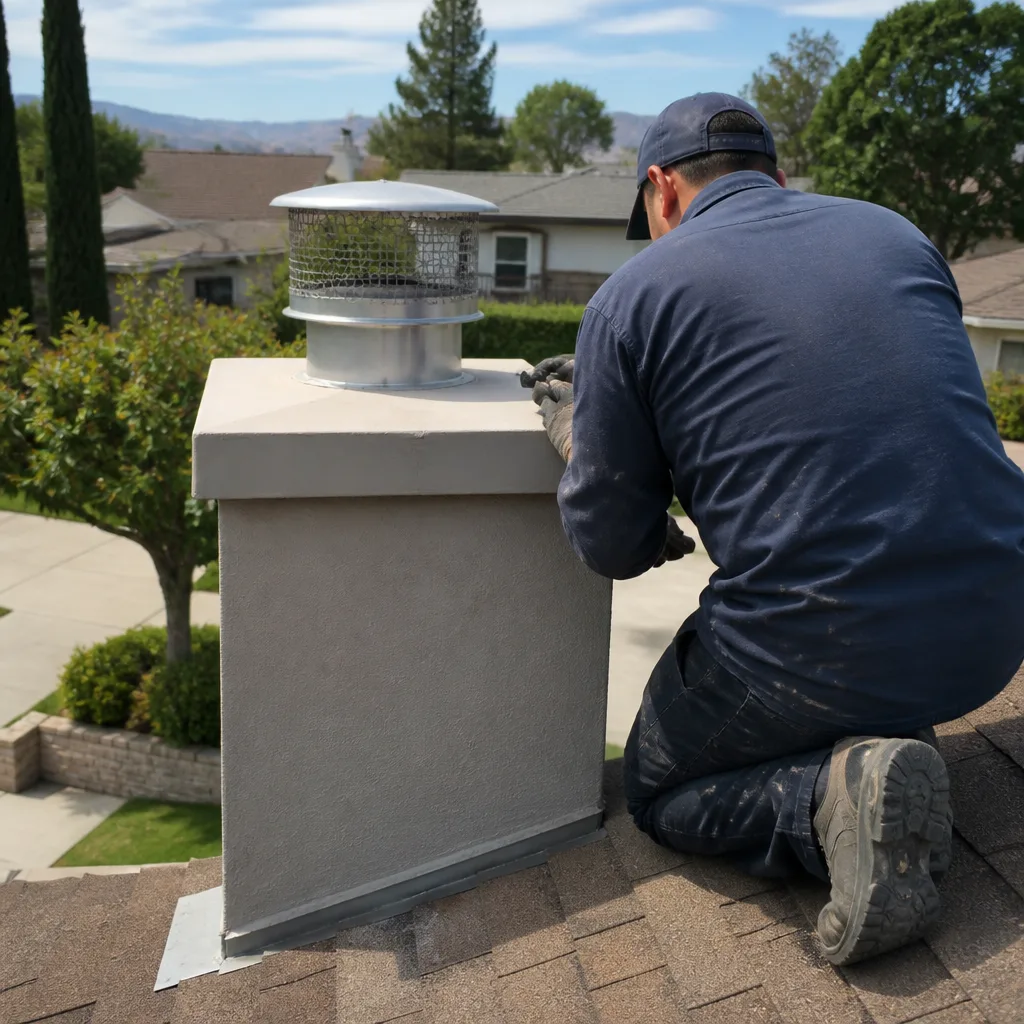
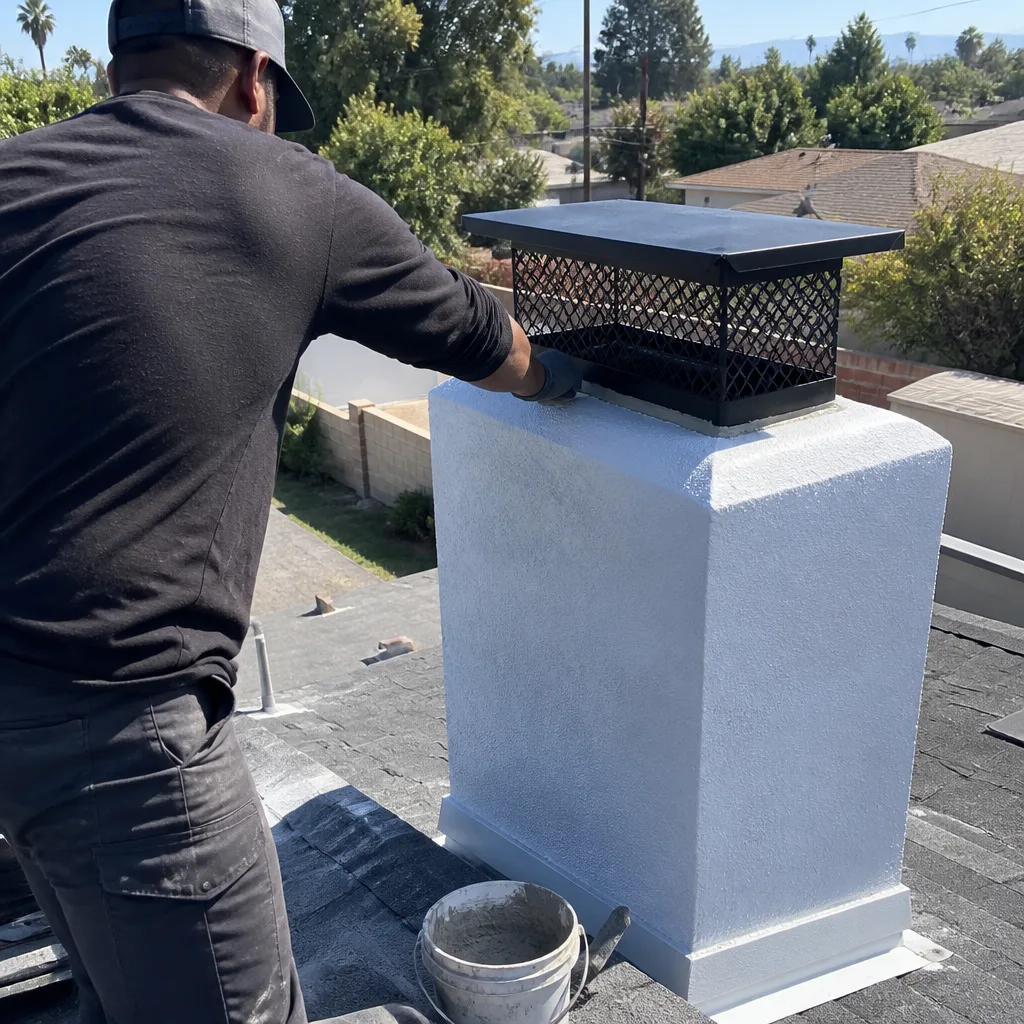
- Ignoring the cap. In Pomona’s tree-heavy neighborhoods, an open or damaged cap is an animal invitation. We’ve pulled raccoon nests, squirrel debris, and generations of bird activity from uncapped chimneys. The cap is a simple, inexpensive component that prevents a lot of problems.
- Thinking gas fireplaces don’t need service. They produce little creosote, but they do produce carbon monoxide, and their venting systems need verification. A gas fireplace that hasn’t been checked in years is a carbon monoxide risk that most homeowners haven’t thought about.
- Choosing the cheapest sweep without asking what they actually do. Some sweeps clean only. They don’t carry cameras. They don’t repair. They can’t apply HeatShield or install Gelco caps because they don’t stock those materials. You’re paying for half a service and probably don’t know it.
- Waiting until you see a problem to act. By the time a homeowner sees staining on the ceiling near the chimney, smells smoke in the house when burning, or sees flakes falling into the firebox, the problem has been developing for a while. Early intervention is cheaper and simpler in every case.
When to Call a Professional
Call a professional if any of these apply: you haven’t had a camera inspection in over two years, you’re seeing shiny or tar-like deposits on the flue walls, you smell smoke inside the house when burning, you’ve had an animal in the chimney, you’re buying a home with an existing fireplace and no maintenance history, or your carbon monoxide detector has activated near the fireplace. Not sure where to start? Read our How to Hire a Chimney Cleaning Contractor in Pomona: A Step-by-Step Guide. These aren’t brushing problems, and delaying on any of them makes the eventual resolution more expensive. Lantern Chimney Sweep offers free estimates in Pomona, and we’ll tell you plainly what we found and what you actually need, without inventing problems to justify the visit. Call (855) 341-8132 to schedule.
Frequently Asked Questions
A standard chimney sweep in Pomona typically costs between $180 and $350, depending on flue accessibility, creosote stage, and whether any animal removal or cap replacement is involved. Prices rise when Stage 2 or 3 creosote requires mechanical or chemical treatment beyond standard brushing. Call (855) 341-8132 for an exact quote based on your specific chimney, estimates are free.
Homeowners who burn 25 to 70 fires per season should have the chimney professionally swept once a year, ideally before the burning season starts in late fall. Light users who burn under 25 fires a season can sometimes go 18 to 24 months between sweeps, provided the previous inspection was clean and only seasoned wood has been burned. Heavy users over 70 fires a season may need twice-a-season attention depending on wood type and flue condition.
Not every damaged liner needs full replacement. In cases where the liner shows cracking or surface deterioration but the underlying structure is still sound, HeatShield ceramic resurfacing can restore the interior surface without the cost and disruption of tearing out the old flue and dropping a new one in. We evaluate each liner individually and explain exactly what we saw with camera footage, so you’re never agreeing to a repair you haven’t seen evidence for.
You can remove light Stage 1 creosote from an accessible, recently inspected flue with a hardware-store brush kit, but that’s a narrow set of conditions. If your chimney is over 30 years old with original clay liner, you’ve never had a camera inspection, or you’re seeing anything shiny or sticky on the flue walls, a brush kit won’t solve your problem and may make it worse. The assessment matters as much as the cleaning.
A proper sweep includes a full visual and camera inspection of the flue interior, the damper, the smoke chamber, the cap, the crown, and the exterior masonry. We’re looking for liner cracks, mortar joint gaps, cap damage, animal activity, excessive creosote, drafting problems, and any signs of water intrusion. The inspection findings are documented and shared with you, including camera footage when relevant.
Most homeowners insurance policies cover sudden and accidental damage like a chimney fire, but they expect the homeowner to have performed reasonable maintenance. A documented professional service history supports a claim. A DIY-only maintenance history leaves you without third-party records, which can complicate a claim if an adjuster asks what you did to prevent the incident. Keep your sweep records.
They can be, and pairing them makes practical sense. Both systems serve the same function: venting combustion byproducts out of your home. Lint accumulation in dryer vents and creosote accumulation in chimneys are the two leading residential fire hazards related to venting, and addressing both in one visit means one less thing on your maintenance list. Ask about combining a dryer vent cleaning with your next chimney sweep.
The Bottom Line
The DIY chimney cleaning question isn’t really about whether you can operate a brush. It’s about whether you can assess what you’re seeing, and whether what you can’t see is safe to leave unseen. For light use, recent inspection, and known-good condition, DIY maintenance between professional visits is reasonable. For everything else, the professional call isn’t a luxury, it’s the only option that gives you a look at what’s actually happening inside your flue. In Pomona, where the housing stock skews older and the burning season comes in fits and starts, the gap between what a brush removes and what a camera reveals is wider than most people think. Start with an inspection, not a brush kit. Lantern Chimney Sweep provides that assessment, along with the repair services that keep what we find from becoming a bigger problem. Call (855) 341-8132 to schedule your sweep and inspection before this season’s first fire.
Written by the team at Lantern Chimney Sweep, serving Pomona since 2013.
See the difference
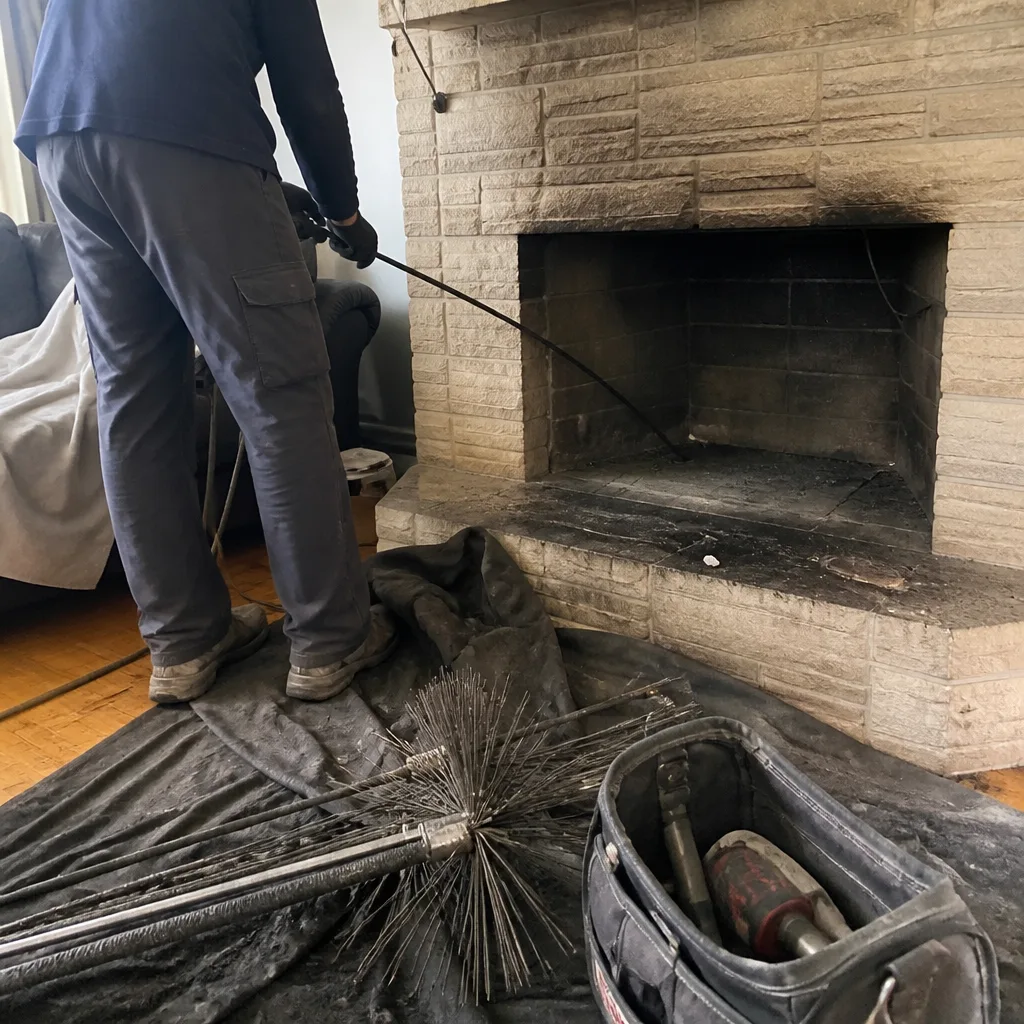 Before
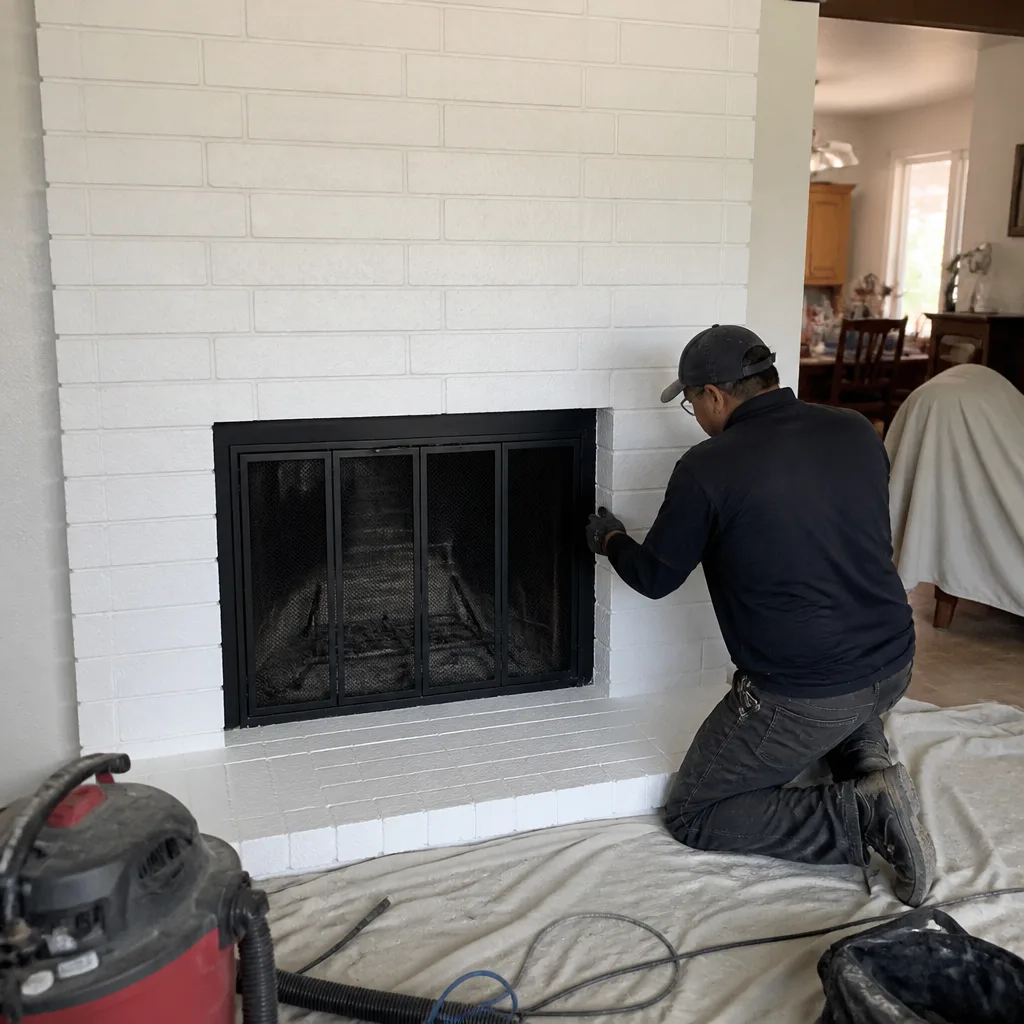 After
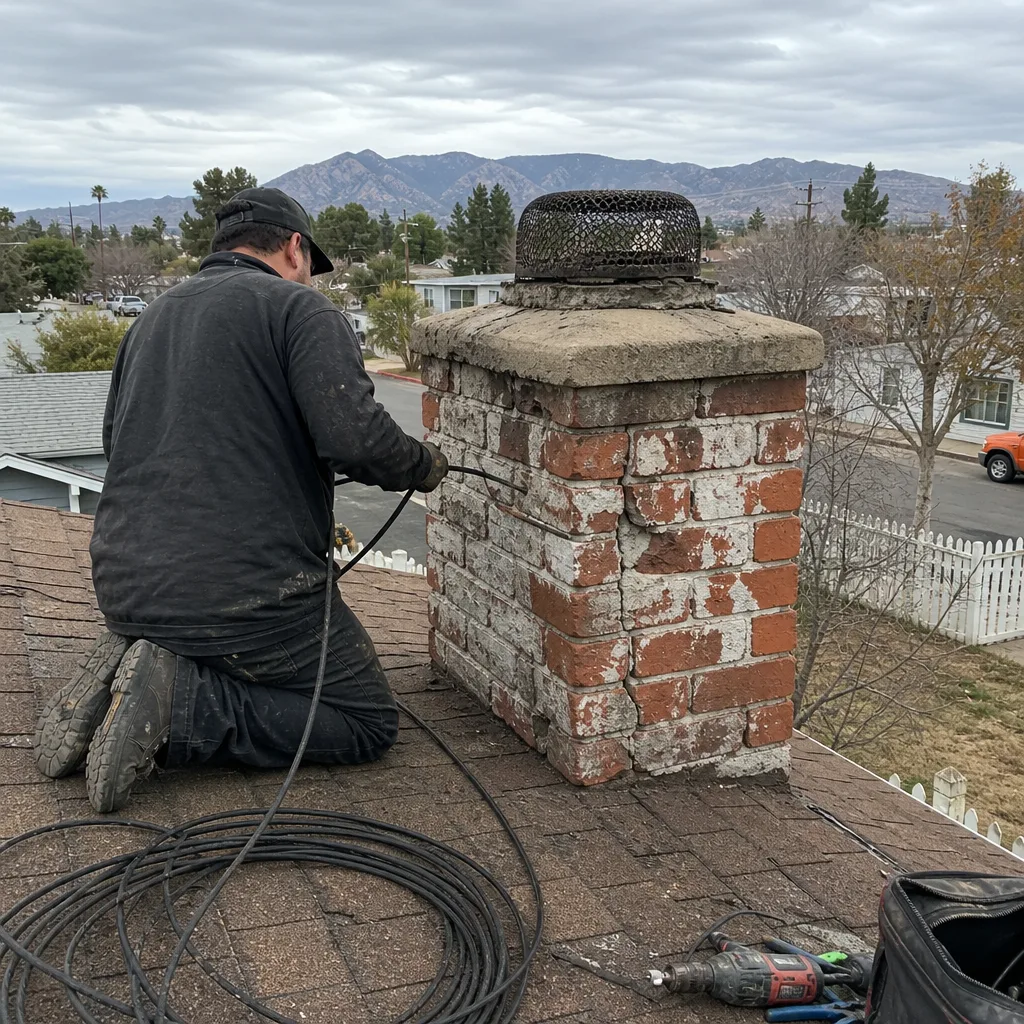 Before
 After
 Before
 After