
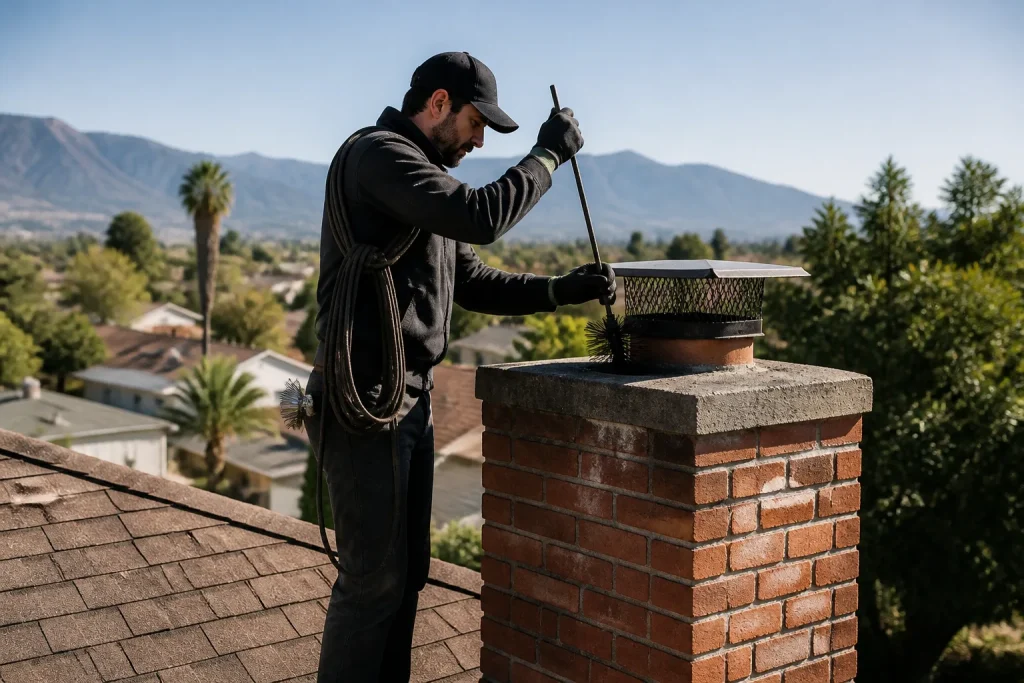
Emergency Chimney Sweep Near Me: What Pomona Homeowners Should Do First
An active chimney fire sounds like a freight train rumbling through your walls, and most Pomona homeowners do the exact wrong thing in those first thirty seconds: they open the damper wider to let air in. The correct response is the opposite. Close the damper, close the fireplace doors or glass, and get everyone outside before you call 911 from the driveway. If you’re searching for an emergency chimney sweep in Pomona after the fact, the fire department has likely already told you the chimney is unusable until a professional inspects it, and that’s where the real work begins.
Three Types of Chimney Emergencies, and Why They Require Different Responses
Not every chimney emergency is a fire. In our experience, Pomona homeowners tend to lump three very different situations under one label, and treating them all the same can make things worse. Here’s what you’re actually dealing with.
An active chimney fire. You’ll hear a roar that people compare to a train or a low-flying jet, often accompanied by loud cracking and popping. Flames or dense smoke may shoot from the chimney top. Your neighbors might see it before you do. This is the one that requires immediate evacuation and a 911 call, not a call to a sweep. The sweep comes after the fire is out.
A backdraft or carbon monoxide event. Smoke fills the room, your CO detector goes off, or family members report headaches and nausea. There’s no visible fire, but the chimney is pushing combustion gases into the house instead of venting them out. This is an immediate health threat. Open windows, get everyone out, and call the gas company or fire department if CO levels are involved. Once the air clears, a sweep needs to find the obstruction or pressure problem that caused it.
Structural compromise. Maybe a chimney cap blew off in a windstorm, bricks fell from the crown, or you heard a crack during the last earthquake sequence that runs through the Pomona foothills. The chimney is damaged but not actively dangerous this minute. You still shouldn’t use it, but the response is slower: call a sweep for a Level II inspection before the next fire.
Each of these paths ends at the same place, a professional assessment, but the first 20 minutes look very different. Knowing which situation you’re in is the point of this whole article.
First Response Protocol for an Active Chimney Fire
We’ve talked to enough Pomona homeowners after chimney fires to know that panic makes smart people do strange things. Here’s the sequence that actually reduces damage.
- Close the damper. This is the counterintuitive move. Your instinct says to let oxygen out, but an open damper feeds the fire. Closing it starves the chimney fire of air and slows it down. Close fireplace doors or glass if you have them.
- Get everyone out. Don’t stop to grab photos or move furniture. Chimney fires can spread to the roof and attic faster than most people expect, especially in older Pomona homes with decades of creosote buildup.
- Call 911 from outside. Tell the dispatcher you have a chimney fire, not just a fireplace fire. That wording matters. The fire department needs to know the fire is in the flue, not the firebox.
- Stay outside until the fire department says it’s safe. Even after the visible flames stop, creosote can continue smoldering inside the flue.
What not to do: do not pour water into the fireplace. Water hitting a hot flue liner causes thermal shock, which can crack clay tile liners instantly and turn a contained chimney fire into a structural emergency. Also do not run fans to blow smoke out of the house. Fans change air pressure in the room and can feed oxygen to the fire through any gap or crack. Close doors to the room instead.
What Most Pomona Homeowners Get Wrong About Backdrafts and Carbon Monoxide
A backdraft isn’t just a nuisance, it’s a warning that your chimney has stopped doing its job. When combustion gases can’t vent upward, they spill into the living space. And carbon monoxide is odorless, so the first sign is often a detector going off or someone feeling dizzy and nauseated.
If your CO detector sounds, treat it like a fire alarm:
- Open windows and doors to ventilate.
- Get everyone outside.
- Call the gas company or fire department if the detector continues to alarm.
- Do not run the fireplace or gas appliance again until a professional finds the cause.
Running fans during a backdraft makes the problem worse. Fans create negative pressure in the room, which pulls more combustion gases down the flue and into the house. The same applies to running a kitchen exhaust fan or bathroom vent while a fireplace is lit. In older Pomona homes with tight remodels and added insulation, negative pressure problems have become more common than they were twenty years ago.
Common causes we find during post-incident inspections include blocked chimney caps, animal nests, a closed or partially closed damper, and flue sizing issues after appliance changes. None of these are problems you can diagnose from the living room. That’s why the follow-up call to a sweep is not optional.
What to Tell the Sweep When You Call After an Incident
If you’ve had a chimney fire or a backdraft and you’re calling a chimney sweep in Pomona Chimney Sweep in Pomona, what you say in that first call determines whether the technician arrives with the right equipment. Here’s what helps us prepare:
- What happened, exactly. Was it a chimney fire the fire department responded to? A backdraft that filled the living room with smoke? A CO detector alarm? Say the words, not just “there’s something wrong with my chimney.”
- How long ago it happened. If the fire department responded, they likely told you not to use the chimney. That note matters. A recent fire means we’re assessing creosote damage and liner integrity, not just doing a routine sweep.
- What the chimney looks like from outside. Do you see cracked brick, missing mortar, a chimney cap that’s gone or dented? Anything you can tell us from the ground helps.
- Any sounds or smells since the incident. A lingering smoke smell is normal after a fire. A chemical smell, a hissing sound, or visible soot falling into the firebox is not.
After a chimney fire, we don’t just sweep the flue and call it done. We bring a camera system to inspect every foot of the liner from the firebox to the chimney crown. We look for cracked tiles, gaps in the mortar joints, and places where heat may have transferred into the surrounding structure. If the liner is damaged, we use materials like DuraFlex flexible liner systems or HeatShield ceramic resurfacing to restore it, depending on what the flue can handle. A sweep-only company often can’t do that repair work, which means a second call and a second company. We’d rather handle the whole diagnosis and fix in one visit.
How to Evaluate Whether Your Chimney Is Safe to Use Again
After any chimney emergency, the question every Pomona homeowner asks is simple: can I use this again? The honest answer depends on what we find during an inspection. Here’s what we’re looking for.
Liner damage. A chimney fire can crack clay tile liners in minutes. Cracked liners allow heat and gases to reach combustible materials inside your walls and roof. We run a camera through the flue and look at every seam. If we find cracks, the fix is either a DuraFlex stainless liner or HeatShield cerfacing, depending on severity. Both are professional-grade materials that restoration contractors specify, not something you buy at a hardware store.
Creosote stage. Chimney fires leave behind a specific kind of creosote: puffy, honeycomb-textured, and more concentrated than the glossy buildup from normal use. This post-fire creosote has to be removed before the chimney is safe, and it often requires more aggressive mechanical brushing than routine sweeping.
Masonry and cap condition. Intense heat can shift brick and crack mortar. A damaged chimney cap, which should have stopped water and animals but may have melted or warped in the fire, needs replacement. We install Gelco caps because they’re built for this exact use case: durable, manufacturer-grade, and made to fit properly.
A post-incident Level II inspection is not optional before the next fire. This is the standard set by the National Fire Protection Association for any chimney that has been involved in a fire, and it’s what we recommend to every Pomona homeowner after an incident. It’s a video inspection of the full flue, the firebox, the damper, and the exterior masonry, plus whatever repairs the findings indicate.
When to Call a Pro, and When You Can Wait
Here’s the plain version. If you’ve had an active chimney fire, call a sweep before using the fireplace again, period. The same applies to any event where carbon monoxide was detected in the house. For structural concerns, a loose cap or some cracked brick, you have more time, but the problem will not fix itself, and it will get more expensive the longer it sits.
If you haven’t had an emergency but you’re worried about creosote buildup, the rule of thumb is an annual sweeping for a fireplace you use regularly. Pomona’s dry climate doesn’t reduce creosote risk, it just changes the type of creosote. Dry, powdery creosote brushes out easily. Hard, glazed creosote from low-burning fires is more stubborn. Both are flammable.
One thing we tell Pomona homeowners, because it saves an extra service call: if you’re having your chimney swept, ask about dryer vent cleaning in the same visit. A clogged dryer vent is the other residential fire hazard that most people ignore, and Dryer Vent Cleaning in Pomona addresses it with the same trade-grade approach we use for chimneys. One visit, two fire hazards handled.
And if you need repair work after an emergency, that’s what we do as a Chimney Repair in Pomona company. Sweep, assess, repair, it’s the sequence we follow on every job, emergency or routine.
We pulled a chimney cap out of a roof near Phillips Ranch a few years back. Homeowner had no idea it was missing until a pigeon got into the flue. That’s not an emergency, but it’s a reminder that chimneys fail quietly. The emergencies are loud. The quiet failures are the ones that show up on an inspection.
The Bottom Line
The first 20 minutes of a chimney emergency determine whether you have a scare or a structural disaster. Close the damper for an active fire. Ventilate and evacuate for carbon monoxide. Never pour water into a hot fireplace. Never run fans into a backdraft. And after the immediate danger passes, schedule a Level II inspection before you even think about lighting another fire.
If you’re in Pomona and need help after a chimney fire, a backdraft, or anything else that feels wrong, we’re a full-service chimney cleaning and repair company that handles sweeping, liner assessment, and professional-grade repairs in one call. We use the materials restoration contractors specify, like DuraFlex, HeatShield, and Gelco, because the point is to fix the problem correctly, not just to make it look clean. Call (855) 341-8132 for a free estimate. We’ll tell you what we found, and we can fix it.
Frequently Asked Questions
Most chimney sweeps in the Pomona area charge between $180 and $340 for a standard sweeping, but a post-emergency visit typically includes a Level II video inspection, which runs higher because of the camera work and detailed reporting. The honest answer is that cost depends on what the camera finds. Free estimates are standard, so you shouldn’t pay anything just to have someone look. Call (855) 341-8132 for a specific quote.
No. A chimney fire compromises the liner in ways you cannot see from below, and even a small crack allows heat and embers to reach the walls and roof. You need a Level II video inspection before the next fire. This is the same answer we give every Pomona homeowner, regardless of how minor the fire seemed. It’s not worth the risk.
Once a year for a wood-burning fireplace used more than a few times each winter. If you burn a lot of unseasoned wood, or you notice tar-like buildup on the damper or firebox walls, twice a year may be appropriate. Pomona’s warm days and cool nights can create temperature swings that make creosote cling differently, but the annual rule holds for most homes. Lantern Chimney Sweep home inspections catch buildup before it becomes an emergency.
Creosote accumulates, hardens into layers, and eventually becomes fuel for a chimney fire. The first sign may be a dull rumbling sound when the fire is burning hot. By the time you notice it, the flue may already be damaged. Skipping sweeping for several years turns a $200 maintenance call into a liner repair that costs ten times that, or a house fire that costs far more. It’s the most expensive way to save money we know of.
Written by the team at Lantern Chimney Sweep, serving Pomona since 2013.
Need Chimney Cleaning Help?
Call Lantern Chimney Sweep — licensed & insured, here with fast after-hours help in Pomona.
(855) 341-8132